低空物流

Search documents
锚定产业升级,探索“低空+旅游”新模式
Xin Lang Cai Jing· 2026-01-06 20:32
Group 1 - The integration of low-altitude economy and tourism in Tibet is being actively explored, with recent investment discussions held in Lhasa and Nyingchi [1] - The Tibet Autonomous Region, known for its world-class natural landscapes and unique cultural heritage, aims to enhance its tourism industry through the "low-altitude + tourism" model [1] - The first low-altitude economic industrial park in Tibet has attracted 17 leading companies, establishing a preliminary industrial cluster focused on research, manufacturing, and operational services [1][2] Group 2 - Tibet Civil Aviation Development General Aviation Co., a state-owned enterprise, is working to create a safe, efficient, and intelligent low-altitude service system suitable for high-altitude environments [2] - In 2024, Tibet is expected to receive over 63.89 million domestic and international tourists, with total tourism spending exceeding 74.6 billion yuan [2] - Discussions among various companies and government departments focused on tourism resource development, scene creation, and cross-border tourism activation [2] Group 3 - The exploration of outdoor leisure opportunities in Tibet is being pursued by companies like Beilai Industrial Group, which sees potential for deep collaboration in the region [3] - Innovations in low-altitude economy and tourism integration, such as AR aerial photography and low-altitude logistics, are viewed as significant opportunities for enhancing visitor experiences in Tibet [3]
山东研究划设济青高速沿线、烟台至长岛低空公共航路,探索地方主导空域管理新模式
Qi Lu Wan Bao· 2025-12-18 07:34
Core Viewpoint - The Shandong Provincial Government has issued the "Public Safety Management Measures for Civil Unmanned Aerial Vehicles" to promote and ensure the high-quality development of the low-altitude economy, effective from January 1, 2026 [1] Group 1: Policy Planning and Regulation - The government emphasizes the importance of policy planning and regulation during the initial phase, establishing various rules and responsibilities for the low-altitude economic development leadership group [1] - A comprehensive action plan for promoting high-quality low-altitude economic development will be formulated, along with a scientific "14th Five-Year" low-altitude economic development plan [1] Group 2: Infrastructure Support - A low-altitude infrastructure construction plan will be developed based on a "provincial-level coordination and municipal implementation" principle, including the establishment of a provincial low-altitude intelligent network system [2] - The plan includes the designation of low-altitude public air routes and the development of anti-drone capabilities at key transportation hubs [2] Group 3: Application Scenario Expansion - The government will create a provincial application scenario construction plan, focusing on personalized and innovative scenarios, with key projects such as low-altitude logistics and tourism [2] - Specific initiatives include the development of a low-altitude government flight service and a low-altitude cargo route between Shandong and Dalian [2] Group 4: Industry Ecosystem Development - The government aims to coordinate the production capacity layout and project construction of low-altitude aircraft, with a focus on key projects in various cities [3] - Plans include the construction of over 40 equipment manufacturing projects with investments exceeding 100 million yuan, fostering a chain-driven and cluster-promoting development model [3]
宁夏2030年建成中国西部“低空经济特色应用示范区”
Zhong Guo Xin Wen Wang· 2025-12-15 17:35
Core Insights - The "Ningxia Low Altitude Economy Development White Paper (2025)" outlines plans for Ningxia to establish a "low altitude economy characteristic application demonstration zone" in Western China by 2030, focusing on ecological monitoring, desert tourism, and emergency rescue [1][2] - The low altitude economy in China is projected to experience explosive growth, with a market size expected to reach 1.5 trillion yuan (approximately 210 billion USD) by 2025 and 3.5 trillion yuan (approximately 490 billion USD) by 2035 [1] Group 1 - Ningxia's low altitude economy benefits from five core advantages: unique geographical location, diverse terrain, favorable flying conditions, leading computing resources, and ample energy reserves, creating a synergistic competitive edge [1] - Current applications in Ningxia's low altitude economy include low altitude logistics, emergency rescue, agricultural protection, aerial surveying, low altitude cultural tourism, construction, and highway surveying [1] Group 2 - By 2030, the "Low Altitude Corridor" will be fully formed, covering major tourist attractions, agricultural production areas, and logistics hubs in Ningxia, enabling efficient low altitude flight connectivity [2] - Ningxia aims to leverage platforms like the China-Arab Expo to enhance technical cooperation with countries along the Belt and Road Initiative, promoting mature technologies such as drone agricultural protection and ecological monitoring to international markets [2]
重庆:支持开展低空物流试点
Zheng Quan Shi Bao Wang· 2025-11-27 08:33
Core Viewpoint - The Chongqing Municipal Government has issued policies to promote the high-quality development of the low-altitude economy, specifically supporting low-altitude logistics pilot projects [1] Summary by Relevant Sections Policy Support - The government will support enterprises that have obtained approval from military and civil aviation management departments and have opened low-altitude logistics routes with at least one endpoint in Chongqing [1] - For new low-altitude logistics routes using small unmanned aerial vehicles (UAVs) that operate regularly for over one year and execute at least 1,000 round trips annually, a one-time support of 50,000 yuan will be provided [1] - For new routes using medium and large UAVs that meet similar operational criteria, a one-time support of 150,000 yuan will be granted [1] - The maximum annual support for a single enterprise will not exceed 1 million yuan [1] - Local districts and counties are encouraged to develop corresponding supporting policies based on their actual conditions [1]
低空物流从“小众试点”到“大众体验”(经济新方位)
Ren Min Ri Bao· 2025-11-18 23:11
Core Insights - The article discusses the rapid development and application of low-altitude logistics, particularly through the use of drones, which are becoming a new logistics transport medium in various regions of China [1][3]. Application Acceleration - Over 140 new low-altitude logistics routes were opened last year, with a significant focus on urban areas, accounting for 90% of new routes [3]. - In Shanghai, a partnership with Meituan has established a low-altitude logistics model that enables delivery within 15 minutes [2]. - Drones have significantly reduced delivery times for agricultural products, such as transporting 2000 pounds of oranges in 10 minutes instead of 3 hours [2][3]. Market Growth - The low-altitude logistics market is projected to reach between 1200 billion to 1500 billion yuan this year, with expectations to grow to 4500 billion to 6050 billion yuan by 2035 [3]. - The industry is primarily concentrated in economically developed regions like the Guangdong-Hong Kong-Macau Greater Bay Area, Yangtze River Delta, Beijing-Tianjin-Hebei, and Sichuan-Chongqing [3]. Advantages - Drones meet the demand for high-efficiency, small-batch, and high-value goods transportation, with significant improvements in delivery speed and cost [4][5]. - For instance, a drone can transport packages at a cost of 1.14 yuan per item, which is about 40% lower than traditional logistics costs [5]. Challenges - The low-altitude logistics sector is still in its early stages, facing challenges such as infrastructure development and safety governance [6][7]. - Efficient operation requires coordination across multiple aspects, including order scheduling, cargo handling, and route planning [6]. Safety and Governance - Safety is critical for the development of low-altitude logistics, necessitating a robust safety governance framework [7]. - Companies are innovating in product design and operational protocols to enhance safety, such as incorporating automatic parachute systems for drones [7].
四川省低空经济产业研究院成立
Xin Hua Cai Jing· 2025-11-14 06:20
Core Insights - The Sichuan Low Altitude Economic Industry Research Institute has been officially established, marking it as the first provincial-level research institute in China focused on low altitude economy [1][2] - The institute aims to promote the development of the low altitude economy through a collaborative innovation model involving government, leading enterprises, and market operations [1][2] - Recent policies have been introduced to support the development of low altitude economic applications, addressing challenges such as insufficient application scenarios and immature business models [1][2] Group 1 - The Sichuan Low Altitude Economic Industry Research Institute is supported by the Sichuan Port and Shipping Investment Group and will focus on research related to application scenarios in low altitude logistics, short-distance transportation, tourism, urban governance, and emergency rescue [2] - The institute will work on low altitude management, services, airworthiness certification, and safety to optimize the industry chain structure and promote collaborative development [2] - Recent agreements at the conference included 19 projects related to industry attraction, investment funds, and product orders, with over 50 key enterprises from outside Sichuan entering the market and a total investment exceeding 50 billion [2] Group 2 - Financial institutions have invested significantly in the low altitude economy, with an industry loan balance exceeding 19 billion, and the establishment of a 2 billion sub-fund dedicated to the sector [2] - Chengdu and Mianyang are highlighted as key areas for the low altitude economic industry chain, showcasing their development environment and unique advantages [2]
利好来了!广东,重磅发布!
Zheng Quan Shi Bao Wang· 2025-10-24 13:24
Core Insights - Guangdong Province has issued measures to support the high-quality development of the low-altitude economy, aiming to establish a leading national industry development hub [1][2] Group 1: Policy Measures - The measures include 16 specific initiatives to accelerate the release and efficient use of airspace resources, emphasizing a scientific planning approach for low-altitude flight routes [2] - The government aims to enhance the management and service capabilities of low-altitude airspace through the establishment of a comprehensive flight service platform and service stations in major cities [2][3] - There is a focus on integrating drone safety management into local emergency management systems to strengthen risk prevention and emergency response mechanisms [2][3] Group 2: Financial Support and Innovation - The measures propose to increase financial support for low-altitude economy enterprises, encouraging banks and investment institutions to provide comprehensive financial services throughout the lifecycle of these businesses [4] - There is an emphasis on fostering innovation by establishing provincial-level innovation platforms and supporting research and development in key areas such as new aircraft configurations and low-altitude flight assurance [3][4] Group 3: Urban Air Traffic Applications - The government supports pilot projects in cities like Guangzhou, Shenzhen, and Zhuhai to develop low-altitude passenger transport routes and explore regulations for low-altitude air traffic [5] - There is encouragement for public sector applications of low-altitude technologies in areas such as emergency rescue, medical services, and urban management [5] - The measures also promote low-altitude tourism by supporting travel agencies and developing partnerships with scenic spots and general airports for aerial tourism activities [5]

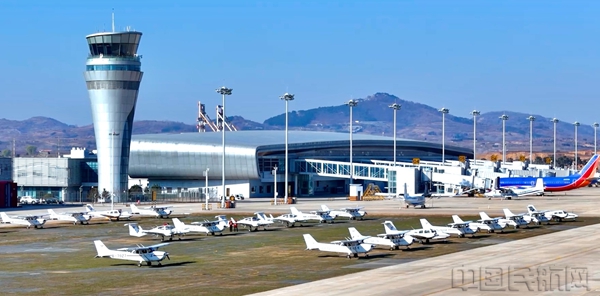
山东日照机场:“硬支撑、优服务、强业态”三向发力 持续深化“三融合”发展模式
Zhong Guo Min Hang Wang· 2025-09-19 05:48
Core Viewpoint - Shandong Province's Rizhao Airport is enhancing its low-altitude economy through a "three-integration" development model, focusing on hardware strength, service optimization, and advanced business cultivation, leading to a significant increase in general aviation flight volumes and contributing to the growth of the low-altitude economy [1][5]. Infrastructure Development - Rizhao Airport emphasizes the importance of infrastructure in supporting low-altitude economic development by building dedicated facilities such as general aviation aprons, hangars, and maintenance facilities, while also accelerating the construction of remote control towers and low-altitude flight service centers [2]. - The airport has achieved full coverage of ADS-B monitoring signals for low-altitude airspace management and provides efficient infrastructure support for general aviation enterprises through platforms like the Feiyiguan APP [2]. - In 2025, the airport accounted for nearly half of the province's general aviation flight operations, with flight hours reaching approximately 15,000 in the first half of the year, maintaining a steady operational trend [2]. Service Optimization - Rizhao Airport adopts a high-quality development approach, implementing flexible flight schedules and transparent cost structures to enhance operational efficiency and alleviate concerns for aviation enterprises [3]. - The establishment of a General Aviation Committee and a rapid response mechanism for on-site service aims to improve service processes and address operational needs effectively [3]. - The airport collaborates with the Shandong Low Altitude Economy Association to develop supportive policies for the low-altitude economy, enhancing service levels and operational capabilities [3]. Ecosystem Development - The airport is creating a favorable ecosystem for low-altitude economic development by scientifically managing airspace resources and establishing a clear and standardized operating environment for general aviation activities [4]. - The implementation of a "five unification" operational management system and close cooperation with aviation enterprises contribute to a stable and efficient operational environment [4]. - Rizhao Airport is exploring new applications in low-altitude logistics, sightseeing, short-distance transport, and educational aviation, continuously expanding the general aviation industry chain and low-altitude economic activities [4]. Future Outlook - Moving forward, Rizhao Airport aims to leverage strategic opportunities in low-altitude economic development, further solidifying its advantages and promoting the "three-integration" model to contribute to the high-quality development of the national low-altitude economy [5].
低空物流解锁新场景 助力农产品打通出村“最初一公里”
Yang Guang Wang· 2025-09-07 01:16
Core Insights - The article highlights the rapid development of low-altitude logistics in China, which is significantly enhancing the distribution of agricultural products and improving the efficiency of logistics systems [1] Group 1: Low-Altitude Logistics Development - Low-altitude logistics is unlocking new scenarios for agricultural distribution, particularly aiding in the initial delivery from rural areas [1] - A new logistics model combining "drones + high-speed rail" has been introduced in Jiangxi Province, facilitating the transportation of agricultural goods across the country [1] - Farmers are experiencing increased sales and efficiency due to the reduced delivery times enabled by low-altitude logistics [1] Group 2: Industry Perspectives - The logistics sector is focusing on specific scenarios characterized by urgency, difficulty, risk, and high costs, indicating a shift towards more specialized logistics solutions [1] - The future logistics system is expected to evolve beyond ground transportation to a more integrated "three-dimensional transportation network" that includes both air and ground logistics [2]

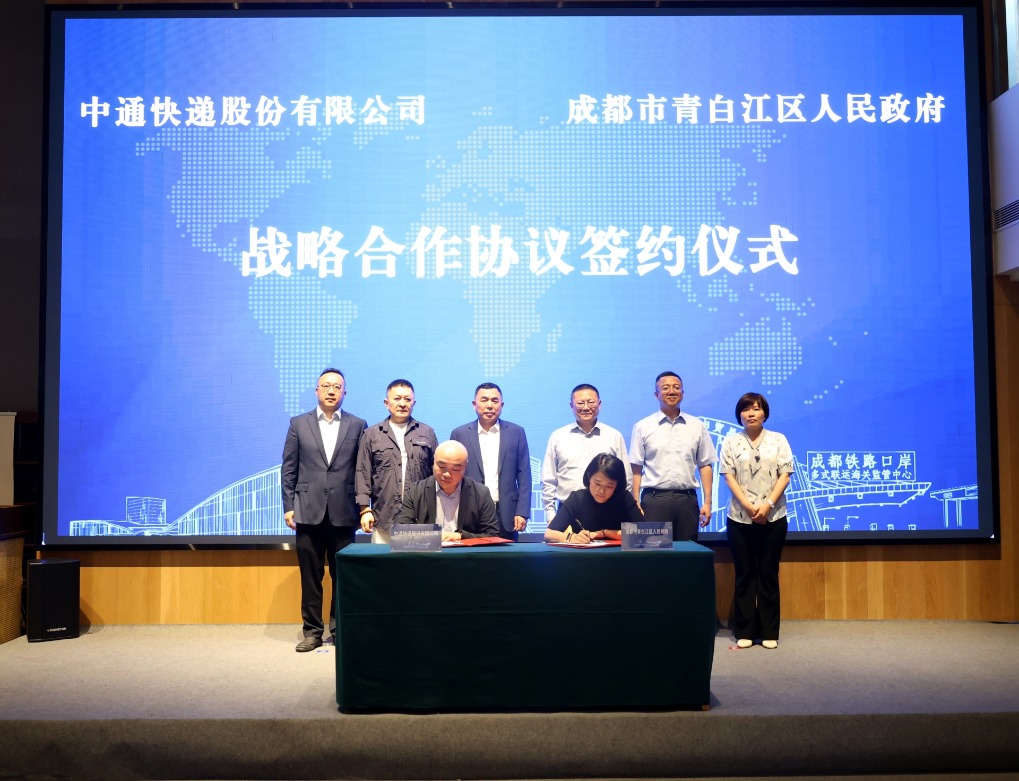
中通快递与成都青白江区共建低空物流枢纽 智慧科技赋能现代物流多式联运升级
Mei Ri Jing Ji Xin Wen· 2025-09-02 15:24
Core Insights - Chengdu Qingbaijiang District and ZTO Express Group signed a strategic cooperation agreement focusing on low-altitude logistics, logistics innovation, and smart logistics to create a multi-modal smart logistics ecosystem [2][3] - The project leverages Qingbaijiang's advantages as an international railway hub and ZTO's expertise in smart logistics and unmanned delivery technology, aiming to enhance the digital and intelligent upgrade of the regional supply chain [2][3] Company Developments - ZTO Express is expanding its investment in Chengdu, utilizing Qingbaijiang's logistics infrastructure and ZTO's industry experience to develop a comprehensive logistics hub headquarters, China-Europe Railway Express hub warehouse, and an intelligent delivery network [3] - The project will also explore integrated logistics systems, including "railway + drone" and "low-altitude + cold chain" delivery models, aiming to create a modern logistics industry function system that integrates intercity distribution and smart transportation [3] Industry Context - Qingbaijiang District is recognized as a national economic and technological development zone and a starting point for the China-Europe Railway Express (Chengdu), with a strong foundation in manufacturing and mature logistics and equipment manufacturing clusters [2] - The collaboration is part of Qingbaijiang's efforts to integrate into the Belt and Road Initiative and build an international supply chain ecosystem, while ZTO aims to enhance its national network and service capabilities [3]