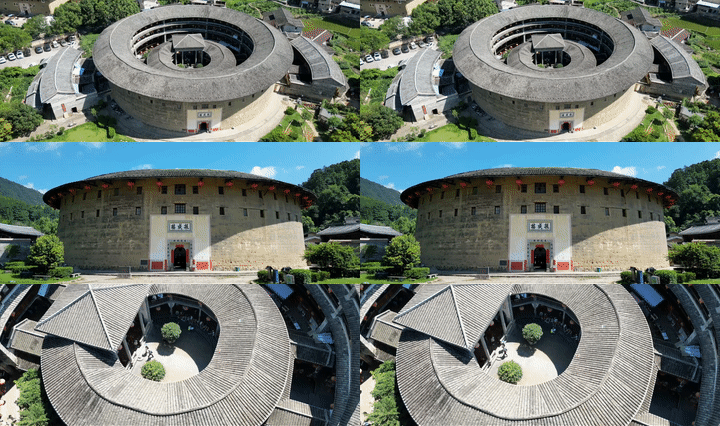
福建土楼

Search documents
方圆之间 蔚为大观(文化中国行·华夏博物之旅·传统建筑)
Ren Min Ri Bao· 2025-12-31 23:51
Core Viewpoint - The Fujian Tulou showcases the wisdom of harmonious coexistence between humans and nature through its unique architectural design and construction traditions, reflecting the profound cultural heritage of Chinese civilization [1]. Group 1: Architectural Features - Fujian Tulou is primarily constructed using local materials, featuring rammed earth walls and wooden frameworks, designed in square and circular shapes, with living spaces arranged around a central courtyard [1]. - The oldest recorded Tulou, the Yide Lou, dates back to the Ming Dynasty, emphasizing the traditional communal living and defensive functions of these structures [2]. - Coastal Tulou are built with granite stone bases to enhance weather resistance, while mountainous Tulou utilize river stones for their foundations, adapting to local environmental conditions [3][4]. Group 2: Types of Tulou - Tulou can be categorized into Minnan Tulou and Hakka Tulou based on user demographics and spatial types, with Minnan Tulou featuring independent entrances and courtyards, while Hakka Tulou typically have interconnected layouts [5]. - The shapes of Tulou include square, circular, and special forms, with square Tulou often having multiple stories and circular Tulou ranging from 30 to 95 meters in diameter [6][7]. Group 3: Construction Techniques - The construction process of Tulou involves meticulous steps such as site selection, foundation building, and layering of rammed earth walls, incorporating bamboo or wood for stability [10]. - Innovative design elements, such as the "soft" structural features of wooden frameworks, allow Tulou to withstand seismic activity, demonstrating a blend of traditional craftsmanship and modern engineering principles [10]. Group 4: Cultural Significance - Tulou is celebrated not only for its unique appearance but also for its rich cultural connotations, with decorative arts like gray sculpture, stonework, and wood carving reflecting the aspirations of the inhabitants [11]. - Recent revitalization efforts, supported by local governments and designers, have enhanced the living conditions within Tulou while preserving their historical aesthetics, leading to recognition in various design awards [11]. Group 5: Technological Integration - Advances in technology, such as 3D scanning and digital twin techniques, are being utilized to analyze and preserve the traditional construction methods of Tulou, facilitating the global dissemination of Tulou architectural culture [11]. Group 6: Overall Impact - The Fujian Tulou represents a unique architectural narrative rooted in the land and life, continuously inspiring and resonating with people [12].
福建土楼展现人与自然和谐共生的营造智慧 方圆之间 蔚为大观(文化中国行·华夏博物之旅·传统建筑)
Ren Min Ri Bao· 2025-12-31 22:14
Core Viewpoint - Fujian Tulou, a unique architectural form, showcases the wisdom of construction rooted in local culture and environment, emphasizing communal living and defense mechanisms [1][9][12]. Group 1: Architectural Characteristics - Fujian Tulou is primarily constructed using local materials, featuring rammed earth walls and wooden frameworks, designed in square and circular shapes [1][9]. - The oldest recorded Tulou, Yide Lou, dates back to the Ming Dynasty, highlighting the historical significance of these structures [2]. - Coastal Tulou are built with granite for enhanced weather resistance, while mountainous Tulou utilize river stones, reflecting adaptation to geographical conditions [3][4]. Group 2: Types and Layouts - Tulou can be categorized into Minnan and Hakka styles, with distinct layouts: Minnan Tulou often have independent entrances, while Hakka Tulou feature interconnected corridors [5]. - The floor plans of Tulou include square, circular, and special shapes, with square Tulou typically having three to five stories and circular Tulou ranging from 30 to 95 meters in diameter [6][7]. Group 3: Construction Techniques - The construction process of Tulou involves meticulous steps, including site selection, foundation building, and layering of earth walls, integrating bamboo or wood for stability [9][10]. - Innovative designs, such as the anti-seismic features of Yuchang Lou, demonstrate the adaptability of Tulou to local environmental challenges [10]. Group 4: Cultural Significance - Tulou are celebrated not only for their architectural beauty but also for their cultural richness, incorporating decorative arts like gray sculpture and wood carving that reflect community values and aspirations [9][10]. - Recent renovations, such as the transformation of Changrong Lou, have enhanced living conditions while preserving the original aesthetic, garnering multiple design awards [11]. Group 5: Modern Relevance - With the push for rural revitalization in China, Tulou are gaining renewed attention from local governments and designers, ensuring their cultural heritage is preserved and celebrated [10][12].
生土为墨 岁月为笺——福建土楼文脉永续
Xin Hua She· 2025-11-22 06:14
Core Viewpoint - The article highlights the historical and architectural significance of Fujian Tulou, emphasizing its unique construction techniques and cultural heritage, while also addressing the challenges of preservation in the modern era [1][5][6]. Group 1: Historical and Architectural Significance - Fujian Tulou represents a unique form of earthen architecture that has evolved from the Song and Yuan dynasties to its peak during the Ming, Qing, and Republic periods, showcasing a rich cultural history [1]. - The construction of Tulou incorporates traditional Chinese "Feng Shui" principles, designed for communal living and defense, reflecting a harmonious relationship between human ingenuity and the natural environment [1][3]. Group 2: Construction Techniques - The walls of Tulou are impressively thick, ranging from over one meter to two or three meters, demonstrating resilience against natural disasters such as earthquakes and typhoons [3]. - The construction process involves manual labor using wooden "pounding tools," where craftsmen work in unison to compact the earth, illustrating a blend of strength and artistry in the building technique [4]. Group 3: Preservation Challenges and Innovations - Some Tulou have suffered from damage over time, such as cracking and leaking, prompting local authorities to focus on preservation efforts [5]. - Digital monitoring technologies have been introduced to aid in the preservation of Tulou, allowing for real-time tracking of environmental conditions and the establishment of "health records" for these structures [5]. Group 4: Cultural and Tourism Development - The Hakka Tulou in Yongding is a significant part of Fujian Tulou, with diverse architectural styles that exemplify the harmony between humans and nature [6]. - The successful application for UNESCO World Heritage status has significantly increased the visibility of Fujian Tulou, transforming it from a secluded family stronghold into a globally recognized tourist destination [6].


总书记关心的世界文化遗产|围楼烟火守光阴
Xin Hua She· 2025-11-18 01:42
Group 1 - The core viewpoint of the article highlights the significance of Fujian Tulou as a unique architectural achievement and a cultural symbol of the Chinese nation, recognized as a World Heritage site since July 2008 [1][4][7] - Fujian Tulou is primarily located in Longyan Yongding, Zhangzhou Nanjing, and Hu'an, with a historical context of disputes over its naming rights, ultimately resolved by then-Fujian Governor Xi Jinping [2][3] - A total of 46 Fujian Tulou structures were successfully included in the World Heritage List after a value assessment process [4] Group 2 - Xi Jinping emphasized the need for comprehensive and systematic protection of cultural and natural heritage to enhance preservation capabilities and safeguard cultural treasures [6] - Fujian Tulou serves as a testament to the hardworking and resilient spirit of the Chinese people, representing not just a shelter but also a unique cultural identity [5][7]