
移动式空调

Search documents
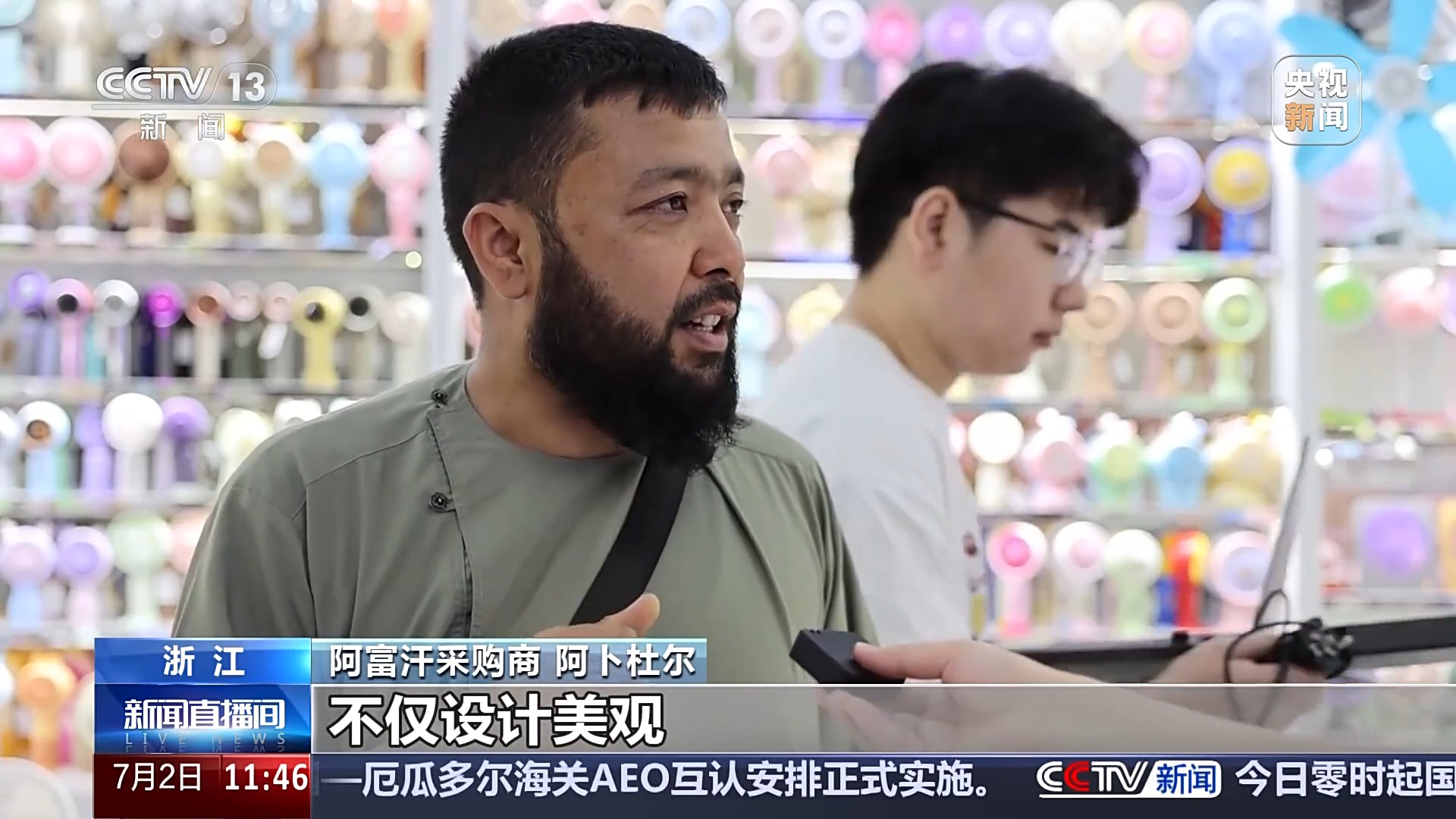
从实用功能到创意巧思 中国“清凉”小商品撬动全球大生意
Yang Shi Xin Wen· 2025-07-02 06:27
Core Insights - The demand for cooling products is surging globally due to rising temperatures, with items like fan hats and pet cooling mats gaining popularity among overseas customers [1][3][5] Group 1: Market Trends - Various innovative cooling products are attracting foreign buyers, particularly in Yiwu International Trade City, where solar-powered fan hats and multifunctional umbrellas are in high demand [1][3] - The portable cooling devices, including small fans and mobile air conditioners, have seen a significant sales increase, with a reported 77% year-on-year growth in the last 30 days [9] - The export of Chinese refrigeration appliances is on the rise, with household air conditioners reaching $9.45 billion, a 17.8% increase year-on-year, and fans at $5.65 billion, up 7.1% [21] Group 2: Product Innovations - Companies are adapting to market needs by customizing products, such as larger umbrellas to accommodate more people and pet cooling mats that effectively dissipate heat [5][13] - The introduction of innovative materials, like cooling silk fabric, has led to substantial growth for manufacturers, with annual increases of over 25% reported [26] - The development of fourth-generation refrigerants, which have a low global warming potential, is gaining traction, with European orders increasing by 50% [28] Group 3: Global Reach - Chinese cooling products are being exported to various regions, including Africa and South America, with companies like Henan Kangbain Electric Co. shipping large refrigerators to Ghana [13][17] - The market for portable air conditioners is expanding, with orders growing by 10% year-on-year and products being sold in over 150 countries [17] - The global market for cooling solutions is increasingly competitive, with Chinese companies focusing on innovation and sustainability to meet diverse consumer needs [30]

中国空调泰国夺第一!新基地又投产,是谁
Jin Tou Wang· 2025-06-03 03:55
Core Insights - The Chinese air conditioning industry is experiencing intense competition domestically, while its presence in overseas markets remains relatively subdued. The successful trial production of the first air conditioner at Haier's Thailand Chonburi Air Conditioning Industrial Park marks a significant milestone for Haier and the Chinese air conditioning sector's rise in international markets [1][2]. Group 1 - Haier has been operating in Thailand since 2002, focusing on user needs and developing innovative products tailored to local climate and lifestyle, such as powerful cooling and efficient dehumidification features [1]. - The Chonburi Air Conditioning Industrial Park, covering an area of 324,000 square meters, is expected to have an annual production capacity of 6 million units, including a full range of products like window units, split air conditioners, RV air conditioners, portable air conditioners, and dehumidifiers, targeting markets in North America, Europe, Southeast Asia, and Japan [1]. - The project team achieved the goal of "construction in the same year, production in the same year, seizing order windows, and reaching production capacity in the same year," completing the entire process from foundation to the first product rollout in just nine months [2]. Group 2 - The first trial-produced air conditioner reflects Haier's response to market demands and incorporates local design optimizations for ease of installation and durability, suitable for the complex climate and architectural characteristics of Southeast Asia [2]. - The successful trial production of the air conditioner symbolizes the broader trend of Chinese brands expanding internationally and exemplifies Haier's commitment to deepening its market presence in Thailand and seizing global market opportunities [2]. - With the full production launch of the Chonburi Air Conditioning Industrial Park, Haier is poised to initiate a new wave of growth in the Southeast Asian market, providing intelligent and energy-efficient solutions while continuing to lead industry development trends [2].
