移动补电车

Search documents
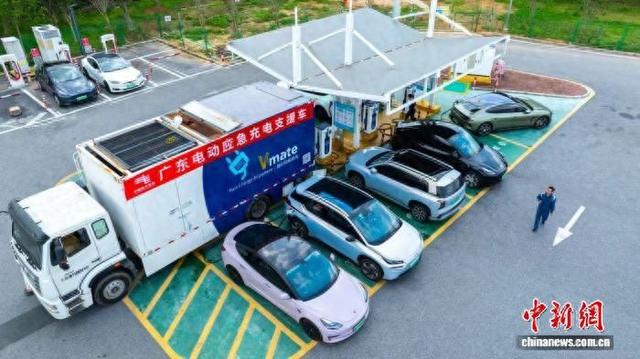
(新春走基层)南方电网新建充电站118座迎“春运”大考
Xin Lang Cai Jing· 2026-02-15 13:49
Core Insights - The demand for electric vehicle charging surged during the Spring Festival holiday, prompting the company to enhance its charging network by adding 118 new charging stations and 708 charging piles in key areas [1][3]. Group 1: Charging Infrastructure Development - The company deployed mobile charging vehicles at highway service areas to ensure charging availability during the Spring Festival travel peak [3]. - A total of 0.68 billion kWh of charging is expected across the network from February 15 to 23, with peak charging days on February 15, February 21, and February 22, averaging about 8.6 million kWh per day [3][4]. - The company focused on operational readiness by accelerating the commissioning of charging facilities in the Guangdong-Hong Kong-Macao Greater Bay Area and other user hotspots [3]. Group 2: Safety and Maintenance Measures - The company conducted safety inspections at 2,225 charging stations on highways and national/provincial roads to ensure operational safety and address potential hazards [3]. - Over 16,000 personnel were assigned to provide on-site maintenance and service at 1,105 charging stations during the holiday period [4]. - The company utilized digital tools to enhance equipment maintenance efficiency, ensuring that charging services remained orderly and high-quality [4].

2025“两会”中的新能源
高工锂电· 2025-03-09 10:29
Core Viewpoint - The article discusses various proposals presented during the 2025 Two Sessions, focusing on the development of the lithium battery, electric vehicle, and low-altitude economy sectors, highlighting the government's commitment to advancing new energy technologies and industries [1]. Lithium Battery Industry Chain - The Chinese lithium battery industry has reached a strong global scale, with leading companies established in the upstream sectors of new energy vehicles, power batteries, and materials [1]. - The government aims for annual production of new energy vehicles to exceed 13 million units by 2024, indicating robust growth in the sector [1]. New Energy Storage - Suggestions from industry leaders include improving market participation mechanisms for new energy storage, such as widening peak-valley price differences and enhancing auxiliary service trading varieties [3][4]. - A call for establishing a regular safety inspection system for new energy storage was made to ensure high-quality development [3]. Innovation Ecosystem - Concerns about "patent weaponization" harming the innovation ecosystem were raised, with recommendations for industry self-regulation and stricter controls on malicious patent litigation [6][7]. - The importance of zero-carbon park construction was emphasized, with suggestions for developing comprehensive work plans and increasing financial support for green technology [8]. New Energy Vehicle Development - Proposals to enhance mobile charging vehicles and improve logistics for lithium batteries were presented, addressing challenges in charging infrastructure and supply chain security [10][11]. - Recommendations for a comprehensive recycling system for power batteries were made to promote sustainable practices within the industry [12]. Low-altitude Economy - The establishment of a management system for eVTOL (electric Vertical Take-Off and Landing) pilot qualifications was suggested to support the development of urban air mobility [44]. - Proposals for creating low-altitude economic demonstration zones in the Guangdong-Hong Kong-Macao Greater Bay Area were made to enhance policy coordination and promote industry growth [45]. Financial Support for Expansion - Calls for improved financial services to support companies expanding internationally were highlighted, emphasizing the need for innovative cross-border financial products [16]. - Recommendations for enhancing the security of the energy metal supply chain through the establishment of warehouses for metal trading in China were also made [16]. Environmental Management - Suggestions for improving the ecological environment zoning control system were presented, focusing on the need for comprehensive legislation and technical standards [19]. Electric Vehicle Infrastructure - Proposals to accelerate the development of battery swapping systems and improve related policies were made to enhance the efficiency of electric vehicle charging [21][22]. - The importance of integrating carbon trading management into the electric vehicle sector was emphasized to support the transition to greener technologies [36][39].