
充电站

Search documents
比亚迪王传福:要在不到一年时间里,把充电站数量做到中国车企第一
Guo Ji Jin Rong Bao· 2026-03-06 01:31
Group 1 - The core viewpoint of the article is that BYD aims to establish 20,000 charging stations by the end of this year, positioning itself as the leader among Chinese automotive companies in terms of charging station quantity [1] Group 2 - BYD's Chairman and President, Wang Chuanfu, announced the ambitious goal during the launch of the second-generation blade battery and fast-charging technology [1]

(新春走基层)南方电网新建充电站118座迎“春运”大考
Xin Lang Cai Jing· 2026-02-15 13:49
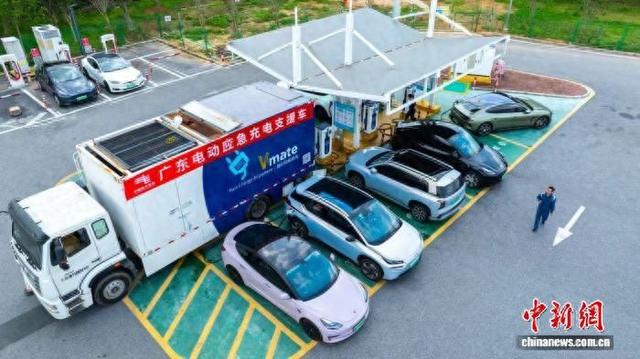
Core Insights - The demand for electric vehicle charging surged during the Spring Festival holiday, prompting the company to enhance its charging network by adding 118 new charging stations and 708 charging piles in key areas [1][3]. Group 1: Charging Infrastructure Development - The company deployed mobile charging vehicles at highway service areas to ensure charging availability during the Spring Festival travel peak [3]. - A total of 0.68 billion kWh of charging is expected across the network from February 15 to 23, with peak charging days on February 15, February 21, and February 22, averaging about 8.6 million kWh per day [3][4]. - The company focused on operational readiness by accelerating the commissioning of charging facilities in the Guangdong-Hong Kong-Macao Greater Bay Area and other user hotspots [3]. Group 2: Safety and Maintenance Measures - The company conducted safety inspections at 2,225 charging stations on highways and national/provincial roads to ensure operational safety and address potential hazards [3]. - Over 16,000 personnel were assigned to provide on-site maintenance and service at 1,105 charging stations during the holiday period [4]. - The company utilized digital tools to enhance equipment maintenance efficiency, ensuring that charging services remained orderly and high-quality [4].

雅博股份2026年2月9日涨停分析:金属屋面+新能源布局+国资背景
Xin Lang Cai Jing· 2026-02-09 02:05
Group 1 - The core viewpoint of the news is that Yabo Co., Ltd. (SZ002323) experienced a significant stock price increase, reaching a limit up of 10.11% to 1.95 yuan, with a total market capitalization of 4.157 billion yuan and a trading volume of 205 million yuan [1][2]. Group 2 - The reasons for the stock price surge include Yabo's leading technology in the metal roofing sector, with its engineering business accounting for 21.32% of total operations by Q3 2025, indicating strong competitive advantages that attract market attention [2]. - The company is actively expanding into the renewable energy sector, particularly in BIPV, energy storage, and charging stations, with its photovoltaic business representing 61.17% of total operations by Q3 2025, aligning with national support for the renewable energy industry [2]. - Yabo's annual report for 2025 shows a reduction in losses, with net profit attributable to shareholders ranging from -190 million to -140 million yuan, suggesting improvements in operational conditions and positive market expectations [2].

绿色能源点亮返乡路
Xin Lang Cai Jing· 2026-01-24 22:39
Core Viewpoint - The article highlights the transformation in Shilian Town, Meitan County, Zunyi City, driven by the integration of green energy solutions, particularly solar power and electric vehicle charging stations, which are attracting more visitors and enhancing local businesses [1] Group 1: Green Energy Integration - The hotel owner, Feng Ji, has installed over 300 square meters of solar panels on the hotel roof, generating electricity that supports both the hotel operations and a nearby charging station [1] - The charging station, built by Guizhou Electric Power Company, serves as a crucial facility for travelers, alleviating concerns about electric vehicle charging during their journeys [1] Group 2: Economic Impact - The presence of the charging station has become a unique selling point for the hotel, attracting more guests, particularly those driving electric vehicles [1] - Feng Ji reports that his hotel has nearly full bookings, with a noticeable increase in guests using new energy vehicles, indicating a shift in consumer preferences towards sustainable travel options [1]
雅博股份2026年1月23日涨停分析:新能源业务+国资支持+经营改善
Xin Lang Cai Jing· 2026-01-23 05:27
Core Viewpoint - Yabo Co., Ltd. (SZ002323) experienced a limit-up on January 23, 2026, reaching a price of 1.86 yuan, with a 10.06% increase, and a total market capitalization of 3.945 billion yuan, driven by factors including its focus on the new energy sector, support from state-owned assets, and improvements in operational performance [1]. Group 1: New Energy Business - The company is actively expanding into the new energy sector, including EPC, BIPV, and energy storage businesses, aligning with national policy directions, with its photovoltaic business accounting for 61.17% of total operations [1]. - Yabo Co., Ltd. possesses leading technology in complex roof structure design and BIM construction, enabling it to undertake high-difficulty landmark projects, which supports its business development [1]. Group 2: State-Owned Support - The actual controller of the company is the Zaozhuang State-owned Assets Supervision and Administration Commission, which enhances the company's creditworthiness and resource acquisition capabilities, providing support for its development [1]. Group 3: Operational Improvement - In the third quarter of 2025, the company's net cash flow from operating activities improved by 96.14% year-on-year, and its revenue for the first three quarters of 2025 increased by 11.49% year-on-year, with significant reductions in sales, management, and R&D expenses, indicating positive operational changes [1]. - Recent market interest in the new energy concept has led to active performance from other stocks in the same sector, creating a certain degree of sectoral linkage effect [1]. Group 4: Market Dynamics - There may have been capital inflows on the day of the limit-up, contributing to the stock price surge, and further technical analysis is needed to assess the situation, although the company's operational improvements may attract attention to its future development potential [1].
奥特迅:部分站点属于充电网络建设长远布局,具有战略意义
Jin Rong Jie· 2025-11-27 15:17
Group 1 - The company responded to investor concerns regarding the low usage of charging stations in Xiong'an and Ulanqab, emphasizing that various factors such as location, traffic flow, external environment, service fees, surrounding facilities, and charging experience affect the operational effectiveness of different stations [1] - Some charging stations, particularly those in extreme cold locations or strategically planned, are part of the company's long-term network construction strategy, highlighting their specific strategic significance and value [1] - The company expressed appreciation for investor attention to operational details and committed to improving the management and operation of these less-utilized charging stations in the future [1]

不投AI投电站:VC正在调转枪口
Hu Xiu· 2025-10-14 08:06
Core Insights - The article discusses a shift in investment focus from AI and technology to tangible assets in the infrastructure sector, particularly in renewable energy and nuclear power projects [2][3][4]. Group 1: Investment Trends - Investors are increasingly turning to infrastructure assets, with a notable interest in renewable energy sources such as solar and charging stations [2][4]. - The market for infrastructure investments is becoming more active, with diverse participants including state-owned enterprises, private equity firms, and insurance capital [6][10]. - Major private equity firms like KKR and Blackstone are raising record amounts for infrastructure funds, indicating a growing recognition of these assets [7][19][20]. Group 2: Market Dynamics - There is a significant funding gap in global infrastructure, projected to reach $57-67 trillion by 2030, creating ample investment opportunities [22]. - The demand for infrastructure investments is driven by trends in digitalization, green energy, and the need for stable cash flows amid economic uncertainty [8][30]. - The focus of capital is primarily on data centers and renewable energy assets, which are seen as strategic investment areas [24][28]. Group 3: Challenges and Considerations - Infrastructure investments require substantial capital and long-term commitment, often conflicting with the typical investment horizons of private equity firms [34][37]. - The need for strong government relationships and policy understanding is critical for private equity firms to successfully navigate the infrastructure landscape [35]. - Innovative solutions, such as partnerships with long-term capital providers and structured products, are being explored to address the challenges of investing in infrastructure [38][39].
有投资人转型去投核电站了
投中网· 2025-10-14 06:29
Core Viewpoint - The shift in investment focus from AI to tangible assets like infrastructure indicates a growing belief that physical assets are more reliable than equity, as expressed by investors transitioning to sectors like renewable energy and nuclear power [3][4][6]. Group 1: Market Dynamics - The market for infrastructure investments is becoming more active with diverse participants, including state-owned enterprises, local governments, and private equity firms, all increasing their involvement [5][10]. - Fund sizes for infrastructure investments are significantly rising, with major global asset managers like Blackstone and KKR raising record amounts for their funds, indicating a strong demand for infrastructure assets [6][13]. Group 2: Investment Trends - There is a notable increase in interest in infrastructure funds since 2024, with more institutions exploring how to incorporate these "alternative assets" into their portfolios to mitigate market uncertainties [8][9]. - The primary focus of capital is shifting towards data centers and renewable energy assets, such as nuclear power plants and solar stations, driven by the surge in AI and the need for sustainable energy solutions [16][17]. Group 3: Institutional Participation - Local state-owned platforms remain key players in infrastructure investments, leveraging their long-standing resources and experience in the sector [10]. - Industry capital is also making significant contributions, with large funds being established for nuclear energy and other infrastructure projects, reflecting a collaborative approach among various stakeholders [11][12]. Group 4: Challenges and Opportunities - Infrastructure investment is capital-intensive, requiring substantial funding and long-term commitment, which poses challenges for traditional VC/PE firms that typically seek high-growth opportunities [22][24]. - The growing demand for infrastructure investment is underscored by a projected global funding gap of $57-67 trillion by 2030, highlighting the vast opportunities available in this sector [15][16].

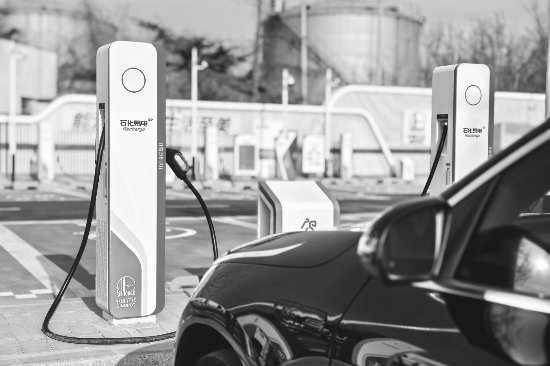
中国石化北京石油小武基充电站 本报记者 刘杨 摄
Zhong Guo Zheng Quan Bao - Zhong Zheng Wang· 2025-10-14 05:24
Core Insights - The article discusses significant financial metrics and trends relevant to the industry, highlighting key performance indicators and their implications for investment opportunities. Group 1 - The company reported a revenue of 41.9 billion, indicating a substantial growth compared to previous periods [1] - The financial performance reflects a trend of increasing profitability, which may attract potential investors [1] - The analysis suggests that the company's market position is strengthening, supported by favorable economic conditions [1]

返程高峰,高速拥堵情况最新预测!
Zhong Guo Ji Jin Bao· 2025-10-05 13:02
Core Insights - The article highlights the surge in tourist activity during the National Day and Mid-Autumn Festival holiday, with popular destinations like West Lake in Hangzhou, The Bund in Shanghai, and the Big Wild Goose Pagoda in Xi'an attracting large crowds [14] - A significant return travel peak is anticipated on October 5th and 6th, with heavy traffic expected in major urban areas such as the Yangtze River Delta, Pearl River Delta, and Beijing-Tianjin-Hebei regions [14] Traffic Trends - The predicted traffic volume on highways during the holiday peak is expected to reach 70 million vehicles, with 14 million of those being electric vehicles [14] - The busiest travel times are forecasted for October 5th and 6th between 3 PM and 7 PM [2][14] Charging Infrastructure - The G45 Daguang Expressway, G4 Jinggang'ao Expressway, and G15 Shenhai Expressway have the highest number of charging stations in the country [14] - Major cities with the most public charging stations include Shanghai, Beijing, Chongqing, Shenzhen, and Suzhou [14] - The peak demand for charging stations occurs between 11 AM and 2 PM, with the busiest hour being from 12 PM to 1 PM [14]
