
稀土及关键矿产

Search documents
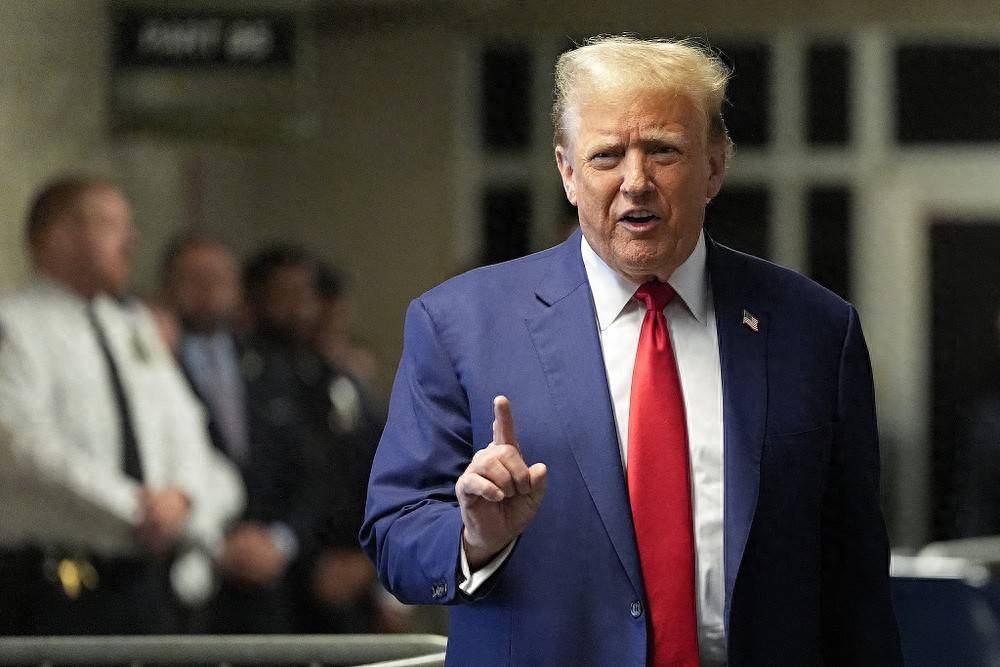
中国算总账,特朗普禁令颁布,不许7国买俄石油,全面收割已开始
Sou Hu Cai Jing· 2026-01-10 10:48
Core Viewpoint - The article discusses the recent legislative actions taken by the Trump administration aimed at prohibiting seven major countries, including China, India, and Brazil, from purchasing Russian oil, with severe sanctions and tariffs as consequences for non-compliance [1][3]. Group 1: Legislative Actions and Intentions - The new legislation is a significant escalation in the U.S.-Russia geopolitical conflict, aiming to cut off funding to Russia's military operations [3]. - The underlying strategy is not merely to sanction Russia but to exert control over global energy markets, similar to the U.S. approach towards Venezuela [5][19]. - The U.S. aims to monopolize the energy supply by pushing out Russian oil and filling the resulting market gap with American oil [22][23]. Group 2: Historical Context and Strategy - The U.S. has previously implemented a five-step strategy to control Venezuela's oil resources, which includes cutting off external connections, monopolizing extraction, depriving sales rights, controlling funds, and enforcing forced repatriation of revenues [7][11][15][17]. - This strategy is now being adapted to apply pressure on the seven targeted countries, aiming to create a similar dependency on U.S. energy [19][26]. Group 3: Global Energy Market Dynamics - Russia's oil exports are heavily reliant on these seven countries, with China and India accounting for nearly 90% of its oil exports [19]. - The U.S. seeks to disrupt this trade flow, not just to weaken Russia but to secure a larger share of the global energy market for itself [22][23][26]. - The potential rise in oil prices due to disrupted Russian oil supplies could have detrimental effects on Western economies already facing inflation [32]. Group 4: China's Position and Response - China, as the largest energy importer, holds significant bargaining power and could counteract U.S. efforts by continuing to engage in energy trade with Russia and other suppliers [30][34]. - The article emphasizes that China's market position and industrial capabilities provide it with leverage against U.S. sanctions, particularly in critical resource sectors like rare earth elements [38][40]. - The geopolitical landscape is shifting, with the potential for a more multipolar energy market, challenging U.S. dominance [50][52].

对抗中国?有人回过味儿了:为啥是澳大利亚出钱,更何况还干不过…
Guan Cha Zhe Wang· 2025-10-24 09:05
Core Points - The United States and Australia signed an $8.5 billion critical minerals agreement aimed at countering China's dominance in the rare earth and critical minerals supply chain [1][4] - The agreement includes a commitment from both governments to invest $1 billion each over the next six months for mining and processing, along with setting a price floor for critical minerals [4] - Analysts express skepticism about Australia's ability to compete with China's established rare earth industry due to high energy and labor costs, which are nearly five times higher than in Asia [1][5] Group 1 - The agreement is seen as a strategic move by the U.S. to build an alternative supply chain for rare earths and critical minerals, raising questions about the use of Australian taxpayer money to address issues faced by other countries [1][2] - Following the agreement, stock prices of some Australian mining companies surged, but smaller firms still struggle to secure financing due to investor concerns about competition with China's robust rare earth sector [2][5] - Experts highlight that while Australia has significant rare earth reserves, its production infrastructure is underdeveloped, making processing expensive and talent less available compared to China [5][6] Group 2 - Geopolitical analysts warn that China could retaliate against Australia, potentially impacting trade relations, as China is Australia's largest trading partner, accounting for nearly one-third of its exports [7] - The pricing of critical minerals is identified as a crucial issue, with concerns that China will not allow the U.S. and Australia to disrupt its current market position [8] - The timeline for establishing a secure and independent supply chain is estimated to take 10 to 20 years, with some experts suggesting that even with full support from allies, it would take at least five years to catch up to China [6][8]
US-Australia sign rare earths partnership to counter China’s dominance
Invezz· 2025-10-21 15:30
Core Viewpoint - The United States and Australia have established a new agreement to enhance the supply of rare earths and critical minerals, addressing concerns over China's market dominance [1] Group 1: Agreement Details - The agreement aims to strengthen the supply chain for rare earths and other essential minerals [1] - This initiative is part of broader efforts by the Trump administration to secure strategic access to these materials [1] Group 2: Strategic Importance - Rare earths and critical minerals are crucial for defense applications, highlighting their strategic importance [1]