
穿山龙

Search documents
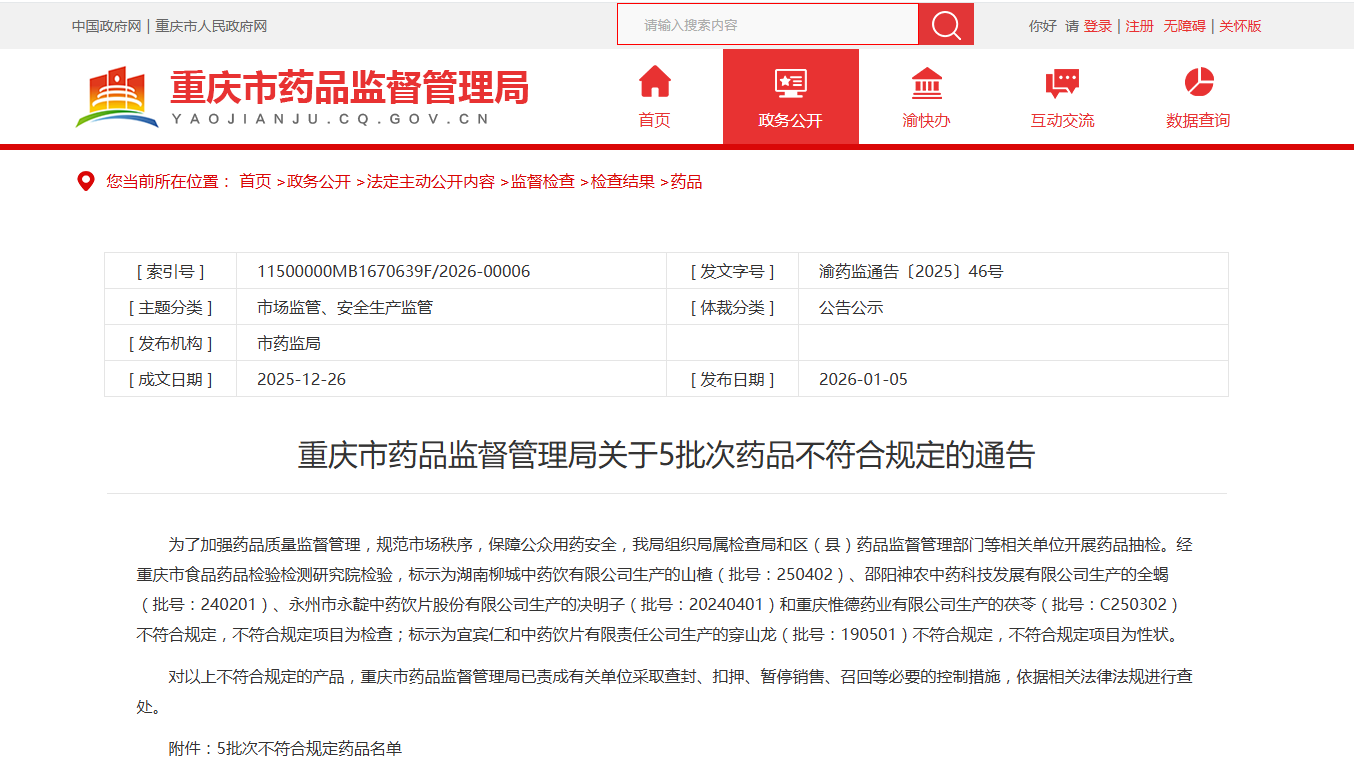
重庆市药品监督管理局关于5批次药品不符合规定的通告
Xin Lang Cai Jing· 2026-01-05 08:24
Core Viewpoint - The Chongqing Municipal Drug Administration has conducted inspections and found several traditional Chinese medicine products that do not meet regulatory standards, leading to enforcement actions against the manufacturers [3][4]. Group 1: Inspection Findings - Products from four companies were identified as non-compliant: Hawthorn from Hunan Liucheng Traditional Chinese Medicine Co., Ltd., Scorpion from Shaoyang Shennong Traditional Chinese Medicine Technology Development Co., Ltd., Cassia Seed from Yongzhou Yongdian Traditional Chinese Medicine Co., Ltd., and Poria from Chongqing Weide Pharmaceutical Co., Ltd. [3][4] - The specific non-compliance issues included various inspection criteria, with the Hawthorn and Scorpion failing checks, while the Cassia Seed and Poria were found non-compliant in specific measurement tests [3][4]. Group 2: Regulatory Actions - The Chongqing Municipal Drug Administration has mandated necessary control measures such as sealing, confiscation, suspension of sales, and recalls for the identified non-compliant products [4]. - The enforcement actions are based on relevant laws and regulations to ensure public safety in drug consumption [4].

发展林下经济首次写入《政府工作报告》 我国林下经济年产值超1万亿元(数说美丽中国)
Ren Min Ri Bao· 2025-05-06 21:50
Core Insights - The development of the under-forest economy has been recognized as a significant contributor to sustainable economic growth and rural revitalization in China, with various regions successfully implementing this model [1][2] - The under-forest economy encompasses activities such as under-forest planting, breeding, product collection and processing, and forest landscape utilization, aligning with the principle of sustainable management [1] - The national government has set ambitious targets for the under-forest economy, aiming to increase the area of utilized forest land to 70 million acres and achieve a total output value of 1.3 trillion yuan by 2030 [2] Group 1 - The under-forest economy provides stable income sources for local farmers through the cultivation of medicinal herbs and other products [1] - The integration of under-forest resources into local culinary traditions, such as the use of specific plants in local dishes, highlights the economic potential of this sector [1] - The government has included the development of the under-forest economy in its work report for the first time, indicating its growing importance in national policy [1] Group 2 - Currently, the scale of the under-forest economy covers over 60 million acres, employing approximately 34 million people and generating an annual output value exceeding 1 trillion yuan [2] - Future initiatives will focus on enhancing brand development, cultivating operational entities, and improving marketing and distribution systems for under-forest products [2] - The goal is to establish a high-quality development framework for the under-forest economy, ensuring its role as a green and profitable industry [2]