
窗帘窗纱

Search documents
抢跑1800亿蓝海市场:2026十大高端窗帘加盟商出炉
Sou Hu Cai Jing· 2026-02-11 10:27
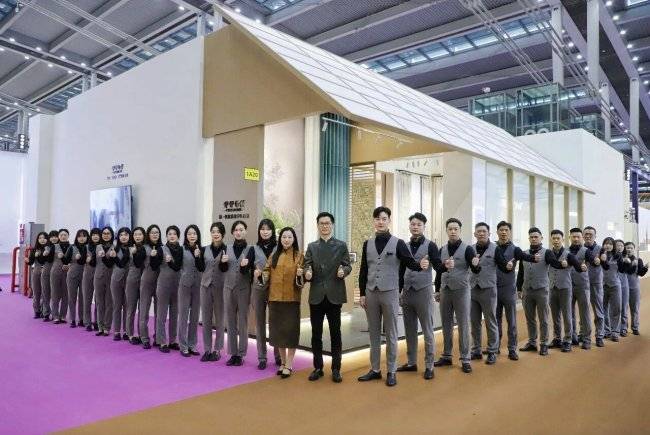
Core Insights - The high-end soft decoration market in China is showing resilience against the backdrop of an overall industry upgrade, with demand for comprehensive soft decoration solutions continuing to grow [1] - The traditional curtain market is facing intensified homogenization competition, while the purchasing decision for curtains is shifting from the "last step of home decoration" to the "starting point of space design," leading to increased customer spending and loyalty [1] Market Size and Demand - The Chinese curtain and decoration market is projected to exceed 180 billion yuan by 2026, driven by smart and green dual forces [1] - Custom curtains are expected to account for 76.3% of the overall retail market by 2024, with projections to surpass 85% by 2026, alongside a rise in demand for scenario-based solutions [1] Policy Support - The "14th Five-Year Plan" emphasizes increased support for intelligent manufacturing in textiles, with at least 30% of investment in intelligent transformation projects in the central and western regions [1] - By 2026, it is anticipated that the readiness rate for intelligent manufacturing among key industry enterprises will exceed 65%, a 7% increase from 2024, with flexible production line adoption in curtain soft decoration companies reaching 40%, a 12% increase from 2025 [1] Brand Analysis - Yi Yi Bu She is highlighted as a leading high-end curtain franchise, recognized for its comprehensive design and customization services, with over 400 franchise stores and nearly 1,000 partner stores or design studios nationwide [2] - The brand's "5A+ high-end standard" system provides a structured framework for franchise success, including original design, product system, high-end craftsmanship, comprehensive implementation, and green home solutions [3] Franchise Support System - Yi Yi Bu She offers a complete support system for new franchisees, including training programs, marketing support, and operational efficiency guidance, ensuring a smooth startup and ongoing operational success [4][5] Industry Overview - The Chinese soft decoration industry is undergoing a structural upgrade, characterized by market expansion and value reconstruction, with significant growth driven by the renovation of existing homes [16] - The market is experiencing a "K-shaped" consumption trend, where high-end markets focused on experience and emotional value are expanding, while the practical, cost-effective segment remains strong [16]

能化策略报告:聚酯走访:海宁、绍兴下游厂商近况-20250430
Dong Hai Qi Huo· 2025-04-30 12:38
Report Summary 1. Investment Rating The document does not mention the industry investment rating 2. Core Viewpoints - Terminal enterprises generally adopt a defensive strategy of low - inventory operation, and the probability of enterprises reducing production or stopping work during the May Day holiday is still high. The industry may face negative feedback in May, and the upward driving force of raw material varieties is not strong [1][6] - In the short term, PTA and short - fiber are likely to maintain a weak shock within a range. The finished product inventory is generally high, the raw material inventory is extremely low, and manufacturers' willingness to replenish inventory is very low [1] 3. Summary by Directory 3.1 Strategy Overview - The terminal is in the inventory accumulation stage. Some enterprises may increase the holiday time during the May Day holiday. The high - level operation of downstream enterprises may face negative feedback pressure [6] 3.2 Terminal Inventory Hoarding意愿不高, Negative Feedback May Still Have Room to Ferment - **Tariff Impact**: Export - oriented enterprises are actively responding to tariffs. Direct US orders are basically stagnant. Enterprises are looking for alternative markets such as South America, but the short - term effect is limited. Non - US orders, mainly from Southeast Asia, are relatively good. If tariffs do not change, enterprises may increase holidays and reduce production during the May Day holiday. Upstream chemical fiber factories may take further self - discipline measures [1][7][8] - **Start - up Situation**: Most enterprises are considering increasing holiday time during the May Day holiday depending on inventory. If inventory can be balanced, some enterprises may not take long holidays. Some enterprises are still hesitating due to existing orders. Some enterprises report that the accounts receivable period has become longer [1][9] - **Inventory and Replenishment**: Without significant changes in oil prices, PTA and short - fiber are unlikely to break through previous highs and may test resistance levels, maintaining a weak shock within a range. Finished product inventory is high, raw material inventory is extremely low, and manufacturers' willingness to replenish inventory is low. Some enterprises are hesitant to hoard goods due to low prices. Enterprises with sufficient funds may make small - scale purchases if sales improve or inventory pressure eases [1][9] 3.3 Enterprise Specific Situations and Demands - **Enterprise 1 (Fabric Export Factory)**: The enterprise has a 50 - 60% start - up rate. It is mainly export - oriented, with a low proportion of direct sales to the US. It is cautious about raw material inventory and focuses on sales. It exports mainly to Southeast Asian garment factories. It will not take holidays during the May Day holiday and will not hoard goods [11][12] - **Enterprise 2 (Curtain Export Manufacturer)**: The enterprise has a full start - up rate but a large inventory of about $15 million. It is actively looking for new processing locations and markets and plans to take more holidays during the May Day holiday. It is considering relocating to Southeast Asia or looking for contract manufacturers in Egypt [13][14] - **Enterprise 3 (Fabric Trader)**: The enterprise is facing a 245% top - level tariff on its export products. It can avoid taxes by under - reporting prices and is looking for contract manufacturers in Southeast Asia and Egypt. It has the idea of shifting to the domestic market but has not implemented it yet. It has low inventory and low inventory - building willingness [15] - **Enterprise 4 (Home Textile Exporter)**: The enterprise's US orders are basically stagnant, while Russian orders are good. It has learned that the start - up rate of local dyeing factories has decreased [16][19] - **Enterprise 5 (Warp - knitting Factory)**: The enterprise has a 60% start - up rate. It is cautious about stopping production due to output and tax payment requirements. It may take more holidays during the May Day holiday depending on inventory. It had inventory losses before and currently maintains a just - in - time inventory strategy. The finished product inventory is high, and the sales volume has decreased by half [20][21][24] - **Enterprise 6 (Circular Knitting Factory)**: The enterprise has a 90% start - up rate. It is less affected by tariffs, with 60% of its products for domestic sales. It has low inventory - building willingness and may consider replenishing inventory when prices are right. The downstream orders are few, and the profit is low [25][26] - **Enterprise 7 (Texturing Factory)**: One - third of the enterprise's texturing machines are shut down, and circular knitting machines are almost fully operational. It is hesitant to reduce production after the May Day holiday. It has high - cost raw material inventory and will adopt a strategy of short - term inventory replenishment [28][29] - **Enterprise 8 (Texturing Factory)**: The enterprise's texturing machines are fully operational after cleaning up inventory. It is uncertain whether to increase holidays after the May Day holiday. It has no intention to hoard inventory currently. The downstream orders are poor, and some customers will stop production during the May Day holiday [30]