笑气

Search documents
Air Liquide (OTCPK:AIQU.F) Update / briefing Transcript
2026-03-31 14:02
Air Liquide Conference Call Summary Company Overview - **Company**: Air Liquide - **Date**: March 31, 2026 - **Focus**: 2025 sustainability performance and future outlook Key Points Industry Context - The sustainability landscape has evolved significantly over the past five years due to geopolitical events and increased focus on energy security and sovereignty [3][4] - Air Liquide's ADVANCE strategic plan, which integrates financial and non-financial performance, is concluding in 2025 [3] Sustainability Performance - **CO2 Emissions**: - Absolute CO2 emissions reduced by 13% compared to 2020, achieving the first objective one year ahead of schedule [5] - Carbon intensity decreased by 46% compared to 2015, surpassing the 2025 target of -30% [6] - **Water Management**: - Water management plans implemented at all 75 priority sites in high water-stressed areas [6] - **Health Care**: - 64% of 2.3 million home patients benefit from personalized care plans [6] - Access Oxygen program expanded to cover 3.5 million people in low and middle-income countries [7] Social Contributions - Achieved a record low accident frequency rate of 0.4 for employees, a 60% reduction in two years [9] - Increased female representation in management roles to 34%, a 4% increase since 2020 [9] - Common Basis of Care program fully deployed, ensuring social coverage for 65,000 employees [10] Climate Transition Plan - **Decarbonization Roadmap**: Built on three strategic levers: 1. **Low Carbon Energy Sourcing**: 40% of power purchased is low carbon, preventing 2.7 million tons of CO2 emissions annually [11][22] 2. **Asset Management**: Improved energy efficiency and electrification of assets, contributing to a 35% reduction in emissions [11] 3. **Carbon Capture and Storage (CCS)**: First CCS project in Europe underway, expected to capture 2.5 million tons of CO2 annually [15][16] Future Outlook - Air Liquide aims to continue its focus on energy efficiencies, low carbon sourcing, and climate adaptation [17] - Advocacy for low carbon products is essential, especially for hard-to-abate sectors [17] Questions and Clarifications - **Scope 2 Emissions**: Clarified that low carbon power accounts for 40% of total power purchased, while renewable energy is around 14% of total energy consumption [22][24] - **Scope 3 Emissions**: Currently focusing on clarifying Scope 3 emissions without immediate plans for setting targets [39][40] - **Water Management**: Plans to equip all 112 priority sites with water management plans moving forward [42][43] Additional Insights - The company is actively engaging with suppliers to reduce Scope 3 emissions and is tracking customer net zero objectives [74][46] - The Carbon Measures initiative aims to advocate for product-level carbon intensity standards and improve carbon accounting protocols [61][64] Conclusion - Air Liquide has demonstrated strong sustainability performance and resilience despite a complex international context, with a commitment to translating ambitions into concrete impacts for customers, the planet, and society [17]
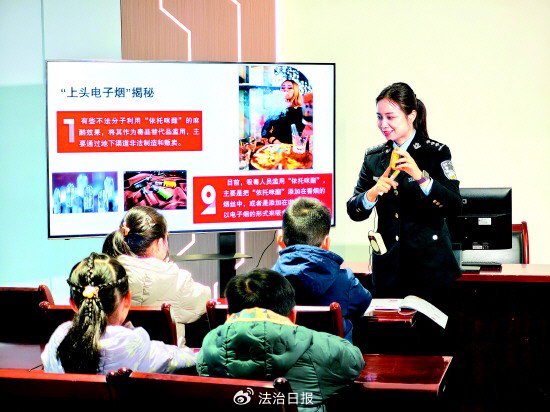
“魔法”禁毒教育课开启青少年识毒拒毒之旅
Xin Lang Cai Jing· 2026-02-07 01:11
Core Viewpoint - The article highlights the importance of drug prevention education for youth, showcasing an interactive program designed to raise awareness about the dangers of drugs, particularly new substances like "laughing gas" [3][4]. Group 1: Drug Prevention Education - The program, held at the Huzhou Youth Substance Addiction Prevention Guidance Center, utilized an engaging format that included AI-driven quizzes and immersive experiences to educate young people about drug risks [3]. - Participants, referred to as "magic warriors," actively engaged in scenarios to learn how to resist drug temptations, reinforcing their understanding of drug refusal [3][4]. - The center aims to provide a comprehensive approach to drug prevention, covering knowledge dissemination, risk warning, targeted intervention, and social reintegration [4]. Group 2: Rehabilitation Success Stories - The article features a success story of a young woman named Xiaoyu, who overcame severe addiction and health issues through a tailored rehabilitation program at the Zhejiang Provincial Rehabilitation Center [5][6]. - Since the initiation of the rehabilitation program in October 2024, over 640 individuals have been assisted, showcasing the effectiveness of the center's approach [6]. - Xiaoyu's recovery journey emphasizes the importance of early intervention and the potential for individuals to reclaim their lives from addiction [6]. Group 3: Ongoing Commitment to Drug Control - The article underscores the proactive stance of Zhejiang's drug control police in addressing emerging drug challenges, emphasizing a dual focus on prevention and rehabilitation [7]. - The dedication of law enforcement in promoting drug education in schools and communities is highlighted as a crucial element in maintaining public safety [8].

去年全国法院一审审结毒品案件同比下降33.82%
Xin Lang Cai Jing· 2026-02-02 18:02
Core Viewpoint - The Supreme People's Court has reported on the handling of new drug-related crimes and typical cases involving narcotic drugs over the past three years, highlighting a significant decrease in drug-related cases and the need for differentiated treatment of medical narcotic drug cases [1][2][3]. Group 1: Drug Crime Statistics - In 2025, over 23,732 drug cases were concluded in first-instance trials across national courts, representing a 33.82% decrease compared to 2024 [1]. - From 2023 to 2025, a total of 93,000 drug cases were concluded, with 133,000 defendants sentenced, of which 27,000 received prison terms of five years or more, resulting in a heavy sentence rate of 20%, which is 13 percentage points higher than the overall heavy sentence rate for all criminal cases during the same period [1]. Group 2: Handling of Medical Narcotic Drug Cases - The handling of medical narcotic drug cases requires a differentiated approach, particularly in cases where individuals knowingly sell to drug users or traffickers, which should be strictly punished [2]. - For those selling leftover medical narcotic drugs in patient circles or with a lenient attitude towards specific individuals, such actions should not be classified as drug crimes [2]. - Evidence must be thoroughly examined to determine the intent behind the sale of leftover narcotic drugs; if intent to sell drugs is proven, it can be classified as a drug crime [2]. Group 3: Challenges and Recommendations - The rise in new drug cases, particularly the abuse of substances like "laughing gas," poses significant challenges to public health and safety, especially among youth [3][4]. - There is a need to improve the channels for the recovery of leftover medical narcotic drugs to encourage patients and their families to return unused medications, which could help reduce related crimes [3]. - The public is urged to follow medical advice regarding the use of narcotic drugs and to properly dispose of any leftover medications to avoid legal repercussions [3].
最高法:未成年人成为新型毒品滥用高危人群 有的已沦为犯罪者
Xin Lang Cai Jing· 2026-02-02 09:46
Core Viewpoint - The rise of new drug abuse among minors, including middle school students, poses significant risks, leading to addiction and potential involvement in drug-related crimes [1][2]. Group 1: Characteristics of New Drug Abuse - Minors are particularly vulnerable to new types of drugs due to their immature judgment and strong curiosity, making them susceptible to misuse and manipulation [1]. - New drugs exhibit strong concealment and disguise characteristics, often being disguised as everyday items like chocolates, snacks, and beverages, complicating enforcement efforts [1]. Group 2: Specific Substances and Legal Response - The abuse of nitrous oxide ("laughing gas") and other unregulated addictive substances has increased significantly, with a notable proportion of users being minors [2]. - The legal system is adapting to address the challenges posed by unregulated substances, ensuring that even if substances are not classified as drugs, related criminal activities are prosecuted [2][3]. Group 3: Preventive Measures and Public Awareness - Courts are actively engaging in public legal education to raise awareness about the dangers of unregulated substances, particularly among youth [3]. - There is a push for regulatory bodies to assess and potentially classify substances like nitrous oxide to enhance control and prevention efforts [3].
这些药物滥用就成了毒品!@青少年 警惕身边的“隐形杀手”
Yang Shi Xin Wen· 2025-06-26 20:55
Core Viewpoint - The increasing trend of substance abuse among youth, particularly with non-controlled drugs, poses significant health risks and challenges for society [1][14]. Group 1: Substance Abuse Trends - The 2024 China Drug Situation Report indicates a structural change in the types of substances abused, with a rapid spread of abuse of narcotic drugs and unregulated addictive substances [1][15]. - In 2024, 76,000 cases of substance abuse were reported among individuals under 35, accounting for 86.4% of the total cases involving narcotic drugs [1]. - The report highlights that the number of individuals abusing unregulated addictive substances reached 49,000, with nitrous oxide abuse accounting for 30,000 cases, representing 61.2% of the total [15]. Group 2: Specific Drugs and Cases - Dextromethorphan, a cough suppressant, was classified as a controlled substance in China starting July 1, 2024, due to its potential for abuse [2][12]. - A case in Hunan revealed a pharmacy owner illegally selling dextromethorphan through a delivery platform, highlighting the illicit distribution channels for such substances [3][6]. - Overuse of dextromethorphan can lead to severe health consequences, including addiction and potential respiratory failure [11][9]. Group 3: Youth Vulnerability and Influences - Youth often underestimate the dangers of narcotic drugs and unregulated substances, leading to experimentation driven by curiosity or peer pressure [14]. - Factors such as family issues, academic pressure, and lack of emotional support contribute to the rising trend of substance abuse among adolescents [14]. - The availability of substances through illegal channels, including online platforms, exacerbates the problem, making it easier for youth to access these drugs [14]. Group 4: Health Risks and Consequences - Abuse of butane, a common gas used in lighters, has led to severe burn injuries among youth, with hospitals reporting a significant increase in such cases [16][29]. - The inhalation of butane can cause serious respiratory injuries and even death due to the risk of explosion when exposed to flames [23][26]. - Medical professionals emphasize the need for greater awareness of the dangers associated with butane and other easily accessible substances [28][31]. Group 5: Prevention and Education Strategies - A multi-faceted approach involving families, schools, and society is essential to create a protective environment against drug abuse [34]. - Parents are encouraged to engage with their children to identify emotional and behavioral changes that may indicate substance use [34]. - Educational institutions should integrate drug prevention education with online safety to address the risks associated with digital platforms [34].