
笔尖钢

Search documents
日本这一技术不仅领先中国30年,甚至还能垄断全球?有没有夸张
Sou Hu Cai Jing· 2026-02-21 06:59
Core Viewpoint - The claims that Japan has dominated the metallurgy sector, particularly in specialty steel, for decades are exaggerated, as China is rapidly catching up in both production and technology [1][10]. Group 1: Historical Context - Japan's steel industry began developing during the Meiji Restoration, with significant growth post-World War II, reaching a peak production of 119 million tons in the 1970s [3]. - In 2023, Japan's crude steel production was approximately 87 million tons, projected to decrease to 84 million tons in 2024, ranking third globally [3]. Group 2: Production Comparison - In contrast, China's crude steel production reached 1.019 billion tons in 2023, accounting for over 50% of global output, nearly ten times that of Japan [3]. - China's production in various steel categories, such as stainless steel and tool steel, has surpassed Japan, with China being the global leader in tool steel [4]. Group 3: Specialty Steel and Market Dynamics - Japan has a strong position in specialty steel, particularly in aerospace, automotive, shipbuilding, and military applications, but this does not equate to overall industry dominance [4]. - The production of pen tip steel, a niche market, shows that while Japan has historical advantages, China has made significant advancements, with major companies like Taigang Group achieving a 45% global market share by 2022 [6]. Group 4: Challenges in Japanese Steel Industry - Japanese steel companies have faced scandals, including data falsification, which have damaged their reputation and highlighted vulnerabilities in their technological edge [7]. - The acquisition of an American steel company by Nippon Steel for $14.9 billion aims to regain market position, yet Japan's overall production still lags behind China's [9]. Group 5: Future Outlook - China's steel industry is transitioning from a focus on quantity to quality, with increasing efficiency and higher-value specialty steel exports [9]. - The narrative of Japan's 30-year lead in the steel industry is misleading, as China's advancements in production and technology have led to a significant shift in market dynamics [10].

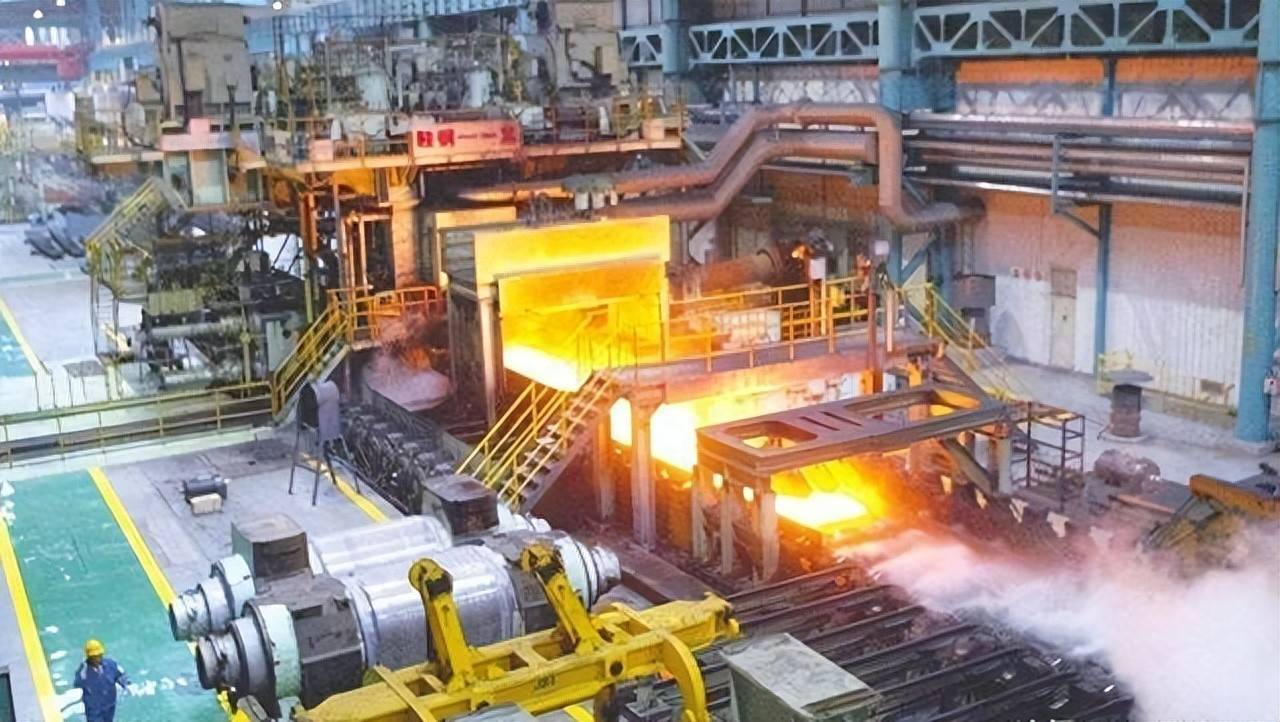
绿色转型与产能优化齐头并进!钢铁行业力稳基本盘
Sou Hu Cai Jing· 2025-10-18 06:45
Core Viewpoint - The Ministry of Industry and Information Technology and other departments have issued the "Steel Industry Stabilization and Growth Work Plan (2025-2026)", providing policy guidance for the development of China's steel industry, which is currently facing significant downward pressure due to oversupply and insufficient effective demand [1][3]. Industry Growth Targets - The plan sets an average annual growth target of approximately 4% for the steel industry's added value over the next two years, aiming for economic benefits to stabilize and recover [3]. - The China Iron and Steel Association indicates that while steel consumption demand is expected to decline in 2025, the reduction in supply will be more significant, optimizing the supply-demand relationship and boosting industry expectations [3]. Structural Improvement - 2024 is projected to be a turning point for the structure of China's steel products, with the output of medium-thick wide steel strips expected to exceed 200 million tons, surpassing rebar for the first time [5]. - The proportion of construction steel and industrial steel is expected to achieve a "50-50" split, reflecting a shift driven by adjustments in the real estate sector and industrial upgrades [5]. Production and Consumption Trends - In 2024, China's crude steel production is forecasted to be 1.005 billion tons, a decrease of 1.7% year-on-year, while domestic consumption is expected to drop by over 4% [6]. - The long-term trend indicates a decline in the demand for ordinary steel, but a slight recovery is anticipated in the coming years after adjustments [6]. Technological Advancements - The steel industry has made significant technological progress, overcoming previous challenges in producing high-end steel products, with 153 new products launched by leading steel companies by 2025 [7]. - The industry has entered a phase of quality leadership, focusing on high-end, intelligent, and green production rather than merely scaling up [6][7]. Environmental Upgrades - The steel industry has made notable advancements in ultra-low emissions, with significant investments leading to improved environmental performance, surpassing global standards [8]. - By the end of 2025, the industry aims to complete ultra-low emission transformations for over 80% of its capacity, reflecting a strong commitment to environmental sustainability [8]. Corporate Transformations - Many steel companies are actively transforming to adapt to changes in steel demand driven by economic restructuring, focusing on high-value-added products [9][10]. - Companies like Shagang and Hualing Steel have successfully shifted from traditional construction steel to manufacturing steel, maintaining stable sales even in a challenging market [10][11]. - Baosteel is leveraging AI technology to optimize processes and reduce costs, demonstrating the industry's embrace of digital transformation [11].
