笙

Search documents
“图书馆里听民乐,特别有年味!”
Xin Lang Cai Jing· 2026-02-22 21:01
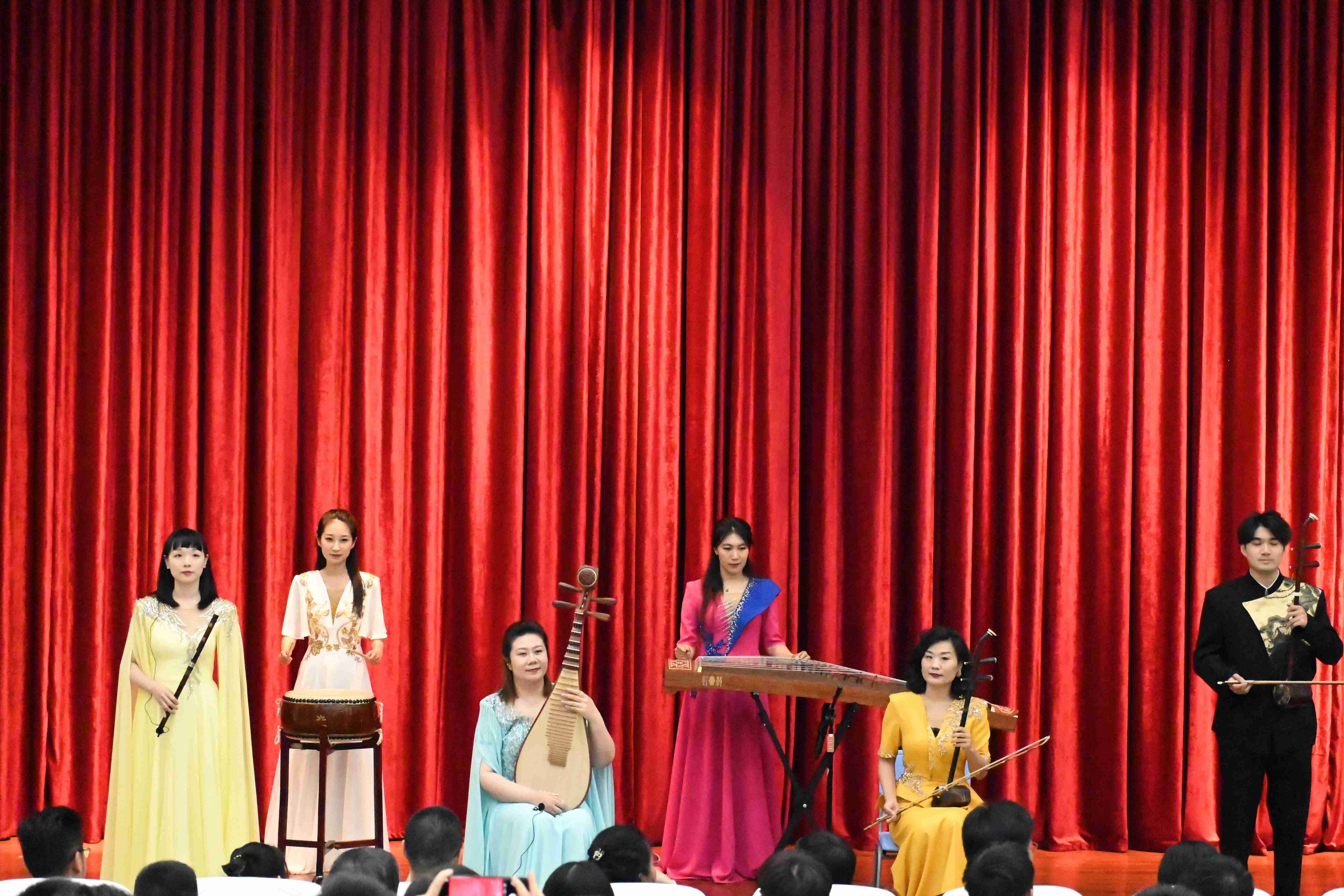
Group 1 - The "Art and Book Sharing Space" event series has been launched in 2024, featuring high-quality public performances such as symphonic music appreciation, folk music analysis, ballet appreciation, and classical dance analysis [4] - The Tianjin Song and Dance Theatre plans to continue exploring Tianjin's cultural resources and create more works that showcase the charm of Tianjin's local customs and historical sites [4] Group 2 - The "Folk Music Appreciation Concert" held at Tianjin Library featured a theme of "Togetherness," symbolizing family reunion and national unity, with performances by four Sheng players [3] - The concert included a flash performance that attracted many attendees, highlighting the integration of music and literature, which was well-received by the audience [3] - Following the flash performance, a deeper appreciation session was conducted, where the history and structure of the Sheng instrument were explained, showcasing its unique charm in cultural exchanges [3]

旅美古筝演奏家荷蓓蓓新专辑《双月》正式发布
Xin Lang Cai Jing· 2026-02-22 02:32
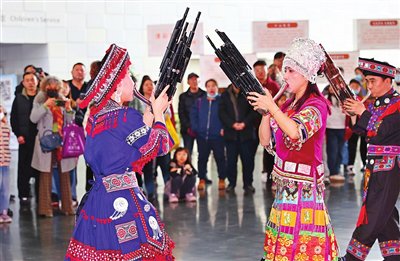
Core Insights - The new album "Two Moons" by Chinese guzheng artist He Beibei was officially released on February 20, 2023, in collaboration with London producer Paul Elliott, aiming to revitalize traditional string sounds within contemporary electronic music contexts [1][2] - He Beibei and Elliott prefer low-fidelity and analog sounds over the mainstream electronic music's focus on high precision and polished production, incorporating natural imperfections like tape saturation and subtle noise into the album [1] - The album features various traditional instruments such as erhu, sheng, dizi, sanxian, and zhongruan, which are integrated into different tracks to enhance melody, rhythm, and spatial dynamics, breaking the limitations of combining a single guzheng with electronic music [1] Album Details - The album consists of seven tracks: "Two Moons," "Cloud Mountain Song," "Dreamy Shanghai," "Silk Banquet," "Red in the Spotlight," "Soaring in the Snow," and "Midnight Grotesque" [2] - Prior to its official release, the album won the silver award for "World Fusion Music Album" at the 2025 Global Music Awards [2]
走过三千年,这一冷门乐器有了“热”价值
Xin Lang Cai Jing· 2026-02-17 03:55
Core Viewpoint - The sheng, a traditional Chinese musical instrument with a history of approximately 3,000 years, is underappreciated in modern society despite its rich cultural significance and unique sound characteristics [2]. Group 1: Historical and Cultural Significance - The sheng is referred to as a "living fossil of three thousand years of ritual and music civilization" and "the ancestor of free reed instruments" [2]. - It has evolved from traditional forms to modern versions, with significant improvements in sound range, volume, and timbre, including the development of 21 to 37 reed configurations [3]. Group 2: Modern Transformation and Popularity - Since its debut in solo performances in 1956, the sheng has gained recognition, with composers creating a diverse repertoire of solo and ensemble works [3]. - The instrument has attracted the attention of contemporary composers, leading to the creation of numerous new pieces that incorporate the sheng into various musical genres [4]. Group 3: Role in Ensemble Settings - The sheng serves as a "glue" and "tuner" in orchestras, providing harmonic foundations and enhancing the overall sound blend of ensembles [5]. - Its ability to produce sustained tones and harmonies makes it indispensable in modern orchestral arrangements, contributing to the richness of sound [5]. Group 4: Technical Challenges and Performance - The sheng's sound quality can be affected by various factors, requiring performers to continuously adjust and maintain the instrument for optimal performance [6]. - The complexity of transitioning between harmonies in ensemble settings poses significant challenges for sheng players, necessitating extensive practice and experience [6]. Group 5: Potential for Artistic Expression - The sheng has not yet achieved a unified form among its various types, which complicates communication and collaboration within the musical community [7]. - There is a wealth of untapped expressive potential in the sheng's unique techniques, which could enhance its role beyond mere harmonic support in contemporary compositions [8]. Group 6: Future Development - The sheng's contemporary value remains to be fully explored, with opportunities for composers and performers to collaborate in expanding its expressive capabilities [8].
东西问丨安娜·瑞德:增进彼此理解,从分享音乐开始
Xin Lang Cai Jing· 2025-12-28 11:10
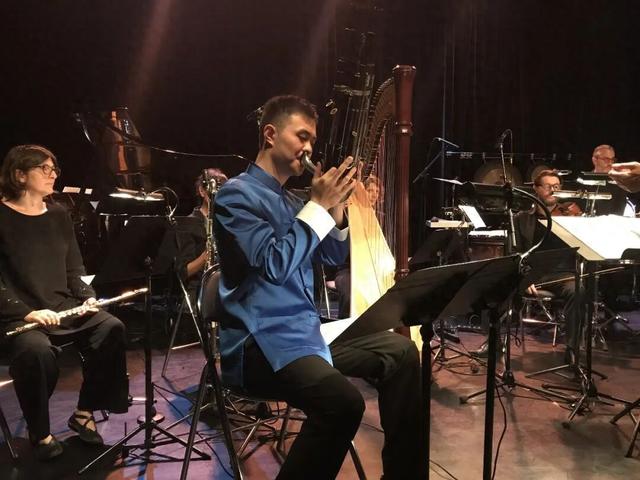
Core Viewpoint - The interview with Anna Reid, the Dean of the Sydney Conservatorium of Music, emphasizes the role of music as a universal language that fosters cultural exchange and understanding between China and Australia [3][10]. Group 1: Cultural Exchange through Music - Music serves as a unique medium for cultural exchange, enhancing mutual understanding between China and Australia [3]. - Anna Reid highlights her impressions of Chinese music, particularly traditional instruments like the guzheng, dizi, and erhu, which she has personally engaged with [3][4]. - The Sydney Conservatorium has approximately 300 students and faculty who can play Chinese instruments, providing a significant opportunity for exploration in both Eastern and Western musical traditions [6][9]. Group 2: Collaboration and Education - The Sydney Conservatorium maintains active partnerships with several Chinese music institutions, facilitating teacher and student exchanges [9]. - Collaborations with institutions like Xinghai Conservatory of Music focus on nurturing young composers and supporting advanced research studies [9]. - The Conservatorium's commitment to cross-cultural music education is reflected in its curriculum, which incorporates diverse musical traditions [7]. Group 3: The Future of Music and Technology - The integration of artificial intelligence in music composition is viewed as a tool that encourages critical thinking among students, rather than a threat [13]. - Anna Reid suggests that AI can assist in music creation, but emphasizes the importance of students developing their judgment and creativity in the process [13]. - The future of music lies in maintaining an open perspective and supporting young composers to create music that resonates with contemporary audiences [6][11].

传承百年 唢呐声远(传承)
Ren Min Ri Bao· 2025-08-23 22:42
Core Viewpoint - The article highlights the cultural significance and revival efforts of the traditional Chinese musical instrument, the suona, led by Zhou Benming and his family group, "Zhou Family Band," which has been recognized as a provincial intangible cultural heritage representative. Group 1: Cultural Heritage and Tradition - Zhou Benming is the fifth-generation leader of "Zhou Family Band," a well-known folk music group in Bolin Village, Lingbi County, with a history of over a century [2] - The suona is celebrated as the "king of instruments" in the region, often featured in important local events such as weddings and ancestral worship [1] - Zhou Family Band has successfully trained over a hundred local Zhou clan members and more than a thousand non-clan enthusiasts in suona performance [2] Group 2: Modernization and Promotion - Zhou Benming has restructured the band, enriching its repertoire and focusing on training, including the publication of "Essentials of Zhou Family Band Heritage" [2] - The band has integrated traditional and modern elements in their performances, creating new works like "Dongfeng Qi" that resonate with contemporary audiences [3] - Since 2017, the band has performed over 200 shows internationally, including a planned 20 performances in the U.S. during the 2025 Spring Festival [3] Group 3: Recognition and Impact - In 2014, the suona art (Lingbi Bolin suona) was included in the national intangible cultural heritage representative project list, boosting its recognition [3] - The performances aim to evoke respect and appreciation for traditional music while also engaging younger audiences with popular music adaptations [3]
民乐名家汇聚 保利国乐艺术节首次落地天津
Zhong Guo Xin Wen Wang· 2025-08-17 07:19
Core Points - The 2025 Poly (Tianjin) National Music Festival will take place from August 17 to 23 in Tianjin, marking its first occurrence in the city [1][3] - The festival will feature top national music masters and professors from leading music academies, covering six major disciplines: pipa, erhu, sheng, guzheng, yangqin, and bamboo flute [3] - Nearly ten performances will be held at the Tianjin Grand Theatre during the festival, including public performances aimed at allowing citizens to experience the charm of national music [3] - The historical and cultural background of Tianjin is seen as a fertile ground for the festival's success, according to Xu Jian, the chief planner of the Poly National Music Festival [3]

“乐韵中非,心桥共筑”:中国传统艺术打动肯尼亚观众
人民网-国际频道 原创稿· 2025-07-01 07:31
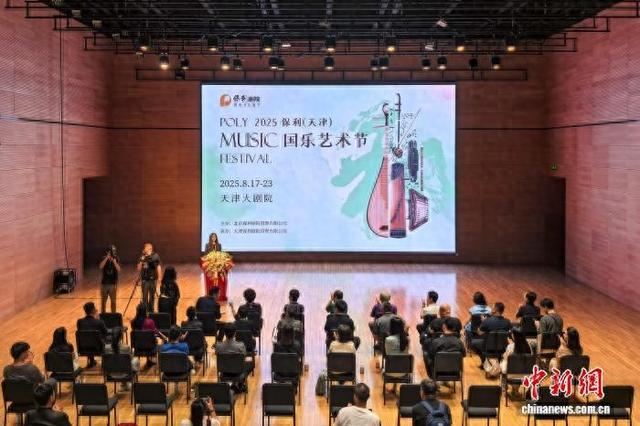
Group 1 - The Shandong Normal University Art Troupe conducted a tour in Kenya, performing at various venues including the University of Nairobi and Kenyatta University, showcasing traditional Chinese musical instruments through diverse formats such as solo performances, ensemble, and the integration of music with martial arts [4][6] - The performances highlighted the unique characteristics of traditional instruments like the erhu, pipa, bamboo flute, sheng, guzheng, and yangqin, and creatively blended them with local classic works, enhancing the cultural exchange experience [4][8] - Audience members, including students and professors, expressed a deep appreciation for the performances, noting the emotional depth and artistic height of Chinese music, which sparked interest in further cultural exchanges and collaborations in traditional music education [4][8] Group 2 - The performances not only showcased the beauty of Chinese traditional music but also fostered a deeper understanding of Chinese culture among Kenyan audiences, with students expressing a desire to learn Chinese songs and martial arts [8][9] - The events were described as a profound cultural and spiritual exchange, planting seeds of interest in Chinese culture among Kenyan students and promoting respect for cultural diversity and mutual understanding [8][9] - The interactions during the performances, such as teaching a simple Chinese song to students, emphasized the role of music as a bridge for understanding and connection between cultures [8][9]