
粮食银行

Search documents
科学储粮减损增收两不误
Jing Ji Ri Bao· 2025-12-10 22:52
Core Viewpoint - The promotion of scientific grain storage methods, such as grain drying towers and "corn buildings," in Inner Mongolia aims to reduce grain loss and enhance farmers' income by allowing them to sell grain at favorable prices during market fluctuations [1][2]. Group 1: Scientific Grain Storage Initiatives - The introduction of grain drying towers and "corn buildings" helps to naturally reduce moisture in corn, addressing issues like mold and pest damage associated with traditional ground storage [1]. - Government investment in infrastructure, such as steel mesh barriers and centralized grain storage points, is crucial for solving the storage challenges faced by small and medium-sized farmers [2]. - The shift from traditional storage methods to modern techniques is essential for minimizing grain loss and ensuring food security [2]. Group 2: Innovative Mechanisms and Technology - The establishment of "grain banks" by cooperatives allows farmers to store their grain without incurring storage fees, facilitating better market timing for sales [3]. - The integration of technology, such as sensors and IoT, in grain storage facilities enhances monitoring and management of storage conditions, aiming to reduce loss rates [3]. - The development of "digital grain warehouses" is underway, focusing on visualizing the entire grain storage process to improve efficiency and reduce losses [3]. Group 3: Policy and Strategic Goals - The 20th Central Committee of the Communist Party emphasizes the importance of reducing grain loss as a key strategy for ensuring national food security [4]. - There is a call to effectively manage both physical farmland and the intangible aspects of grain loss reduction to strengthen China's food security [4].
各地多举措战阴雨抢秋收:“粮食银行”护粮减损 烘干链闭环助农“收好粮卖好价”
Yang Shi Wang· 2025-10-11 03:37
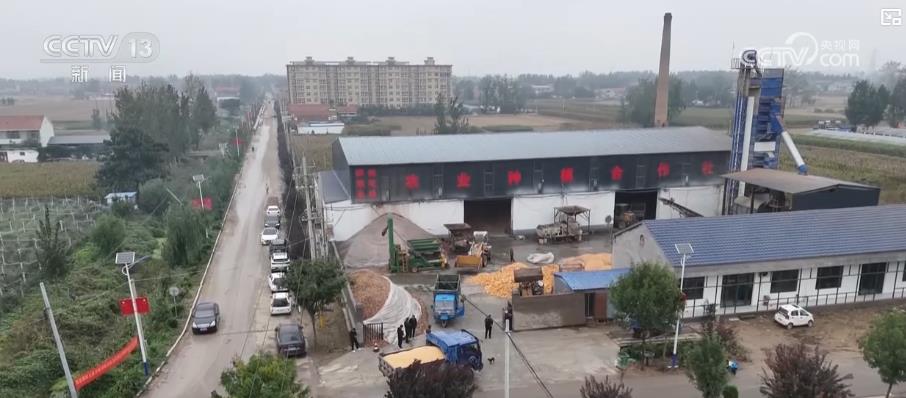
Group 1 - The core issue in Shandong's Yuncheng County is the impact of continuous rainy weather on the autumn harvest, leading to difficulties in drying and storing grain [1] - Yuncheng County is exploring a "grain bank" model to enhance social services related to grain and oil, aiming to increase farmers' income [1][5] - The grain bank has a designed storage capacity of approximately 20,000 tons, with 8,000 tons already stored, helping farmers maximize their profits by waiting for better prices to sell [5] Group 2 - In Anhui Province, local departments have activated emergency plans to address the challenges posed by rainy weather during the harvest of corn and rice, ensuring grain is collected effectively [7] - The implementation of a "harvest + drying" closed-loop system in Huaiyuan County, with 18 grain drying centers operating 24/7, is aimed at safeguarding farmers' harvests [7] - In Suzhou's Daxiang County, a mechanism has been established to connect farmers with drying points and purchasing enterprises, facilitating the entire grain drying, storage, and sales process [7]

“田保姆”让种地更轻松
Jing Ji Ri Bao· 2025-09-19 22:23
Core Insights - The article highlights the significant advancements in agricultural socialized services in Laixi City, Shandong Province, showcasing the benefits of modern technology and service integration for local farmers [1][2][3] Group 1: Agricultural Technology and Services - The introduction of 53 agricultural drones by Qingdao Supply and Marketing Cooperative has improved efficiency, allowing for the treatment of 15.7 million mu of land in just five days [1] - Farmers are experiencing enhanced convenience through socialized agricultural services, with dedicated service providers handling various aspects of farming, leading to a more relaxed farming experience [1] Group 2: Economic Benefits for Farmers - The "Grain Bank" initiative allows farmers to store their harvests with benefits such as free storage and financial incentives, reducing storage costs and enhancing their integration into the modern agricultural value chain [2] - The implementation of full mechanization in wheat and corn cultivation by Jin Cheng Agriculture has resulted in a cost reduction of approximately 40 yuan per mu, with an additional income of 270 yuan per mu from straw recycling, leading to an overall income increase of over 20% for farmers [3] Group 3: Growth of Socialized Agricultural Services - Laixi City has established a comprehensive socialized service network with 924 organizations, successfully serving over 206,800 smallholder farmers, and achieving a full-service rate of 65% for major crops [3] - The local government has introduced policies to support the development of agricultural socialized services, addressing challenges faced by farmers and significantly improving agricultural productivity and efficiency [3]