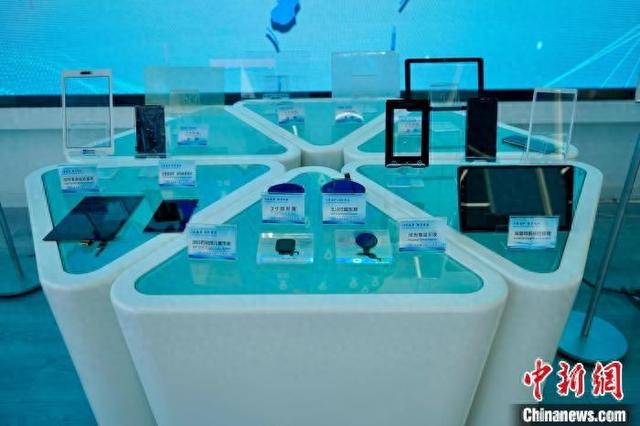
精微光学镜头

Search documents
山西晋城探索多元发展路径,助“压舱石”更稳、“基本盘”更活
Zhong Guo Xin Wen Wang· 2026-01-14 00:56
Core Viewpoint - Jincheng is focusing on balancing its inherent advantages with transformation development, leveraging technology to enhance the coal industry while ensuring energy security and promoting green low-carbon transitions [1] Group 1: Energy Sector Transformation - Jincheng aims to achieve a historical high in coal production of 148 million tons, utilize 7.145 billion cubic meters of coalbed methane, and generate 25.3 billion kilowatt-hours of electricity by 2025 [2] - The city plans to build 10 new intelligent coal mines this year, maintaining coal production above 140 million tons with advanced capacity accounting for 97% [2] - Jincheng is committed to enhancing the comprehensive utilization of gas, targeting an annual coalbed methane utilization of 7.2 billion cubic meters [2] Group 2: Industrial Development - The industrial output value of Jincheng is projected to grow from 160.7 billion yuan in 2020 to 299.6 billion yuan by 2024, with manufacturing output increasing from 36.4 billion yuan to 109.6 billion yuan [3] - The city is focusing on transitioning traditional manufacturing to a "green and intelligent integration," with significant advancements in optical and mechanical industries, expecting total output to exceed 100 billion yuan by 2025 [3] Group 3: Emerging Industries - Jincheng is prioritizing the development of emerging industries, particularly in optical and mechanical systems, new materials, and artificial intelligence, while also exploring low-altitude economy, biomedicine, and green hydrogen [4] - The city aims to enhance local supply chains and foster new growth drivers through strategic investments in these sectors [4] Group 4: Agricultural and Service Sector Enhancement - Jincheng is promoting the development of specialty agriculture, focusing on stable production and quality improvement in key sectors like pig farming and traditional Chinese medicine [5] - The city plans to enhance the competitiveness of its agricultural products and expand into food processing, ceramics, and textiles, while also improving the quality of modern service industries [6]
山西晋城破局资源型城市转型:光机电产业年产值破700亿元
Zhong Guo Xin Wen Wang· 2025-05-22 05:39
Core Viewpoint - Shanxi Jincheng is transforming from a resource-based city to a technology-driven economy, with the optical and mechanical industry projected to exceed 70 billion yuan in annual output by 2024, marking it as the fastest-growing emerging industry in the city [1][3]. Group 1: Industry Development - Jincheng has established a "1+130" industrial cluster, led by one major enterprise and supported by over 130 companies, covering three major industrial chains: vision systems, new materials, and artificial intelligence [3]. - The city has integrated over 10 vocational colleges to form an optical and mechanical vocational education group, providing specialized talent annually [3]. - Jincheng has attracted 7 academicians and 93 doctors to enhance its research capabilities, leveraging local coal and coalbed gas resources to reduce production costs [3]. Group 2: Policy and Investment - The city has introduced 128 policy measures across eight areas, investing nearly 3 billion yuan to address issues like unclear functional positioning and insufficient funding [3]. - In 2024, Jincheng will implement new policies such as "24 measures to promote investment" and "28 risk compensation measures," creating a four-dimensional support system for investment and innovation [3][4]. Group 3: Infrastructure and Logistics - Jincheng has invested 5 billion yuan to improve infrastructure, establishing over 2,000 acres of standard land and 2 million square meters of standard factories to meet ultra-clean production requirements [6]. - The city has developed a comprehensive logistics network, including a "five vertical, four horizontal, and one ring" road system to facilitate transportation [6]. Group 4: Future Goals - Jincheng aims to become a global hub for the optical and mechanical industry, transitioning from coal dependency to a focus on technology, with initiatives in green energy parks and international cooperation [6].