红色物业

Search documents
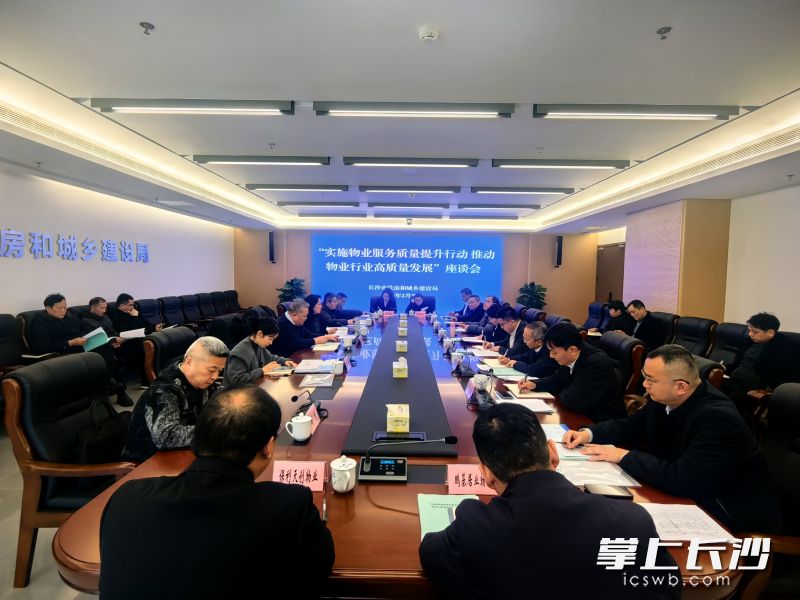
共话“服务进家庭”,长沙物业行业共绘“品质宜居”新图景
Xin Lang Cai Jing· 2026-02-27 15:21
Core Viewpoint - The meeting in Changsha aims to enhance the quality of property services and promote high-quality development in the property industry during the "14th Five-Year Plan" period, with participation from over ten key property service companies [1] Group 1: Industry Goals and Challenges - By 2025, Changsha's property industry aims to achieve "two increases and one decrease," significantly improving service information disclosure and fulfillment rates while reducing complaint rates [3] - The industry faces challenges such as prioritizing fees over services, low transparency in public revenue, and difficulties in upgrading old facilities [3] - The Changsha property industry is urged to maintain a sense of urgency to improve service quality, transitioning from "existence" to "quality" [3] Group 2: Innovative Solutions and Best Practices - "Red Property" initiatives have addressed grassroots governance issues, exemplified by the "rider-friendly community" model that facilitates service delivery for delivery personnel [3] - Hunan Pengji Property's "root system project" emphasizes community engagement through party group establishment and collaboration with building leaders [3] - Hunan Haobusi Property's "530 rapid response mechanism" has improved service request handling, achieving an average response time of 3.5 minutes for 50,000 requests annually [3] Group 3: Financial Transparency and Compliance - Hunan Kunpeng Property showcased its "transparent account book" for public revenue management, establishing dedicated accounts and comprehensive disclosures to enhance community quality [4] - Changfang Property shared its compliance controls in the use of maintenance funds, ensuring traceability and audit readiness for public revenue usage [5] Group 4: Collaborative Development and Future Directions - High-quality development requires collaboration among various stakeholders, including strengthened party leadership, departmental coordination, industry self-regulation, and public engagement [6] - The "Every Beauty and Common" red property brand has successfully implemented ten quality improvement projects in old communities, recognized as a national model [7] - Companies are encouraged to resist malicious low-price competition and focus on service quality, with suggestions for optimizing maintenance fund usage and establishing a robust incentive mechanism [7] Group 5: Strategic Focus for 2026 - The property management sector is identified as a key area for public welfare, with a focus on enhancing service quality and integrating services into households by 2026 [6][7] - The meeting's insights are expected to serve as a "golden key" for driving high-quality development in the property industry, aiming to create a recognizable "Changsha Property" brand [7]

章丘“红色物业”破解基层治理难题
Zhong Guo Fa Zhan Wang· 2025-12-12 14:58
Group 1 - The core idea of the article is that the Jinan Zhangqiao District Housing and Urban-Rural Development Bureau is leading innovation in property management through the establishment of a "Red Property" system, effectively addressing grassroots governance challenges and enhancing the integration of property services with community governance, resulting in significantly improved public satisfaction [1] Group 2 - An organizational system has been established to enhance service delivery, with the formation of a property service industry party committee in 2020 and the extension of this system to grassroots levels by 2024, achieving full coverage of party organizations across 76 property service companies and 203 property projects [2] - A "dual-entry, cross-appointment" mechanism has been implemented, allowing community committee members to serve as supervisors in property service companies, and over 560 company staff have been appointed as part-time community grid members, effectively breaking down functional barriers between communities and property services [2] - The establishment of a "Red Discussion Hall" and other collaborative platforms has created a unique "Spring City Red Property" working mechanism [2] Group 3 - A comprehensive evaluation and credit management system for property service quality has been established, linking evaluation results to enterprise supervision and reward-punishment mechanisms, with 144 service quality evaluations conducted this year and 29 property projects being interviewed [3] - The "Trust + Reward" model has been innovatively introduced to address management challenges in old residential areas, with successful pilot operations in the Langou Power Plant dormitory, emphasizing trust-building and financial transparency [3] - The implementation of a smart property platform has standardized service identification, efficiently handling 235 issues raised by owners this year [3] Group 4 - The district is focusing on exemplary projects to promote high-quality industry development, with two projects recognized as provincial "Qilu Red Property" demonstration projects and one company awarded as a provincial demonstration enterprise since 2022 [4] - The district is intensifying penalties for poorly performing companies through regular inspections, comprehensive evaluations, and complaint verifications, gradually optimizing the industry structure and enhancing overall service quality [4] - The Housing and Urban-Rural Development Bureau will continue to deepen the innovation of "Red Property" management, addressing common issues such as parking management and service attitudes, and promoting a management mechanism that visualizes service standards, transparency in the rectification process, and public evaluation results [4]
精细治理变“民生愿景”为“民生实景”
Ren Min Wang· 2025-11-13 06:47
Core Insights - The article emphasizes the importance of urban development as a key aspect of modernization and improving the quality of life for citizens, highlighting the principles of "innovation, livability, beauty, resilience, civilization, and intelligence" in urban planning [1] Urban Development Practices - The Central Urban Work Conference in July 2023 outlined a vision for modern cities centered around the people, emphasizing that cities should be built by and for the people [1] - In Taian, the establishment of a community-led property management company has significantly improved the living conditions in previously neglected neighborhoods, with a resident satisfaction rate exceeding 95% [4][3] - The "Red Property" initiative in Taian has integrated property management with community governance, addressing long-standing issues in older residential areas [4][3] Community Engagement and Governance - Taian has implemented a "point-line integration, four-level connection" urban governance model, which has successfully resolved over 6,000 issues raised by residents and businesses [5][4] - The community has been divided into six management grids, enhancing the efficiency of local governance through the involvement of community leaders and property management staff [3] Cultural and Environmental Initiatives - The renovation of Cultural Road in Taian has preserved cultural elements while improving infrastructure, creating a blend of modernity and tradition [6] - The city has initiated a special action for the protection of ancient trees, incorporating technology to monitor their health and ensure their preservation [7] Housing Development - Taian is advancing the construction of high-quality residential projects, including the first passive ultra-low energy consumption community, which is set to be a model for sustainable living [8][9] - The city has introduced innovative designs and features in housing projects, such as extensive insulation and integrated environmental control systems, to enhance living conditions [10][9] Streamlined Property Services - The establishment of integrated property service centers in Taian has simplified the process for residents, allowing them to complete various property-related transactions in one location [11] - The new system has significantly reduced the time required for property transactions, with a reported increase in both new and second-hand property sales [12][11]
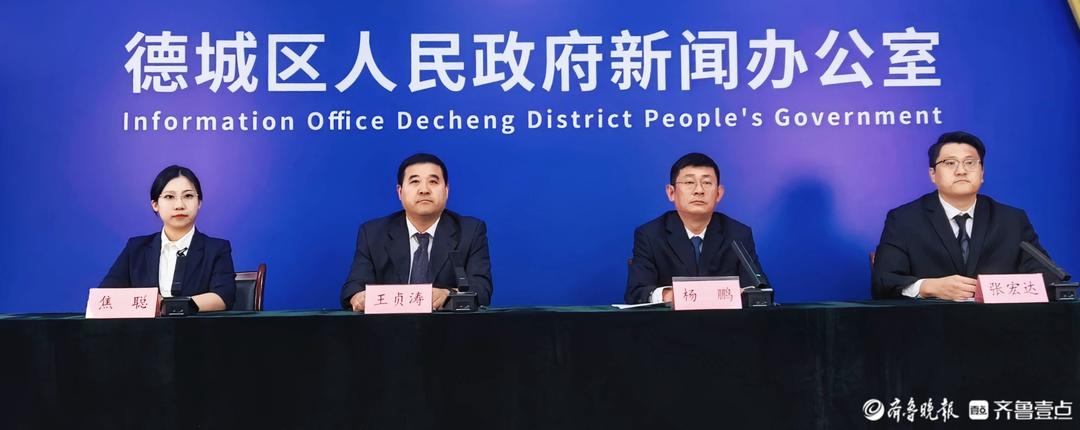
从“有问题”到“有解法”:德城“红色物业”精准化解物管难题
Qi Lu Wan Bao Wang· 2025-10-10 10:01
Core Insights - The government of Decheng District is actively promoting the "Red Property" initiative to enhance community governance and service quality through a series of actions and measures [1][3]. Group 1: Initiatives and Actions - The Decheng Construction Bureau has launched the "Three Enhancements and Ten Tackles" special action to develop the "Red Property, Happy Decheng" brand, focusing on improving the management and service quality of property services [3]. - A comprehensive implementation plan has been established to address prominent issues in the property sector, including inadequate service delivery and the encroachment on public benefits by property management companies [3]. - Over 380 property management communities have been inspected, resulting in the identification and rectification of over 50 issues, with 8 corrective notices issued and 28 property service companies interviewed to ensure compliance [3][4]. Group 2: Training and Capacity Building - The establishment of a strong industry party committee has been prioritized, with dedicated personnel assigned at both district and street levels, achieving 100% coverage of party work in property enterprises [4]. - A series of training sessions have been conducted, covering over 120 property companies and 500 personnel, aimed at enhancing the professional standards of the property management workforce [4]. Group 3: Innovative Management Models - New property management models are being piloted, such as the "Trust + Shangde" model in specific communities to increase transparency in property services [4]. - Community party organizations are being encouraged to lead property service enterprises, integrating governance and public welfare to address challenges in managing older neighborhoods [4]. Group 4: Future Directions - The Decheng Construction Bureau plans to continue advancing the "Red Property" initiative, intensifying regulatory oversight in the property sector, and leveraging political and organizational advantages for improved community governance and service delivery [4].