
纪检监察一体化工作平台

Search documents
业务丛谈丨大数据信息化赋能正风反腐
Zhong Yang Ji Wei Guo Jia Jian Wei Wang Zhan· 2025-12-25 01:04
Core Insights - The article emphasizes the importance of building a comprehensive digital platform for enhancing supervision and accountability in public power, focusing on data integration and technological innovation [1][2][3][4][5] Group 1: Digital Platform Development - The establishment of an integrated digital platform is crucial for empowering disciplinary inspection and supervision work, with a focus on data collection and system integration [2] - The initiative in Zhoukou City aims to create a unified online operational system that encompasses all supervisory processes, enhancing efficiency and convenience [2] - A cross-departmental data sharing mechanism is being developed to facilitate collaboration among various regulatory bodies, ensuring a seamless flow of information [2] Group 2: Technological Empowerment - Technological innovation is identified as a key driver for improving the quality and efficiency of supervision and case handling, with a focus on specific areas such as bid rigging and fund misappropriation [3] - The implementation of intelligent supervision models aims to proactively identify risks and enhance the detection of irregularities through data analysis [3] - A system for intelligent analysis is being constructed to support case handling, providing detailed insights and relationship mapping to aid investigators [3] Group 3: Mechanism and Regulation Strengthening - The Zhoukou City disciplinary inspection commission is focusing on establishing strict operational norms and technical safeguards to prevent misuse of power and data leaks [4] - A comprehensive management system is being developed to ensure that all supervisory actions are traceable and accountable, enhancing transparency in the process [5] - The establishment of a full-process traceability system aims to ensure that every action taken in supervision is documented and can be reviewed [5] Group 4: Talent Development - The development of a skilled workforce is highlighted as essential for the success of digital initiatives in disciplinary inspection, with a focus on integrating business and technology skills [5] - Training programs are being implemented to cultivate professionals who are proficient in both supervision and information technology, addressing the gap between these areas [5] - Efforts are being made to extend digital capabilities to grassroots levels, ensuring that information technology is effectively utilized in frontline supervision [5]
悟规律 明方向 学方法 增智慧 | 以系统思维一体推进“三不腐”
Zhong Yang Ji Wei Guo Jia Jian Wei Wang Zhan· 2025-12-09 00:11
Core Viewpoint - The article emphasizes the importance of applying systematic thinking in the anti-corruption struggle, highlighting the need for an integrated approach to address corruption comprehensively and effectively [4][5][6]. Group 1: Systematic Thinking in Anti-Corruption - Systematic thinking helps to understand the root causes of corruption, which is a complex social phenomenon involving various factors such as political ecology, institutional systems, and social psychology [4]. - The application of systematic thinking requires a shift from addressing individual cases to a more holistic approach that integrates reform, institutional improvement, and governance enhancement [5][6]. - The goal is to achieve maximum governance effectiveness by analyzing both individual and overall effects, ensuring a unified approach to political, legal, and social outcomes [5]. Group 2: Integrated Promotion of "Three No Corruption" - The integrated promotion of "Three No Corruption" (not daring to corrupt, not being able to corrupt, and not wanting to corrupt) is a fundamental strategy in the anti-corruption campaign, reflecting the application of systematic thinking [7]. - This approach requires recognizing the interconnectedness of deterrence, constraints, and awareness, and implementing them as an organic whole to enhance their combined effects [7][8]. - The practice of "Three No Corruption" should involve a full-cycle management concept, exploring effective pathways and methods to ensure its implementation in practice [7][8]. Group 3: Mechanisms for Promoting "Three No Corruption" - The article discusses the importance of enhancing the mechanisms for promoting "Three No Corruption" through systematic thinking, emphasizing the need for clear responsibilities and effective implementation [10][11]. - It highlights the role of reform in releasing anti-corruption effectiveness, suggesting that optimizing the functions and configurations of supervisory bodies is crucial for improving the overall system [8][10]. - The use of big data and information technology is encouraged to enhance the precision and effectiveness of supervision and investigation, thereby integrating digital technology into anti-corruption efforts [9][10]. Group 4: Practical Approaches to Anti-Corruption - The article outlines practical approaches to strengthen the integrated promotion of "Three No Corruption," focusing on the relationship between deterrence, constraints, and awareness [12][14]. - It emphasizes the need for a comprehensive strategy that includes both punitive measures and educational initiatives to foster a culture of integrity among party members and officials [12][15]. - The importance of continuous evaluation and improvement of mechanisms to address corruption effectively is also highlighted, ensuring that lessons learned from past cases inform future strategies [9][15].

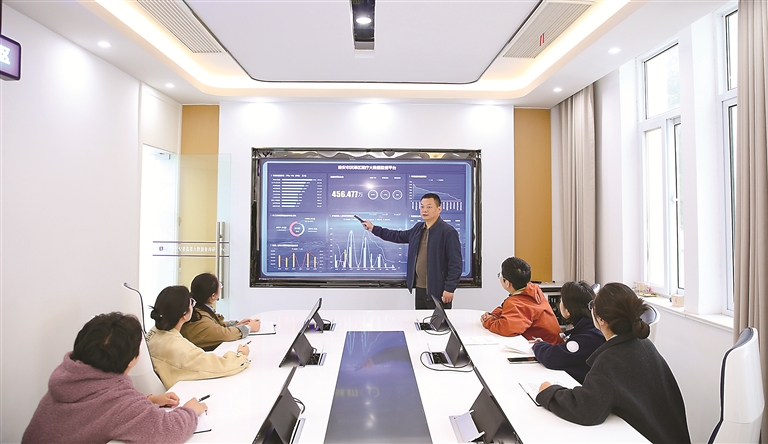
省纪委监委理论学习中心组深入学习习近平总书记关于科技创新的重要论述
Shan Xi Ri Bao· 2025-08-26 23:54
Group 1 - The meeting emphasized the importance of political supervision in supporting technological innovation, focusing on the implementation of innovation-driven development strategies and the integration of technological and industrial innovation [1][2] - The provincial disciplinary inspection and supervision agencies are required to deepen the use of big data and information technology to enhance anti-corruption efforts, particularly in identifying misconduct and corruption issues [2] - There is a push for the construction of an integrated disciplinary inspection and supervision platform to streamline communication and information sharing among various departments, improving the overall efficiency of corruption governance [2] Group 2 - The meeting highlighted the need for coordination and collaboration between disciplinary inspection agencies and relevant functional departments, aiming to establish a data-sharing mechanism to support high-quality data resource provision for anti-corruption work [2] - The focus is on ensuring that the important discussions and decisions regarding technological innovation by the central government are effectively implemented in Shaanxi province [2] - The meeting was led by the provincial party committee secretary, indicating the high-level commitment to advancing technology and innovation within the region [1]