
绵绵冰

Search documents
这座城市为何总让人“乐”不思蜀
Xin Lang Cai Jing· 2026-01-18 18:28
Core Insights - The article highlights the significant impact of the local culinary culture in Leshan, with a focus on the "Niang Niang" phenomenon, which has become a cultural symbol and economic driver for the city [5][10][15] Economic Impact - In 2024, the restaurant industry in Leshan is projected to attract over 100 million tourists and generate revenues exceeding 110 billion yuan [10][11] - From January to November 2025, the restaurant industry revenue reached 10.7 billion yuan, reflecting a year-on-year growth of 6.6% [11] Cultural Significance - The term "Niang Niang" refers to women of a similar age to mothers in the local dialect, and these women are seen as the soul of Leshan's culinary scene, contributing significantly to its popularity [7][8] - The local government has recognized the importance of "Niang Niang" in the food culture, noting that they have been pivotal in attracting food enthusiasts for decades [8][10] Business Development - Leshan has cultivated around 22,000 restaurant operators and employs over 200,000 people in the food and beverage sector [10] - The city has established numerous modern agricultural and food processing parks to enhance the local food industry [10] Future Prospects - The new generation of restaurant owners is leveraging modern technology and internet strategies to expand their reach, aiming to bring Leshan cuisine to a global audience [16] - There is a growing emphasis on maintaining the quality of food while also enhancing the historical and cultural narratives behind Leshan's culinary offerings [15][16]

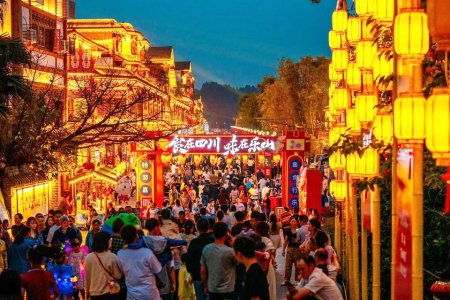
昆明遇见台北:一条街 两岸情
Ren Min Ri Bao Hai Wai Ban· 2025-07-04 01:29
Core Viewpoint - The establishment of a Taiwanese-style street market in Kunming, named "Taipei Street," reflects the cultural exchange and integration between Taiwan and mainland China, showcasing Taiwanese cuisine and fostering community connections [1][2][3] Group 1: Market Development - The Taipei Street, a 138-meter long Taiwanese-style street, has attracted significant foot traffic, averaging 10,000 visitors daily, with per capita spending between 30 to 40 yuan, indicating a strong local interest in Taiwanese snacks [2] - The market features over 60 Taiwanese vendors, including traditional food stalls, which have quickly gained popularity, often selling out of their offerings, such as the 250 daily portions of "large intestine wrapped small intestine" [2] Group 2: Cultural Exchange - The street market serves as a cultural bridge, with elements like traditional Taiwanese lanterns and local performances, enhancing the experience for visitors and promoting cultural understanding [3] - The integration of Taiwanese culinary practices with local ingredients has led to cost-effective operations and increased sales for vendors, demonstrating a successful blend of different culinary traditions [2][3] Group 3: Visitor Engagement - The atmosphere of the market is described as vibrant and welcoming, with vendors engaging with customers, fostering a sense of community and connection among visitors [2][3] - Statistics indicate a significant increase in cross-strait interactions, with 4.405 million people expected to travel between Taiwan and mainland China in 2024, marking a 53.8% year-on-year growth, reflecting a growing interest in cultural exchange [3]