大肠包小肠

Search documents
台胞德化“赶大集”
Xin Lang Cai Jing· 2026-02-15 23:22
Core Viewpoint - The 2026 Dehua "Village Bowl" Gourmet Carnival is being held to promote cross-strait food exchange, featuring over 40 Taiwanese snack and gift vendors, attracting many visitors to experience Taiwanese cuisine and culture [1] Group 1: Event Overview - The carnival runs until the 22nd and showcases a variety of Taiwanese delicacies such as oyster omelets, scallion meat rolls, and brown sugar pearl milk tea [1] - The event serves as a platform for cultural exchange between Fujian and Taiwan, with local citizens and tourists participating actively [1] Group 2: Participation and Impact - Taiwanese vendors not only prepare authentic Taiwanese dishes on-site but also bring unique seasonal gifts for sale [1] - The event is seen as a vital medium for cross-strait communication, emphasizing the importance of food in fostering connections [1] Group 3: Market Opportunities - Taiwanese vendor Lin Zongyan expresses the potential of the mainland market, aiming to expand the reach of authentic Taiwanese flavors through participation in the carnival [1]
武汉消费热力满格!元旦首日线下消费额突破40亿元
Sou Hu Cai Jing· 2026-01-03 07:40
Core Insights - Wuhan's consumer market experienced a strong start in 2026, with offline retail spending reaching 40.92 billion yuan on New Year's Day, marking a year-on-year increase of 19.14% [1] - The number of transactions totaled 7.0482 million, up 21.46% year-on-year, while the number of consumers reached 6.3493 million, reflecting a 21.17% increase [1] Retail Performance - The luxury goods sector, particularly at 武商MALL, saw a significant influx of consumers, with long queues forming outside stores like LV [3] - Various shopping districts in Wuhan showcased vibrant New Year celebrations, attracting large crowds and enhancing the shopping experience [5] Consumer Engagement - Events such as the "Golden Fortune Tree" photo spot and performances featuring traditional and modern elements contributed to a festive atmosphere, drawing in young consumers [5][7] - The integration of cultural performances, such as the giant fire dance and traditional crafts, increased foot traffic and sales, with clothing sales expected to exceed 9 million yuan on New Year's Day [7] Dining Trends - The dining scene was bustling, with long wait times reported at popular restaurants, including the newly opened 海底捞 [9][10] - The first Taiwan Food Festival at 鲁巷广场 attracted significant interest, with early bird tickets selling out quickly, indicating strong consumer demand for diverse culinary experiences [10]


日翻台12轮、低至9.9元/碗,台湾卤肉饭又火了?
3 6 Ke· 2025-11-25 12:19
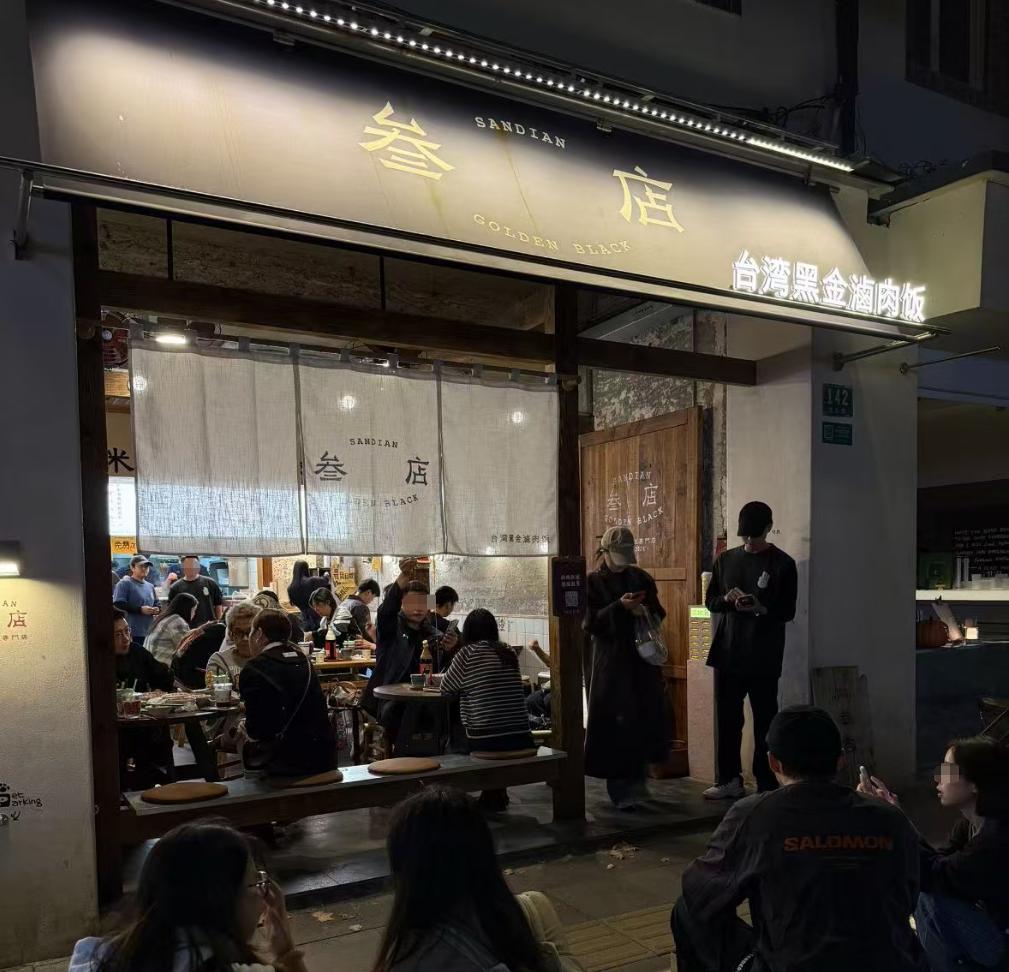
Core Insights - The Taiwanese braised pork rice has rapidly gained popularity in the dining market, particularly in Shanghai, with brands like "A Yuan Is Here" opening nearly 40 locations since January, over 70% of which were opened in the last three months [1][3] - The average table turnover rate for these restaurants has reached 12 times a day, making Taiwanese braised pork rice a new favorite among diners [1][3] Expansion and Popularity - "A Yuan Is Here" has opened nearly 40 stores across cities like Shanghai, Shenzhen, Beijing, Nanjing, and Ningbo, leading the popularity charts in various categories [3][4] - Other brands such as "Jian Jiao Taiwanese Eatery" and "Home Cooking" have also expanded rapidly, with Jian Jiao opening nearly 20 locations since its inception in 2022 [3][4] Pricing Strategy - The pricing for Taiwanese braised pork rice is kept low, often below 20 yuan, with some offerings as low as 9.9 yuan, appealing to young consumers seeking value [6][7] - Brands like "A Yuan Is Here" and "Long Lai Xia" emphasize high value through unlimited rice and soup refills, enhancing the overall dining experience [6][7] Menu and Dining Experience - These brands typically operate as "Taiwanese snack collective stores," offering a combination of braised pork rice, Taiwanese snacks, and beverages, catering to both individual diners and small gatherings [8][10] - The average customer spending ranges from 35 to 45 yuan, despite the low pricing of individual items, due to the combination of main dishes and snacks [10] Design and Atmosphere - The new brands focus on creating aesthetically pleasing dining environments, contrasting traditional fast-food outlets, which enhances perceived value [11] - Open kitchen designs and modern decor attract consumers, making the dining experience more enjoyable and justifying slightly higher prices compared to typical fast food [11] Market Trends and Challenges - The trend of Taiwanese braised pork rice is spreading nationwide, with new brands emerging in cities like Wuhan, Shenzhen, and Hangzhou [12] - The operational model of these new establishments is simplified, allowing for quick service and lower labor costs, which facilitates rapid expansion [13][17] - However, the low entry barriers and high demand may lead to market saturation and increased competition, resulting in challenges related to brand differentiation and product uniqueness [14][15][17]
台胞大陆扎根“地摊经济” 于细微处感受融合发展
Zhong Guo Xin Wen Wang· 2025-11-07 07:30
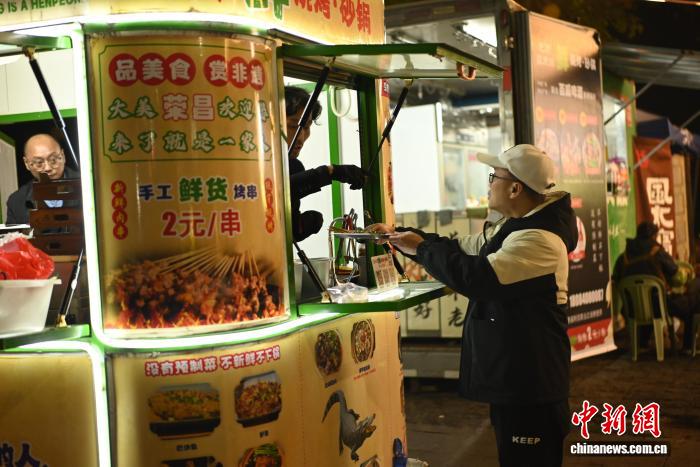
Core Viewpoint - The article highlights the experiences of Taiwanese entrepreneur Li Dong'en in the "street stall economy" in mainland China, emphasizing the integration and development opportunities available through this sector [1]. Group 1: Entrepreneurial Journey - Li Dong'en has been involved in the "street stall economy" for nearly 20 years, starting with a two-yuan store in Guangdong and later expanding into various sectors including retail, tea drinks, and snacks [3]. - In 2007, he was invited by a fellow countryman to join a successful two-yuan store business in Guangdong, where a small store could generate daily revenues exceeding 10,000 RMB [3]. - After moving to Chongqing, he diversified his offerings to include "tea drinks + Taiwanese snacks" such as bubble tea and ice cream starting in 2012 [3]. Group 2: Current Ventures and Innovations - Li Dong'en plans to launch a new project featuring "桶仔鸡" (bucket chicken), which will offer multiple chicken-based products and incorporate cultural elements from both sides of the Taiwan Strait [6]. - He has embraced the internet by creating a social media presence, achieving significant engagement with 282,000 likes and 15,000 followers on one platform [4]. - Li has been appointed as a cultural and tourism ambassador for Chongqing's Rongchang District, promoting culinary exchanges between Taiwan and mainland China [4]. Group 3: Market Trends and Challenges - The "street stall economy" has evolved, requiring operators to possess more skills and adapt to new market demands, shifting from a model where "good food sells itself" to one where visibility and marketing are crucial [6]. - Li Dong'en's upcoming project will reflect the growing complexity and cultural integration within the street food sector, showcasing the nuances of cross-strait culinary collaboration [6].
海峡两岸社团交流节精彩纷呈
Ren Min Ri Bao Hai Wai Ban· 2025-10-20 22:53
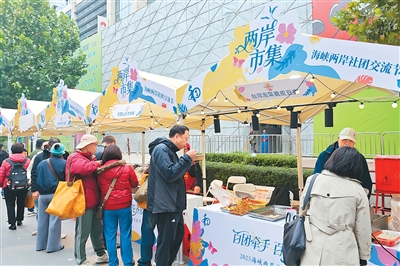
Core Points - The 2025 Cross-Strait Community Exchange Festival opened in Beijing, featuring over 360 Taiwanese guests from various sectors, emphasizing the importance of community interaction in promoting cross-strait relations [1][2][6] - The event aims to deepen cooperation and understanding between the two sides, with a focus on cultural, technological, and health sectors, as well as youth engagement [2][5] Group 1: Event Overview - The festival is themed "Hundreds of Groups Hand in Hand, Hundreds of Flowers Blooming," highlighting the significance of community ties in cross-strait relations [1] - The opening ceremony featured speeches from key figures, including Zhang Zhijun, who emphasized the need for continued dialogue and cooperation based on the "One China" principle and the "1992 Consensus" [1][2] Group 2: Activities and Participation - The festival includes various activities such as cultural performances, food markets showcasing Taiwanese delicacies, and discussions on professional cooperation between Taiwanese and mainland associations [3][4][5] - Approximately 40 specialty booths were set up at the market, featuring well-known brands and traditional Taiwanese foods, attracting significant interest from visitors [4] Group 3: Future Initiatives - Following the opening ceremony, ten "Hand in Hand" salon activities will take place, focusing on in-depth discussions about community exchanges and professional collaborations [5] - The event will also organize thematic visits for Taiwanese guests to cities like Tianjin and Shanxi, covering areas such as cultural heritage, technological innovation, and community governance [5]
品异国风味 逛区域首店 观音桥商圈假期打造多元消费盛宴
Sou Hu Cai Jing· 2025-10-03 09:25
Core Insights - The "2025 Chongqing·Singapore Experience Week" was held during the National Day and Mid-Autumn Festival holiday, marking the 10th anniversary of the China-Singapore connectivity project [1] Group 1: Event Highlights - The event attracted large crowds, showcasing Singaporean cuisine such as Hainanese chicken rice, laksa, satay, and kaya toast, creating an immersive cultural experience [3] - Various interactive zones were set up, including a brand exhibition area, cultural travel interaction zone, and entertainment performances, featuring well-known Singaporean brands like Singapore Airlines and CapitaLand [3] Group 2: Cultural Exchange and Activities - The first "Taiwan Culture Week" was also launched during the holiday, featuring over 40 Taiwanese food vendors offering traditional dishes like braised pork rice and salt and pepper chicken [5] - The event included a music section with performances and workshops, promoting cultural exchange through traditional games and activities [5] Group 3: Consumer Engagement and New Openings - The Chongqing shopping district saw the opening of several flagship stores, enhancing consumer attraction with new shopping experiences [5] - New urban scenes like Xinggui Square and "I Am in Chongqing" district drew significant foot traffic, integrating trendy landmarks and cultural projects to enrich the consumer experience [5]
昆明遇见台北:一条街 两岸情
Ren Min Ri Bao Hai Wai Ban· 2025-07-04 01:29
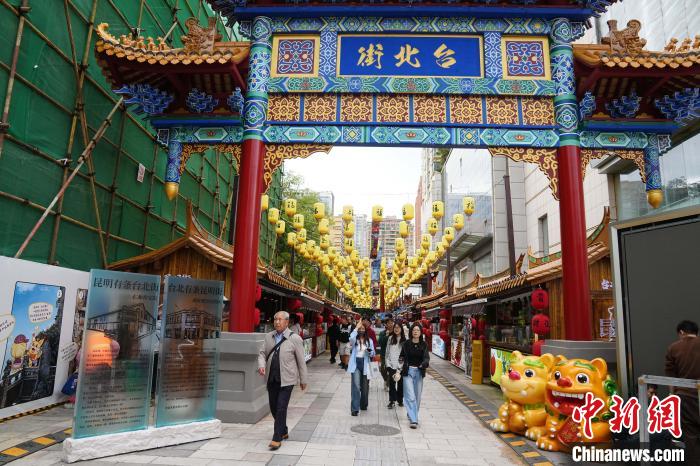
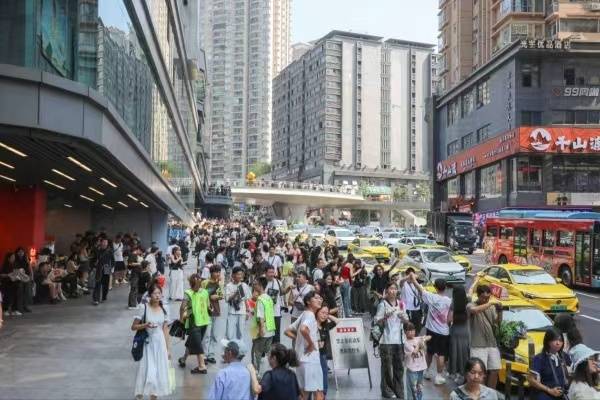
Core Viewpoint - The establishment of a Taiwanese-style street market in Kunming, named "Taipei Street," reflects the cultural exchange and integration between Taiwan and mainland China, showcasing Taiwanese cuisine and fostering community connections [1][2][3] Group 1: Market Development - The Taipei Street, a 138-meter long Taiwanese-style street, has attracted significant foot traffic, averaging 10,000 visitors daily, with per capita spending between 30 to 40 yuan, indicating a strong local interest in Taiwanese snacks [2] - The market features over 60 Taiwanese vendors, including traditional food stalls, which have quickly gained popularity, often selling out of their offerings, such as the 250 daily portions of "large intestine wrapped small intestine" [2] Group 2: Cultural Exchange - The street market serves as a cultural bridge, with elements like traditional Taiwanese lanterns and local performances, enhancing the experience for visitors and promoting cultural understanding [3] - The integration of Taiwanese culinary practices with local ingredients has led to cost-effective operations and increased sales for vendors, demonstrating a successful blend of different culinary traditions [2][3] Group 3: Visitor Engagement - The atmosphere of the market is described as vibrant and welcoming, with vendors engaging with customers, fostering a sense of community and connection among visitors [2][3] - Statistics indicate a significant increase in cross-strait interactions, with 4.405 million people expected to travel between Taiwan and mainland China in 2024, marking a 53.8% year-on-year growth, reflecting a growing interest in cultural exchange [3]
舌尖上的两岸故事:“台北味”香飘昆明夜
Zhong Guo Xin Wen Wang· 2025-06-01 01:37
Core Insights - The article highlights the vibrant atmosphere of the Taipei Street in Kunming, where Taiwanese food and culture are showcased during the Dragon Boat Festival, attracting numerous visitors [1][2]. Group 1: Event Overview - The Taipei Street in Kunming features a variety of Taiwanese delicacies, with around 30 vendors bringing nearly 100 authentic Taiwanese dishes, creating a unique cultural experience [2][3]. - The street has become popular on social media due to its authentic food and enthusiastic vendors, with daily visitor numbers exceeding 10,000 since its opening [2][3]. Group 2: Cultural Significance - The establishment of Taipei Street serves as a nostalgic destination for Taiwanese expatriates in Yunnan, fostering connections between the two regions [5][6]. - The street reflects the shared cultural heritage of Taiwan and mainland China, with architectural elements and food items that resonate with both cultures [2][5]. Group 3: Vendor Experiences - Vendors express a sense of familiarity and warmth in Kunming, likening the local atmosphere to that of Taiwan, which enhances customer engagement and sales [3][6]. - Plans are underway to promote more entrepreneurial exchanges between young people from both sides, indicating a commitment to long-term operations and cultural exchange [6].