
网约车一口价服务

Search documents
打车“一口价”被多地叫停背后:司机称车程越远越亏,乘客则称被索要空调费
Xin Lang Cai Jing· 2025-11-29 20:17
Core Viewpoint - The introduction of a "fixed price" discount ride-hailing model has led to regulatory scrutiny due to the negative impact on both drivers and passengers, resulting in a dilemma for both parties [1][20]. Group 1: Driver Concerns - Drivers report that the "fixed price" model often results in earnings as low as 1 yuan per kilometer for long-distance rides, making it unprofitable [3][5]. - For a 20-kilometer ride, drivers can earn significantly less with "fixed price" orders compared to standard fares, with earnings dropping from approximately 35 yuan to 25 yuan [5]. - Drivers face penalties for rejecting low-priced orders, creating a cycle where they must accept unprofitable rides to maintain their order volume [8][20]. Group 2: Passenger Complaints - Passengers have expressed dissatisfaction with drivers demanding additional fees for services like air conditioning, despite the low "fixed price" fare [9][10]. - Instances of fare increases beyond the initially quoted "fixed price" have been reported, leading to confusion and frustration among passengers [13][14]. - Passengers have noted that drivers often exhibit poor service attitudes, particularly when they feel the fare does not adequately compensate their efforts [9][10]. Group 3: Regulatory Actions - Multiple cities have begun regulating "fixed price" and discount ride-hailing services to prevent price deception and protect driver earnings [20][21]. - Regulations include a proposal in Nanjing to ensure drivers receive at least the local minimum wage for their service hours, addressing the issue of low earnings from discount rides [20]. - The West Xi'an Transportation Bureau has issued a notice to suspend low-price marketing activities, highlighting the need for fair competition and service quality in the ride-hailing market [20][21].

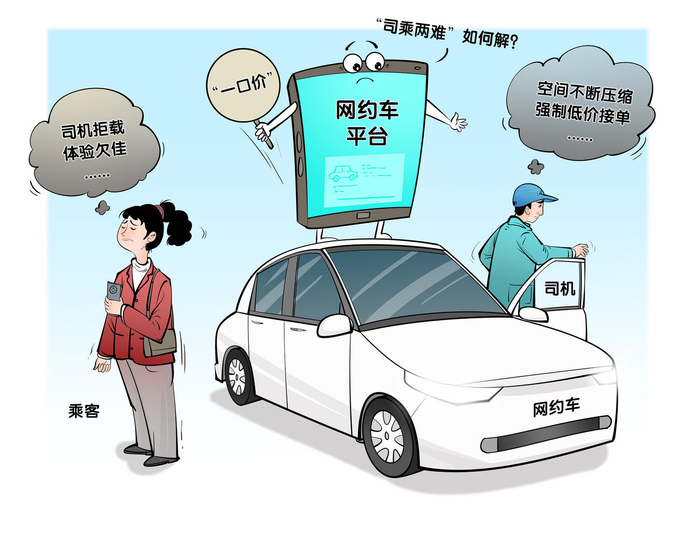
多地叫停网约车“一口价” 行业价格下滑待破局
Di Yi Cai Jing· 2025-11-29 00:32
Core Viewpoint - The rights and interests of ride-hailing drivers are increasingly under scrutiny, particularly regarding the "fixed price" model and its impact on driver income and market order [1][2][5]. Group 1: Fixed Price Model - The "fixed price" model, which provides consumers with price certainty, has received positive feedback from passengers but negative responses from drivers due to lower earnings and unpredictable operational conditions [3][4]. - Regulatory bodies have begun to implement measures to manage the "fixed price" model, requiring platforms to report low-price promotional activities and prohibiting operations below cost to maintain market order [4][5]. - Complaints from drivers indicate that the "fixed price" and "special offer" orders often lead to a situation where drivers earn less than their operational costs, contributing to a perception of unfair compensation [5][6]. Group 2: Price Decline Challenges - The controversy surrounding the "fixed price" model is linked to a general decline in fare prices, with drivers reporting that "fixed price" orders are often lower than those from dynamic pricing models [6][7]. - Factors contributing to the price decline include market saturation, increased driver supply, and the shift from a growth market to a mature market, leading to reduced subsidies from platforms [7][8]. - The competitive landscape is characterized by price wars, driven by the need for platforms to differentiate themselves in a limited growth environment, which has further exacerbated the issue of low pricing [7][8]. Group 3: Regulatory and Market Implications - The cancellation of the "fixed price" model may lead to short-term increases in travel costs and reduced order volumes for platforms, but it is expected to encourage a shift towards service quality competition in the long run [8]. - To address low-price competition, a multi-faceted approach is recommended, including establishing transparent pricing mechanisms, encouraging service innovation, and optimizing regulatory frameworks to support driver rights [8].
人民财评:网约车“一口价”的本质仍是内卷式竞争
Ren Min Wang· 2025-10-12 01:01
Core Viewpoint - Recent policies in cities like Xi'an, Shaanxi, have suspended low-price marketing practices such as "one-price" for ride-hailing services, aiming to eliminate price fraud and malicious underpricing, which is seen as a step towards a fair and sustainable industry ecosystem [1][3] Group 1: Policy Changes - Multiple regions, including Jiangxi, Henan, and Guangdong, have implemented similar policies to prohibit platforms from enforcing "one-price" models on drivers, indicating a broader regulatory trend [1] - The cessation of "one-price" practices is intended to disrupt the unsustainable reliance on low-price competition, which has shifted operational costs onto drivers, leading to increased workloads without corresponding income [1] Group 2: Industry Dynamics - The core of the governance approach is not merely prohibition but finding optimal solutions that respect drivers' labor value while addressing concerns about potential fare increases for passengers [1][2] - A transparent pricing mechanism and reasonable commission rules are essential to eliminate disorderly low-price competition without burdening consumers [2] - The ride-hailing industry is transitioning from "barbaric growth" to a phase focused on quality and efficiency, necessitating platforms to shift from price reduction to quality enhancement through technology and management optimization [2]