
职工医保

Search documents
跨省共济来了!职工医保个人账户全家共用,今年所有省份开通
2 1 Shi Ji Jing Ji Bao Dao· 2026-02-11 02:50
Core Viewpoint - The National Healthcare Security Administration has released the first batch of key items for the 2026 annual plan in the healthcare insurance sector, emphasizing the establishment of cross-province mutual aid for employee medical insurance personal accounts [1] Group 1: Policy Changes - All provinces will open cross-province mutual aid for employee medical insurance personal accounts, allowing funds to be used for medical expenses and personal contributions to resident medical insurance and long-term care insurance [1] - The mutual aid beneficiaries will include not only direct relatives but also siblings, grandparents, and other close relatives [1] Group 2: Implementation Status - As of early January 2026, 337 coordinated regions have launched the medical insurance wallet and achieved cross-province mutual aid [1]
参保从不是“浪费钱”,是每个人的健康底气(医保知识第一期)
Sou Hu Cai Jing· 2026-02-03 10:35
Core Viewpoint - The article emphasizes the importance of insurance participation, highlighting that it serves as a financial safety net against unexpected health issues and medical expenses, advocating for proactive enrollment in health insurance programs [1][2]. Group 1: Importance of Insurance Participation - Insurance participation is fundamentally about mutual assistance and risk-sharing, where individuals contribute to a large medical insurance fund that supports those facing significant health expenses [1]. - Basic medical insurance provides reliable and safe healthcare coverage for all, ensuring timely medical treatment and mitigating the risk of poverty due to illness [1]. Group 2: Advantages of Basic Medical Insurance - Risk Mitigation: In 2024, the average hospitalization rate for insured residents is projected to be 21.7%, with average hospitalization costs significantly exceeding the total insurance contributions over ten years, effectively shielding individuals from the financial burden of serious illnesses [1]. - Comprehensive Coverage: Participants benefit from various reimbursements, including outpatient services, chronic disease treatments, and automatic reimbursements for major illnesses, along with oversight to prevent excessive medical practices [2]. - Low Costs: The average daily contribution for residents is approximately 1.1 yuan, translating to about 30 yuan monthly, providing health coverage at a minimal cost [2]. - Government Subsidies: All insured individuals receive substantial government subsidies, with the per capita subsidy expected to increase by 30 yuan by 2026, reaching at least 700 yuan per person, amounting to over 600 billion yuan annually [2]. - Quality Services: Participants can enjoy direct settlement at designated medical institutions without the hassle of manual reimbursements, and can access services in different locations with ease [2].
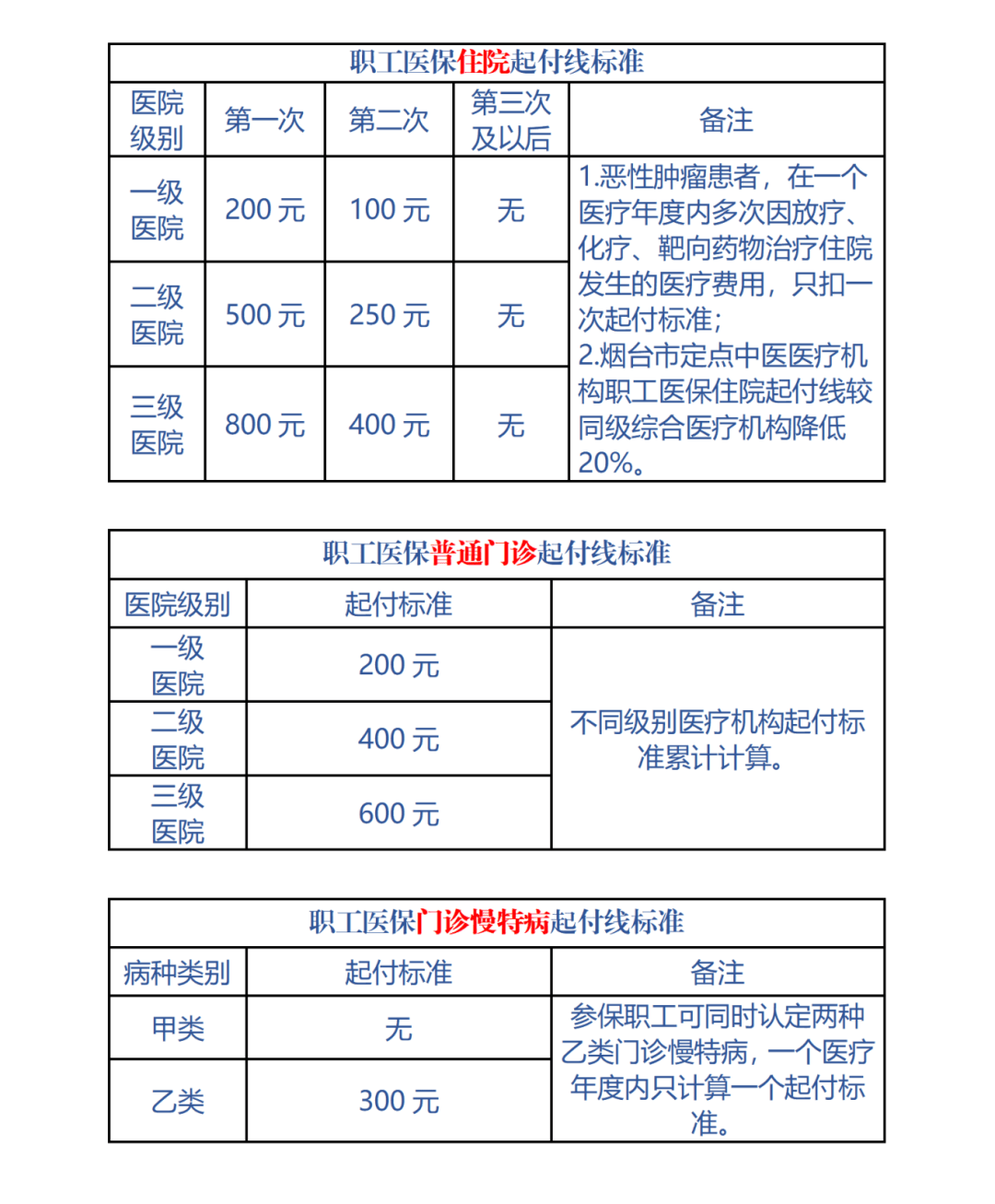
【医保小课堂】一文看懂医保“起付线”,看病花费心里有数
Sou Hu Cai Jing· 2026-01-31 18:37
Group 1 - The core concept of the "deductible line" in health insurance is that it serves as a threshold for reimbursement, meaning that only medical expenses above a certain amount will be covered by the insurance fund [1] - The deductible line is calculated annually, starting from January 1 to December 31, and expenses below this line are paid out-of-pocket by the insured [1] Group 2 - The deductible line is set to guide reasonable medical usage and promote tiered medical treatment, with lower lines for primary care facilities and higher lines for tertiary hospitals, encouraging patients to seek care for minor ailments at lower-tier facilities [2] - The system prioritizes coverage for major illnesses, ensuring that resources are allocated to high-cost treatments, with reimbursement rates increasing as expenses exceed the deductible line [2] Group 3 - Different hospital levels have varying deductible standards, with higher levels requiring higher deductibles and offering lower reimbursement rates, thus incentivizing patients to choose lower-tier hospitals for minor health issues [3] - The deductible standards for inpatient care vary by hospital level, with specific amounts set for first, second, and subsequent hospitalizations, and special provisions for patients with severe conditions like cancer [4]

徐州积极织就“参保网” 加强居民医疗保障
Xin Hua Ri Bao· 2025-09-24 00:22
Core Insights - The expansion of medical insurance coverage in Xuzhou has significantly improved the health security of its citizens, with innovative methods leading to notable achievements in enrollment [1][2][3] Group 1: Data-Driven Enrollment Expansion - Xuzhou's medical insurance department collaborated with statistical departments to identify 6,120 unregistered enterprises from a total of 16,273 surveyed, implementing targeted outreach strategies to ensure comprehensive enrollment [1] - The department utilized a combination of methods including letters, proactive discussions, and on-site visits to engage potential participants, ensuring no one was left out [1] Group 2: Service Accessibility Enhancements - To address the challenges posed by a high number of migrant workers and a mobile population, Xuzhou has established a "15-minute medical insurance service circle," with 275 standardized service stations and 2,826 service points in communities [2] - The city has also upgraded urban services by installing self-service terminals in high-traffic areas, providing 24-hour access to medical insurance services [2] Group 3: Policy Innovations for Enrollment Retention - Xuzhou has introduced various policies to enhance the attractiveness of medical insurance, including a 1% reduction in contribution rates for flexible employment workers compared to standard rates [3] - The implementation of a "family mutual aid" policy allows personal account balances to cover family members' insurance costs, improving fund utilization and participant satisfaction [3] - Financial assistance for vulnerable groups has exceeded 100 million yuan, ensuring that those in need are adequately supported and enrolled [3] - As of August 21, 199.56 million workers were enrolled in employee medical insurance, an increase of 1.68 million from the previous year, with a coverage rate increase of 0.52 percentage points [3]