城乡居民医保

Search documents
故乡回不去了,普通人的出路在股市吗?
集思录· 2026-02-24 13:07
Group 1 - The article emphasizes that the stock market can be a viable path for ordinary people to achieve wealth accumulation and asset appreciation, especially through strategies like dividend investing, cash flow strategies, and index funds [1][8][12] - It highlights the importance of time and compound interest in investment, suggesting that even small, consistent investments can lead to significant returns over time [1][6] - The article also points out that many retail investors tend to chase trends and make impulsive decisions, which can lead to losses, while a more disciplined approach can yield better results [9][13] Group 2 - The discussion includes the effectiveness of basic medical insurance in rural areas, noting that government policies have improved the quality of life for the elderly, which indirectly supports the argument for financial planning and investment [3] - It mentions that the stock market is often viewed as a casino, with a high risk of loss, and suggests that ordinary people should focus on stable income sources and skill development instead [2][7] - The article concludes that true financial success in the stock market requires knowledge, patience, and a long-term perspective, rather than seeking quick profits [6][10][14]


财政部印发《〈社会保险基金会计制度〉补充规定》 强化医保基金运行监测 化解收支错配风险
Shang Hai Zheng Quan Bao· 2026-01-12 18:35
Core Viewpoint - The Ministry of Finance has issued supplementary regulations to standardize accounting for medical insurance funds and enhance management, particularly in the context of the ongoing reforms in the medical insurance system and the establishment of long-term care insurance [1] Group 1: Accounting Regulations - The supplementary regulations unify and standardize the accounting and reporting for long-term care insurance funds, facilitating a true reflection of fund operations across regions [1] - Adjustments have been made to the accounting treatment of urban and rural residents' medical insurance premiums to accurately reflect fund operations and identify risks early [2] Group 2: Accounting Treatment Adjustments - Under the new regulations, urban and rural residents' medical insurance premiums collected in advance for future years will be processed through a "temporary receipt" account, with income recognized in the corresponding benefit year [2] - The regulations further specify the accounting treatment for major illness insurance funds under both commercial insurance and self-managed models, requiring detailed accounts for premium transfers, risk compensation, and surplus returns [2] Group 3: Direct Settlement Initiatives - The regulations mandate that direct settlement transactions with pharmaceutical companies be processed as "temporary payments" until premium settlements are confirmed, enhancing transparency in fund management [3] - Institutions are required to update their accounting systems to comply with the new regulations and ensure accurate data management for urban and rural residents' medical insurance funds [3]
四川省贫困人口参加医保财政部门全额代缴
Si Chuan Ri Bao· 2026-01-06 11:24
Core Viewpoint - The provincial government is implementing measures to alleviate the economic burden of medical treatment for impoverished populations by fully subsidizing their personal contributions to urban and rural resident health insurance starting this year [1] Group 1: Policy Implementation - The provincial health insurance bureau mandates that designated medical institutions must provide services to impoverished individuals without relaxing standards or engaging in excessive medical practices [1] - There is a strict prohibition on the use of non-reimbursable drugs, diagnostic projects, and medical service facilities outside the health insurance directory for impoverished patients [1] - The use of expensive diagnostic projects is tightly controlled, and large prescriptions and extensive examinations are strictly prohibited [1] Group 2: Financial Support - Since September of last year, county-level public medical institutions in impoverished counties are banned from using self-paid drugs and devices for impoverished patients [1] - There is a strict control on the use of expensive drugs and high-value medical consumables in township hospitals, community health service institutions, and village clinics for impoverished patients [1] - Any non-compliant medical expenses identified will be borne by the medical institutions themselves [1] Group 3: Insurance Coverage - Since 2017, the personal contribution portion of health insurance for impoverished populations has been fully subsidized by the financial department according to the minimum payment standards set by each planning area [1] - The required funding is included in the public budget of county-level finances, with provincial and municipal finances providing subsidies to ensure that impoverished individuals have access to basic health insurance [1] - For inpatient treatment at designated medical institutions within the county, a "diagnosis and treatment first, settlement later" policy is implemented, with no prepayment required, and 100% reimbursement of eligible medical expenses by the health insurance fund [1]
从托底到赋能 “投资于人”擦亮经济发展民生底色
Zheng Quan Shi Bao· 2025-12-09 17:45
Core Viewpoint - The article emphasizes the strategic shift in China's economic policy towards "investing in people," which aims to enhance the quality of life and stimulate domestic consumption through various social welfare initiatives [1][6]. Summary by Sections Social Welfare Investments - In 2025, China will increase investments in core social security areas such as pensions and medical insurance, with a 2% increase in basic pensions for retirees, marking the 21st consecutive year of pension increases [2]. - The per capita financial subsidy for urban and rural residents' medical insurance will rise by 30 yuan, reaching 700 yuan per person annually, alleviating the burden of medical expenses [2]. Fiscal Policy and Management - The fiscal policy for 2025 includes a historic increase in the general public budget deficit ratio to 4%, up by 1 percentage point from the previous year, and the issuance of 1.3 trillion yuan in special long-term bonds to support social welfare [2][3]. - Expenditures on social security, employment, education, and health have outpaced overall budget growth, with social security and employment spending increasing by 9.3% year-on-year [2]. Consumer Confidence and Spending - The "investment in people" strategy is expected to boost consumer confidence, with a consumer willingness index rising to 112.9, the highest in five quarters [5]. - The elderly care and childcare policies are designed to reduce household financial burdens, encouraging increased consumer spending [4]. Economic Growth and Structural Changes - The article highlights a shift from traditional social safety nets to strategic investments in human capital, indicating that future competition will focus on population quality and labor capabilities [3][6]. - The integration of "investment in material" and "investment in people" is anticipated to enhance domestic circulation and foster new growth drivers [7]. Future Outlook - Experts predict that the "investment in people" approach will enter a new phase in 2026, focusing on support for vulnerable groups and improving the social security system [6]. - Recommendations include building a robust guarantee system to reduce household risk exposure and creating a lifecycle policy framework for social welfare [6].
财政部:积极培育新兴产业和未来产业 持续推动制造业转型升级
智通财经网· 2025-11-07 10:56
Core Viewpoint - The report emphasizes the acceleration of new growth momentum in China's economy through enhanced fiscal policies, support for innovation, and investment in key industries, while ensuring the stability of employment and market expectations [1][3]. Group 1: Fiscal Policy and Economic Growth - The fiscal policy is increasingly proactive, focusing on stabilizing employment, businesses, and market expectations, while promoting economic recovery [3][4]. - A total of 300 billion yuan in special bonds is allocated to support the replacement of consumer goods, which is expected to stimulate significant retail sales [4][15]. - The central government plans to increase its technology funding to 398.12 billion yuan in 2025, a 10% increase from the previous year, focusing on core technology and strategic industries [5][21]. Group 2: Investment and Consumption - The government aims to enhance domestic demand by boosting consumption and effective investment, with a focus on key sectors and weak links [13][16]. - The issuance of special bonds has accelerated, with 5.55 billion yuan issued in the first half of the year, completing 42.7% of the annual target [16]. - The manufacturing sector is expected to see a 10.3% increase in industrial investment, driven by government support for technological upgrades [17]. Group 3: Employment and Social Welfare - The central government allocated 667.4 billion yuan for employment support, with 6.95 million new urban jobs created in the first half of the year [27][28]. - Education spending increased by 5.9% to 2.15 trillion yuan, with a focus on improving quality and access to education [29][30]. - Basic public health service funding reached 804.35 billion yuan, enhancing health management and disease prevention efforts [32][33]. Group 4: Risk Management and Financial Stability - The government is implementing measures to mitigate financial risks, including the management of local government debt and the promotion of real estate market stability [7][9]. - A comprehensive approach to fiscal management is being adopted, including reforms in tax systems and budget execution to ensure effective use of resources [7][12]. Group 5: Innovation and Technology - The report highlights the importance of integrating technological innovation with industrial development, with a focus on enhancing research capabilities and supporting key technology projects [20][21]. - Funding for basic research is set to increase by 12.1%, emphasizing the need for original innovation and support for research institutions [21][22]. Group 6: Environmental and Social Development - The government is committed to ecological protection and sustainable development, with significant funding allocated for pollution control and ecosystem restoration [38][39]. - Social welfare programs are being expanded, with increased support for vulnerable populations and efforts to improve living standards [34][35].
惠农“税费通”|支持乡村振兴系列税费优惠政策(35)采摘观光的种植养殖土地免征城镇土地使用税
蓝色柳林财税室· 2025-10-28 14:03
Core Viewpoint - The article discusses the growing trend of agritourism, particularly apple picking, and highlights the tax benefits associated with converting traditional orchards into agritourism sites, specifically the exemption from urban land use tax for qualifying activities [1][2][4]. Group 1: Agritourism Development - The article mentions that agritourism, such as apple picking, is becoming increasingly popular, attracting visitors from urban areas [1]. - It suggests that converting traditional orchards into agritourism sites can be a profitable venture, as it aligns with current trends in eco-tourism [2]. Group 2: Tax Exemption Policy - The article outlines that land directly used for agritourism activities, such as planting and harvesting, is exempt from urban land use tax under specific regulations [4][5]. - It references the relevant policy from the Ministry of Finance and the State Administration of Taxation, which provides guidelines for tax exemptions for agricultural land used for tourism [6].

怎么缴?何时缴?缴多少?
Xi An Ri Bao· 2025-10-22 02:43
Core Points - The article discusses the 2025 urban and rural residents' medical insurance payment period in Xi'an, which runs from October to December 25, 2025, with a total funding standard of 1,100 yuan per person, including a government subsidy of 700 yuan and a personal contribution of 400 yuan [1][2] Group 1: Payment Standards and Subsidies - The personal payment standard for 2025 is set at 400 yuan per person per year, in line with the national minimum standard [2] - The government subsidy for residents' medical insurance has increased by 30 yuan from the previous year, reaching a minimum of 700 yuan per person per year [2] Group 2: Coverage and Eligibility - The medical insurance covers all urban and rural residents, excluding those already participating in employee insurance or other medical coverage [3] - Special provisions allow out-of-town students and preschool children to enroll in their place of residence, while university students are encouraged to enroll at their school location [3] Group 3: Treatment Enjoyment Periods - Individuals who meet continuous payment conditions can enjoy medical insurance benefits from January 1 to December 31, 2026, after paying during the concentrated payment period [4] - Those who do not meet continuous payment conditions will face a three-month waiting period for benefits, starting from April 1, 2026 [4][5] Group 4: Special Groups and Green Channels - Special groups, such as the extremely poor and orphans, can receive full subsidies, while low-income individuals may only need to pay 110 yuan [6] - Certain groups, including military veterans and low-income individuals, can enroll through a "green channel" after the concentrated payment period and start enjoying benefits the following month [7] Group 5: Policy Optimizations - The policy allows for the transfer of employee insurance benefits to residents' insurance without interruption if the break in coverage is less than three months [9] - New payment channels have been introduced, allowing family members to pay for each other's insurance online, enhancing convenience [10]
徐州积极织就“参保网” 加强居民医疗保障
Xin Hua Ri Bao· 2025-09-24 00:22
Core Insights - The expansion of medical insurance coverage in Xuzhou has significantly improved the health security of its citizens, with innovative methods leading to notable achievements in enrollment [1][2][3] Group 1: Data-Driven Enrollment Expansion - Xuzhou's medical insurance department collaborated with statistical departments to identify 6,120 unregistered enterprises from a total of 16,273 surveyed, implementing targeted outreach strategies to ensure comprehensive enrollment [1] - The department utilized a combination of methods including letters, proactive discussions, and on-site visits to engage potential participants, ensuring no one was left out [1] Group 2: Service Accessibility Enhancements - To address the challenges posed by a high number of migrant workers and a mobile population, Xuzhou has established a "15-minute medical insurance service circle," with 275 standardized service stations and 2,826 service points in communities [2] - The city has also upgraded urban services by installing self-service terminals in high-traffic areas, providing 24-hour access to medical insurance services [2] Group 3: Policy Innovations for Enrollment Retention - Xuzhou has introduced various policies to enhance the attractiveness of medical insurance, including a 1% reduction in contribution rates for flexible employment workers compared to standard rates [3] - The implementation of a "family mutual aid" policy allows personal account balances to cover family members' insurance costs, improving fund utilization and participant satisfaction [3] - Financial assistance for vulnerable groups has exceeded 100 million yuan, ensuring that those in need are adequately supported and enrolled [3] - As of August 21, 199.56 million workers were enrolled in employee medical insurance, an increase of 1.68 million from the previous year, with a coverage rate increase of 0.52 percentage points [3]
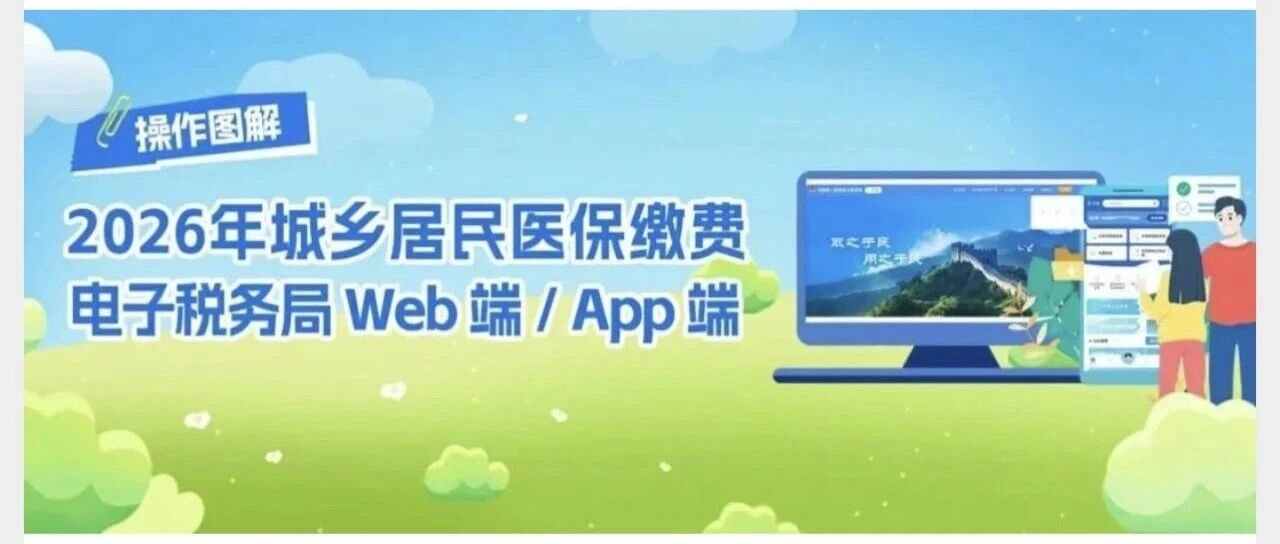
电子税务局怎么缴2026年度城乡居民医保?清晰图解+关键步骤一图掌握!
蓝色柳林财税室· 2025-09-20 12:14
Group 1 - The article provides a detailed guide on how to pay for urban and rural residents' medical insurance in Ningbo City through the electronic tax bureau, covering both web and app platforms [2][4][7] - Users can choose to pay for themselves or others, with clear steps outlined for both scenarios, including entering personal information and verifying payment details [5][8][6] - After completing the payment, users can check their payment status and print the payment receipt through the social security business module [6][7] Group 2 - The article emphasizes the importance of proper procedures for issuing VAT special invoices, highlighting situations where such invoices cannot be issued, such as for advance payments without actual sales [19][20] - Specific cases where VAT special invoices are prohibited include sales of certain consumer goods by general taxpayers and transactions involving used fixed assets [21][24] - The article outlines various service categories, such as financial services and tourism, where VAT special invoices cannot be issued, providing clarity on compliance requirements [24][25][26]