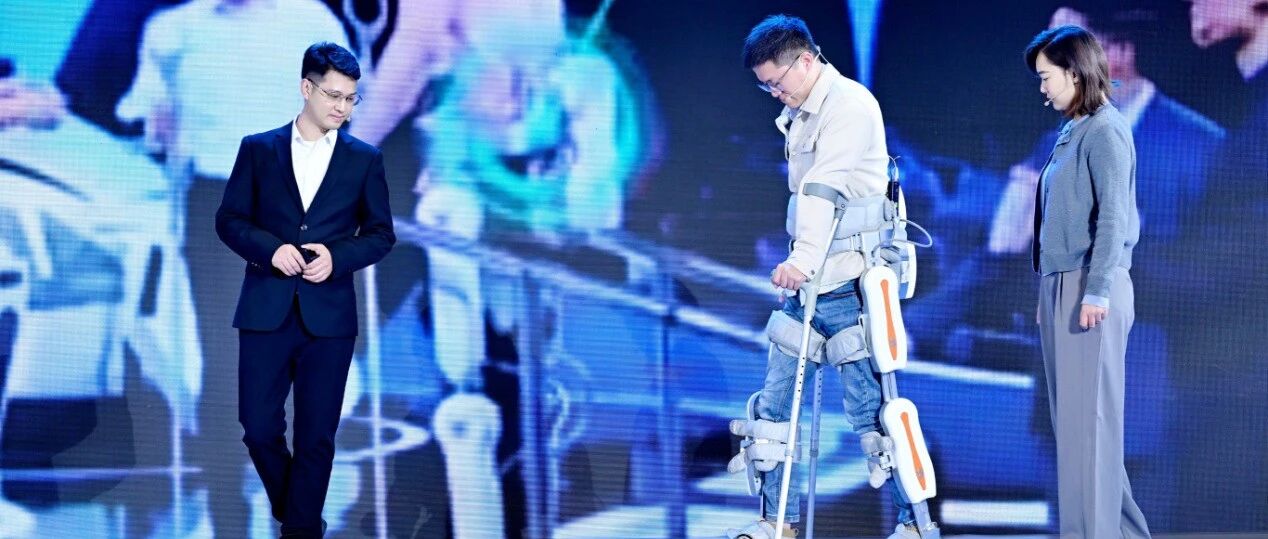
脑控下肢外骨骼机器人

Search documents
翔宇医疗20260107
2026-01-08 02:07
Summary of Xiangya Medical's Conference Call Company Overview - **Company**: Xiangya Medical - **Industry**: Brain-Computer Interface (BCI) and Rehabilitation Equipment Key Points and Arguments Product Development and Market Entry - Xiangya Medical has launched a series of brain-computer interface products, including EEG machines and new products with multimodal technology, covering disease diagnosis and patient rehabilitation. Over 10 non-invasive brain-controlled products are expected to receive registration by Q1 2026, with plans to launch 70-80 new products by the end of the year, totaling over 100 products in the market [2][3][4] - The brain-controlled products have entered over 500 top hospitals, with a target of over 1,000 hospitals by the Lunar New Year of 2027, primarily through clinical research, scientific projects, or procurement methods [2][4] - New devices are classified as Class II medical devices, which do not require clinical trials, representing an upgrade to traditional rehabilitation equipment. The active rehabilitation effect is over 20% better than traditional passive rehabilitation methods, with this percentage continuously improving [2][6] Revenue and Growth Projections - Xiangya Medical anticipates approximately 100 million yuan in revenue from the brain-computer interface business by the end of 2026, despite a macroeconomic downturn, projecting single-digit growth in 2026 and a return to double-digit growth in 2027 [3][19] - The company has established a goal of achieving over 100 million yuan in revenue based on the progress of registration certificates and hospital procurement processes [19] Competitive Advantages - Xiangya Medical has a significant competitive edge in the BCI field due to 10 years of technical accumulation, including hardware, algorithms, and data collection precision. All key components are self-developed, which reduces costs and enhances compatibility with rehabilitation devices [11][12] - The company is the only one in the rehabilitation industry that simultaneously produces self-developed data collection devices and rehabilitation equipment, making it difficult for competitors to catch up quickly [11] Market Demand and Policy Support - There is strong demand and procurement willingness for BCI devices in top hospitals, driven by government policies supporting the industry. Nearly 20 provinces have published related charging directories, accelerating the clinical application of BCI devices [9][10] - The pricing for BCI rehabilitation training is affordable, ranging from tens to over a hundred yuan, which aligns with clinical needs and enhances the market's acceptance [10][16] Non-Medical BCI Products and Future Plans - Xiangya Medical is also developing non-medical BCI products focusing on attention, meditation, and insomnia, with plans to launch consumer-grade products in 2026 [22] - The company has established a robotics research center to focus on rehabilitation robots, with plans for lightweight portable exoskeleton products expected to receive registration in the first half of 2026 [23][25] Clinical Integration and Regulatory Environment - The integration of clinical specialties is increasingly recognized despite current procurement pressures. The company promotes a comprehensive clinical rehabilitation model, which is expected to improve hospital revenue structures in the long term [31] - The DRG system positively impacts the rehabilitation business, with evidence showing that rehabilitation revenue in high-level hospitals can account for one-third of total income [32][33] Conclusion - Xiangya Medical is positioned for significant growth in the BCI and rehabilitation equipment market, leveraging its technological advancements, strong market demand, and supportive government policies to achieve its revenue goals and expand its product offerings in both medical and non-medical applications [3][19][22]

拿下关键融资!这家成都机器人公司正将“脑机接口+外骨骼”带入市场
机器人大讲堂· 2026-01-06 15:00
Core Viewpoint - The article highlights the advancements and achievements of Buffalo Robotics, a Chengdu-based hard-tech company specializing in rehabilitation robotics, particularly focusing on their innovative exoskeleton technology and brain-machine interface applications [1][3][20]. Company Evolution - Buffalo Robotics originated from a laboratory at the University of Electronic Science and Technology, where a team led by Professor Cheng Hong developed an exoskeleton robot aimed at helping patients with gait disorders [5]. - The company has grown to become a leading player in the domestic rehabilitation robotics sector, with its products now available in over 500 hospitals and institutions across China, including top-tier medical facilities [5][7]. Product Development - The core product, the "Lower Limb Walking Exoskeleton Robot," is recognized as one of the first innovative medical devices in China and has served over 10,000 patients [7]. - Buffalo has expanded its product line to include upper limb rehabilitation robots, pediatric exoskeletons, and brain-controlled smart wheelchairs [7][10]. Research and Development - The company boasts a research team of over 100 members, with more than 70% holding master's degrees or higher, ensuring a strong foundation for technological innovation [9]. - Buffalo has applied for 130 invention patents, with over 60 granted, and 16 key technologies have successfully transitioned from research to market [9]. Brain-Machine Interface Technology - Buffalo showcased a brain-controlled electric wheelchair at a smart health exhibition, allowing users to control the wheelchair through thought alone, thanks to their advanced brain-machine interface AI technology [12]. - The flagship product, the brain-controlled lower limb exoskeleton robot, is currently in clinical trials and is expected to receive regulatory approval by mid-2026 [12][14]. Future Plans - Following the recent funding round, Buffalo plans to increase R&D investment, accelerate product deployment, and deepen market penetration [16]. - The company aims to create a comprehensive product and service system that spans clinical settings to community and industrial applications [18]. Market Trends and Challenges - The rehabilitation robotics market is poised for significant growth due to an aging population and increasing quality of life demands [20]. - Buffalo faces challenges in scaling production and developing sustainable business models, exploring innovative solutions like product-service-data integration and rental models to make high-tech products more accessible [19].