康复机器人

Search documents
投资人探厂记:华工教授All in 康复硬科技 谁给的底气?
2 1 Shi Ji Jing Ji Bao Dao· 2026-02-15 06:20
Core Insights - The article highlights the advancements in rehabilitation technology, particularly through the use of AI and robotics, exemplified by the lower limb rehabilitation robot developed by Lizi Intelligent Technology (Guangzhou) Co., Ltd, which aids patients with Parkinson's disease and lower limb paralysis [1][3]. Company Overview - Lizi Intelligent, a spin-off from South China University of Technology, has accumulated over 100 invention patents and international patents, positioning itself as a strong player in the "AI + medical rehabilitation" sector [3]. - The company was founded in 2022 after nearly a decade of technological development, focusing on transforming research achievements into marketable products [5]. Market Context - There are approximately 15 million stroke patients in China, with 3.3 million new cases annually, and a lifetime risk of stroke for adults reaching 39% [4]. - The high disability rate from strokes in China, around 75%, compared to 20%-30% in developed countries, underscores the urgent need for rehabilitation technology [4]. Technological Development - Lizi Intelligent has developed nearly 20 intelligent rehabilitation robot products, with 6 receiving Class II medical device registration, and plans to complete certification for the remaining products within the year [5][9]. - The company has established a comprehensive technology chain, including brain-computer interfaces, physiological and motion sensing sensors, AI algorithms, and embodied intelligent robots [5]. Financial Support and Growth - Lizi Intelligent received significant financial backing, including a multi-million yuan credit line from Minsheng Bank, reflecting confidence in its technology and market potential [3][7]. - The company has successfully navigated early challenges, including product market acceptance and funding crises, ultimately securing multiple rounds of financing in 2023 and 2024 [7][10]. Future Plans - The company aims to develop more cost-effective home rehabilitation robots, focusing on lightweight, compact, and intelligent designs to make rehabilitation accessible to a broader audience [10]. - Minsheng Bank is committed to supporting Lizi Intelligent's growth through a comprehensive financial service system tailored for technology-driven enterprises [10].


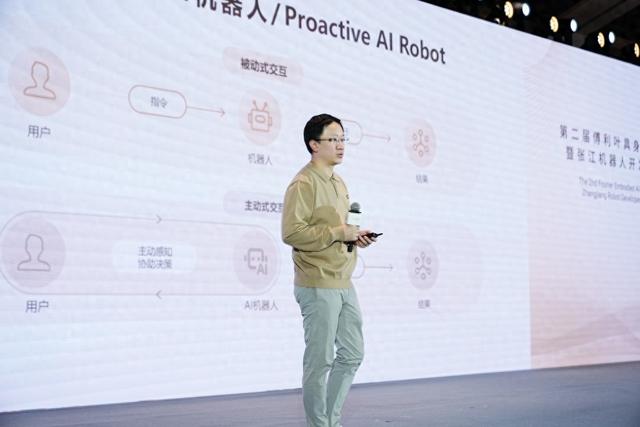
傅利叶发布脑机接口与具身智能深度融合战略
Xin Hua Cai Jing· 2026-01-29 05:36
Core Insights - Fourier is exploring the deep integration of brain-machine interfaces (BMIs) with embodied intelligence, launching a rehabilitation solution called "Brain-Machine Embodied Rehabilitation Port" aimed at wellness scenarios [1] - The company has been a pioneer in the rehabilitation robotics industry in China, focusing on wellness scenarios as a key application area for embodied intelligence [1] - Traditional rehabilitation methods face challenges such as low patient engagement and difficulty in quantifying training effectiveness, with existing devices primarily focusing on peripheral execution rather than central brain involvement [1] Group 1 - The integration of BMIs allows rehabilitation treatments to operate on a closed-loop system based on "brain intention," marking a significant advancement in rehabilitation technology [1] - Fourier has been exploring the combination of BMIs with exoskeleton robots since 2017, achieving concept validation but facing engineering challenges that limited clinical application [1][2] - Recent advancements in BMI hardware have led to lighter, modular devices with improved interference resistance and accuracy, expanding signal acquisition methods beyond traditional EEG to include near-infrared and multi-channel ultrasound [2] Group 2 - The use of AI algorithms enables real-time classification and interpretation of complex brain signals, facilitating precise intention recognition and driving robotic lower limb training [2] - Fourier has established over 300 rehabilitation departments across the country, targeting various levels of medical institutions and wellness communities [2] - A collaborative initiative called the "Brain-Machine Embodied Data Engine Joint Innovation Plan" has been launched, involving multiple academic and research institutions to support the integration of BMIs with embodied intelligent systems [3]
傅利叶:未来1-2年将脑机接口引入机器人康复训练,提升治疗效率
Xin Lang Cai Jing· 2026-01-28 14:43
Core Insights - Fourier Exploration aims to integrate embodied intelligence technology with brain-machine interface (BMI) technology to enhance rehabilitation efficiency and improve patient quality of life [1][4] - The CEO, Gu Jie, announced plans to scale the introduction of BMI technology in robotic rehabilitation training within the next 1-2 years, emphasizing the importance of recognizing patient intent during training [1][3] Group 1: Technology Integration - The combination of BMI and robotic systems allows for real-time recognition of patient intentions, enabling robots to provide appropriate assistance during rehabilitation [3][4] - Traditional rehabilitation methods often lead to passive training, while the new approach encourages active participation from patients, resulting in better rehabilitation outcomes [3][4] Group 2: Development Challenges - There is a lack of large-scale datasets and necessary hardware and software infrastructure for BMI and embodied intelligence technologies globally [1][6] - The company has initiated a collaborative project with several academic institutions to enhance interdisciplinary cooperation and support the exploration of BMI and embodied intelligence integration [6] Group 3: Technological Advancements - Recent advancements in BMI hardware have led to lighter, modular devices, and the transition from single EEG systems to multi-modal signal acquisition methods has improved accuracy and reliability [5][6] - The development of large models has transformed the processing of EEG signals, allowing for more effective classification and interpretation of complex brain signals [5]

AI-医疗-DeepSeek新一代大模型电话会
2026-01-15 01:06
Summary of Conference Call on AI in Healthcare - DeepSeek Industry Overview - The application of AI in the healthcare sector is increasingly widespread, particularly in areas such as image recognition, Clinical Decision Support Systems (CDSS), and intelligent triage [1][2] - Collaboration between Ruijin Hospital and Huawei has led to the development of an open-source large model that significantly enhances pathological recognition capabilities, which has been adopted by multiple hospitals to alleviate the shortage of pathologists [1][2] Key Insights and Arguments - AI technology has shown remarkable progress in medical imaging, especially in chest X-rays, CT scans, MRIs, and angiography, with significant efficiency in identifying lung nodules during the pandemic [2] - The integration of AI in rehabilitation robotics is a promising area, particularly in community hospitals, with companies like Fourier Intelligence making substantial advancements [2][3] - The current AI systems in hospitals are primarily provided by external vendors, while hospitals supply the necessary hardware, such as Haiguang CPUs and Huawei 910B integrated machines [5] - AI accounts for approximately 1% of total healthcare IT spending, with one-third of that allocated to AI solutions [6] Emerging Trends - Personal health applications, both domestically (e.g., Ant Financial's Aifuku) and internationally (e.g., OpenAI Health), are rapidly developing, focusing on managing patient data through apps in collaboration with healthcare professionals [7][8] - Future data integration efforts may focus on chronic diseases like diabetes, with third-party platforms facilitating data sharing and utilization [9] Data Management and Integration - Current efforts in hospital data management are being spearheaded by local health authorities, with projects in the planning stages to organize and potentially trade data assets [10][11] - Although no hospital has fully established a comprehensive data management system yet, pilot projects are underway to explore data asset trading [11] Competitive Dynamics - The relationship between public hospitals, third-party companies, and large enterprises is evolving, with commercial entities potentially addressing service limitations imposed by insurance reimbursement standards [12] - The demand for rehabilitation services is high in aging cities like Shanghai, where the shortage of rehabilitation physicians and expensive equipment presents challenges [3][14] Future Prospects - The acceptance of large models in hospitals has increased significantly, with AI technology becoming a standard component in various healthcare IT projects [4] - The integration of AI in hospital management is expected to enhance operational efficiency and improve service quality [4] - The market for rehabilitation robots is expected to diversify in terms of payment models, with potential for private institutions to adopt service fees or insurance payments [17] Conclusion - The healthcare industry is on the brink of a significant transformation driven by AI technologies, with ongoing developments in data management, rehabilitation robotics, and personalized health applications paving the way for improved patient care and operational efficiency [1][2][3][4][5][6][7][8][9][10][11][12][14][17]


拿下关键融资!这家成都机器人公司正将“脑机接口+外骨骼”带入市场
机器人大讲堂· 2026-01-06 15:00
Core Viewpoint - The article highlights the advancements and achievements of Buffalo Robotics, a Chengdu-based hard-tech company specializing in rehabilitation robotics, particularly focusing on their innovative exoskeleton technology and brain-machine interface applications [1][3][20]. Company Evolution - Buffalo Robotics originated from a laboratory at the University of Electronic Science and Technology, where a team led by Professor Cheng Hong developed an exoskeleton robot aimed at helping patients with gait disorders [5]. - The company has grown to become a leading player in the domestic rehabilitation robotics sector, with its products now available in over 500 hospitals and institutions across China, including top-tier medical facilities [5][7]. Product Development - The core product, the "Lower Limb Walking Exoskeleton Robot," is recognized as one of the first innovative medical devices in China and has served over 10,000 patients [7]. - Buffalo has expanded its product line to include upper limb rehabilitation robots, pediatric exoskeletons, and brain-controlled smart wheelchairs [7][10]. Research and Development - The company boasts a research team of over 100 members, with more than 70% holding master's degrees or higher, ensuring a strong foundation for technological innovation [9]. - Buffalo has applied for 130 invention patents, with over 60 granted, and 16 key technologies have successfully transitioned from research to market [9]. Brain-Machine Interface Technology - Buffalo showcased a brain-controlled electric wheelchair at a smart health exhibition, allowing users to control the wheelchair through thought alone, thanks to their advanced brain-machine interface AI technology [12]. - The flagship product, the brain-controlled lower limb exoskeleton robot, is currently in clinical trials and is expected to receive regulatory approval by mid-2026 [12][14]. Future Plans - Following the recent funding round, Buffalo plans to increase R&D investment, accelerate product deployment, and deepen market penetration [16]. - The company aims to create a comprehensive product and service system that spans clinical settings to community and industrial applications [18]. Market Trends and Challenges - The rehabilitation robotics market is poised for significant growth due to an aging population and increasing quality of life demands [20]. - Buffalo faces challenges in scaling production and developing sustainable business models, exploring innovative solutions like product-service-data integration and rental models to make high-tech products more accessible [19].
苏州市首届科技助残创新产品推介会举行
Su Zhou Ri Bao· 2025-12-06 00:22
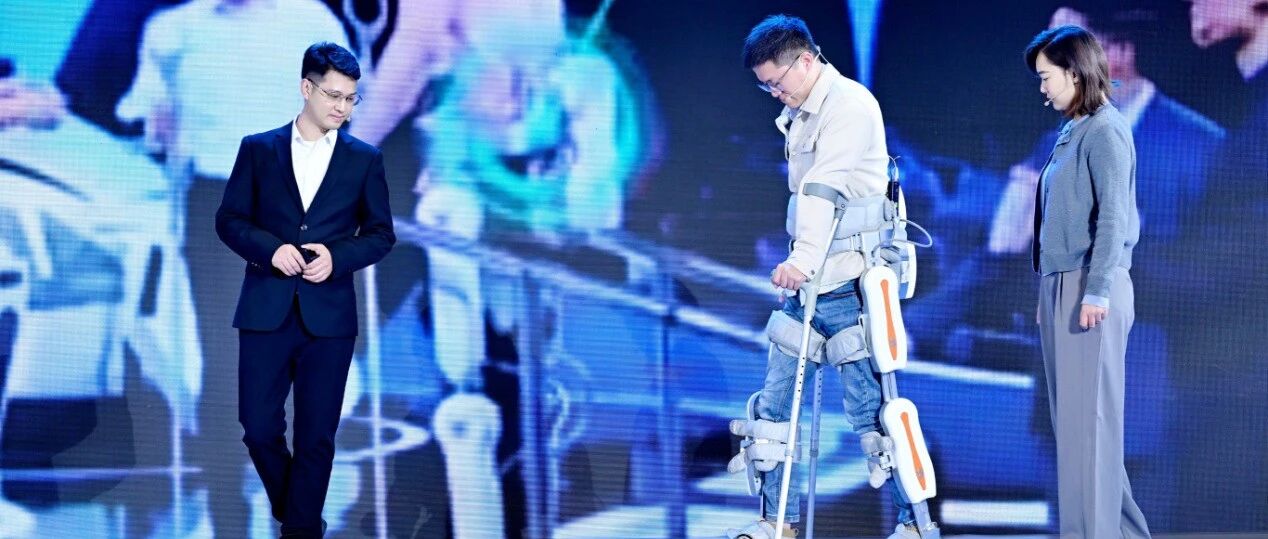
Core Viewpoint - The first Technology Assistance for the Disabled Innovation Product Promotion Conference and R&D Innovation Competition was held in Suzhou, showcasing the potential of technology in improving the lives of disabled individuals through innovative products and collaboration between universities and enterprises [1][2]. Group 1: Event Overview - The event featured a collaboration agreement between Suzhou University and the Suzhou Disabled Persons' Federation to provide more internship opportunities for students in the field of assistive technology [1]. - Six technology companies presented cutting-edge assistive products, highlighting advancements in areas such as smart assistive devices and biomedical technology [1]. Group 2: Innovative Products - Notable products included the first artificial cornea made from new synthetic materials, which offers high transparency, stability, low cost, and large-scale production capabilities [1]. - An AI-based tinnitus detection and personalized treatment system was introduced, transforming tinnitus treatment from subjective to objective measures [1]. - An open-type hearing aid was showcased, addressing common issues with traditional hearing aids such as fit, sound quality, and high costs [1]. Group 3: Innovation Competition - Seven innovative projects from institutions like Suzhou University and the Suzhou Institute of Biomedical Engineering and Technology were presented, covering five categories of disabilities [2]. - The competition evaluated projects based on innovation, practicality, and market potential, resulting in the awarding of two first prizes, two second prizes, and three third prizes [2]. - Winning projects included a smart hand rehabilitation robot and a digital rehabilitation solution for autism based on humanoid robots [2].
具身智能赋能康复 傅利叶亮相2025中国康复医学会综合学术年会
Zheng Quan Ri Bao Wang· 2025-10-25 02:45
Core Insights - The China Rehabilitation Medical Association's comprehensive academic annual meeting and rehabilitation medical industry expo will be held from October 24 to October 26, 2025, showcasing advancements in rehabilitation technology [1] Group 1: Product Innovations - Fourier's MetaMotus Galileo system is a domestically developed, pioneering human motion quantification and rehabilitation system that integrates biomechanics, rehabilitation medicine, and sports science [1] - The system features a six-axis motion platform, six-dimensional force platform, LED flexible ring screen, adaptive treadmill, dynamic weight reduction system, motion capture system, and human-computer interaction software, providing training for various functional impairment groups [1] - The system offers immersive rehabilitation training experiences, utilizing virtual reality technology to create scenarios for walking and climbing exercises, incorporating multi-sensory experiences [1] Group 2: Smart Rehabilitation Solutions - Fourier's Smart Rehabilitation Port solution includes core devices such as the ExoMotus M4 lower limb exoskeleton robot and ArmMotus EMU three-dimensional upper limb rehabilitation robot, enabling data interconnectivity and collaborative training through IoT technology [2] - This solution covers the entire process from rehabilitation assessment to training and functional reconstruction, having been implemented in over 300 hospitals nationwide [2] - The company aims to integrate multi-modal perception, AI models, and motion control technologies into humanoid robots, enhancing emotional care and personalized experiences in rehabilitation [2]
张江独角兽,完成超6亿元融资 | 融资周报(2025年第34期)
Sou Hu Cai Jing· 2025-09-17 06:11
Financing Overview - A total of 23 financing events occurred in Shanghai this week, with Zhangjiang accounting for 7 and Lingang for 2 [2] - The financing amount disclosed this week reached approximately 1.731 billion yuan, with 6 out of 23 events revealing their amounts [4] - The number of financing events increased by 5 compared to the previous week, which had 18 events [4] Company Dynamics - YaoTang Biotech announced research results on LNP-mRNA mediated in vivo gene editing of hematopoietic stem cells on August 12 [3] - On September 4, RuShen Robotics was selected for Tencent's 2025 Silver Technology Partner Program [3] - HengRui Medicine's subsidiary received approval for its first mRNA gene drug Phase II clinical trial on September 10 [5] - The China-Russia Medical Technology and Equipment Cooperation Center was established in Pudong on September 11 [5] - AstraZeneca's long-acting C5 complement inhibitor was launched in China on September 12 [5] Financing Rounds - The majority of financing events this week were in the angel round, totaling 9, followed by 7 in the A round [6] - B round financing reached a significant amount of 60 million USD [6] Industry Focus - Financing events this week spanned 11 industries, with the healthcare sector leading with 5 events, followed by artificial intelligence with 3 [9] Notable Financing Highlights - Zhenqu Technology completed over 600 million yuan in E round financing on September 8, led by Guotou Innovation and Guotou Investment [13] - Yijielike completed 60 million USD in B round financing on September 8, led by Longpan Investment [15] - New Electric Hero secured nearly 300 million yuan in strategic financing on September 10, exclusively invested by BAI Capital [17] - YaoTang Biotech completed over 300 million yuan in B round financing on September 10, led by AstraZeneca's CICC Medical Industry Fund [19] - RuShen Robotics completed several million yuan in angel+ round financing on September 9, exclusively funded by Daotong Investment [22] Hot Industry Focus - This week saw 5 financing events related to healthcare, including 2 in gene technology: Yijielike's 60 million USD B round and YaoTang Biotech's over 300 million yuan B round [24] - The surge in gene therapy investments is driven by policy support, with Shanghai's Science and Technology Commission announcing a special fund for gene therapy research, with a maximum grant of 5 million yuan per project [24]

AI赋能康复产业 机器人“读懂”患者“想做什么”
Shen Zhen Shang Bao· 2025-08-07 17:00
Core Insights - The 22nd Shenzhen International Rehabilitation Forum focused on "Artificial Intelligence Empowering Rehabilitation," gathering global experts to discuss revolutionary breakthroughs in rehabilitation healthcare through AI technology [1] Group 1: AI in Rehabilitation - The forum included a significant component on the application of AI in rehabilitation medicine, featuring discussions led by prominent experts, including Academician Li Jian'an, who emphasized the core principles, technical support, application scenarios, and development prospects of AI in rehabilitation [2] - Big data is identified as the core foundation of AI, with its value depending not only on the volume of data but also on its continuity, systematization, and precision [2] - The integration of human body sensors for high-quality health data acquisition and AI for data analysis is expected to drive profound changes in medical thinking and treatment methods [2] Group 2: Technological Innovations - Shenzhen is recognized as one of the first 12 national comprehensive innovation pilot areas for rehabilitation assistive devices, fostering numerous high-tech companies focused on intelligent rehabilitation [3] - Shenzhen Jianlitong Intelligent Robot Co., Ltd., the forum's organizer, specializes in the research, production, and sales of rehabilitation robots and related high-tech products, highlighting AI's role in reshaping the rehabilitation healthcare system [3] - The use of multimodal data fusion technology in lower limb exoskeleton rehabilitation training systems allows for early rehabilitation training for patients with motor function impairments, effectively activating neural pathways [3] - This technology enables rehabilitation robots to accurately interpret patient intentions, transitioning from passive execution to active guidance, akin to equipping robots with a "multisensory system" [3]
2025Q1小巨人企业融资事件同比减少超两倍,IPO数量环比增加近三成丨2025Q1专精特新小巨人企业资本市场发展报告
创业邦· 2025-05-31 03:29
Core Insights - The number of specialized and innovative "little giant" enterprises in China exceeds 14,000, with Jiangsu, Guangdong, and Zhejiang leading in quantity [3][5][25] - Financing events and amounts for these enterprises have significantly decreased, with a 55% drop in events and a 48.1% decline in disclosed financing amounts in Q1 2025 compared to the previous year [9][12] - The number of IPOs for these enterprises has increased, with 19 IPOs in Q1 2025, marking a 26.7% year-on-year growth [24][25] Group 1: Development Overview - As of March 31, 2025, there are 14,687 specialized and innovative "little giant" enterprises in China, with Jiangsu having 2,160, Guangdong 1,985, and Zhejiang 1,804 [5][25] - The top five cities with the highest number of these enterprises are Beijing, Shenzhen, Shanghai, Suzhou, and Hangzhou [5] Group 2: Financing Overview - In Q1 2025, there were 136 financing events for specialized and innovative "little giant" enterprises, a decrease of 55% year-on-year, with disclosed financing amounting to 9.85 billion RMB, down 48.1% [9][12] - Jiangsu, Beijing, Guangdong, Shanghai, and Zhejiang are the leading regions in financing activity, with Shanghai having the highest financing amount exceeding 9 billion RMB [12] Group 3: IPO Insights - The number of IPOs for specialized and innovative "little giant" enterprises in Q1 2025 was 19, reflecting a 26.7% increase year-on-year [24] - Among the 27 new IPOs in A-shares, 18 were specialized and innovative "little giant" enterprises, accounting for 66.7% [25] Group 4: M&A Activity - In Q1 2025, there were 29 disclosed M&A events involving specialized and innovative "little giant" enterprises, a significant increase of 262.5% year-on-year, with a total disclosed transaction amount of 5.16 billion RMB, up 26.8% [34] Group 5: Recent Developments - In March 2025, the Ministry of Industry and Information Technology and 15 other departments issued guidelines to enhance compliance awareness and management among small and medium-sized enterprises, including specialized and innovative "little giant" enterprises [39]