
脱毒种薯

Search documents
把准规律做活产业
Jing Ji Ri Bao· 2026-01-27 00:02
Core Insights - The potato in Dingxi City has undergone various roles such as "lifesaving potato," "food security potato," "poverty alleviation potato," and "revitalization potato," highlighting the city's ability to adapt to different developmental stages [1] - Dingxi has effectively understood and leveraged natural and industrial laws to overcome poverty and stimulate industry vitality, transitioning from the "potato project" to becoming "China's Potato Capital" [1] - The city has developed a comprehensive potato industry chain, addressing growth bottlenecks by focusing on high-value products like disease-free seed potatoes and processed foods [1][2] Group 1 - The potato is not the highest value crop but is the most suitable for Dingxi, which has maintained industry vitality by understanding developmental laws [1] - Dingxi's harsh natural conditions have led to a deep understanding of these conditions, allowing the city to find the right industrial direction and ultimately escape poverty [1] - The city has a foundational potato industry of 3 million acres, which is crucial for addressing growth limitations and enhancing the industry's value [1] Group 2 - Dingxi's potato industry has formed a complete development pattern covering breeding, planting, processing, and sales, ensuring a diverse product supply [2] - The national potato planting area of approximately 70 million acres represents a vast market for disease-free seed potatoes, aligning with changing consumer trends towards high-quality agricultural products [2] - The increasing demand for specialty agricultural products and leisure foods has helped elevate the brand and reputation of Dingxi's processed potato products [2]
“聪明”种子背后的科技密码
Xin Lang Cai Jing· 2026-01-05 18:44
Core Insights - The article highlights the advancements in potato seed technology, particularly focusing on the development of virus-free potato seedlings through tissue culture techniques, which is seen as a significant step in agricultural innovation [2][6][16]. Group 1: Research and Development - Researchers at Qinghai University are engaged in creating virus-free potato seedlings, utilizing advanced techniques such as "stem tip culture" to ensure the health and quality of the seeds [3][6]. - The process involves meticulous steps including isolation, cultivation, and disease resistance testing, which are crucial for producing high-quality seed potatoes [3][4][6]. - The team has established a four-tier seed breeding system that includes laboratory seedling production, greenhouse cultivation, and field planting, demonstrating a comprehensive approach to seed development [7][16]. Group 2: Technological Innovations - The introduction of gene editing technology has allowed researchers to reduce natural toxins in potato leaves while increasing protein content, potentially transforming both the above-ground and underground parts of the plant into food sources [14][16]. - New potato varieties, such as "Qing Shu 9," have been developed and are now widely cultivated across China, with a planting area of 498,000 hectares, making it the most widely planted potato variety in the country [10][11][12]. Group 3: Economic Impact - The advancements in potato seed technology are contributing significantly to national food security and increasing farmers' incomes, with the new varieties playing a crucial role in agricultural productivity [12][17]. - The coverage rate of quality crop seeds in Qinghai Province has reached 98.2%, reflecting a shift from a weak foundation to self-sufficiency in seed sources, which is vital for ensuring food security [17]. Group 4: Future Prospects - The research team continues to explore new applications for potatoes, including their use in cosmetics and biodegradable materials, indicating a potential expansion of the market for potato-based products [14][16]. - The ongoing innovations in potato cultivation and processing are expected to enhance the efficiency of land use and contribute to sustainable agricultural practices in high-altitude regions [14][16].

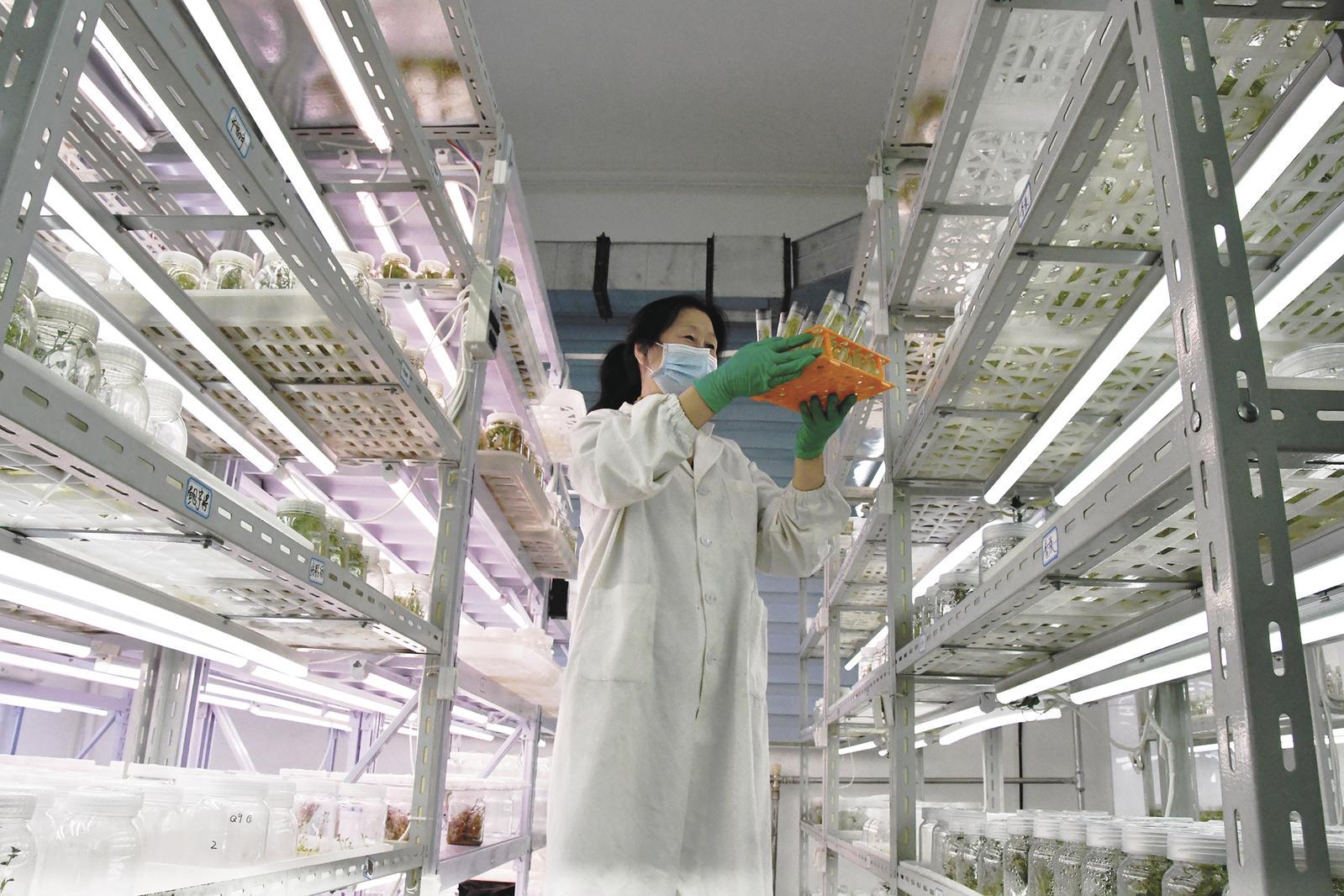
科技品牌双轮驱动 河北省张北县延伸马铃薯产业链条促增收
Zhong Guo Chan Ye Jing Ji Xin Xi Wang· 2025-04-28 00:36
Core Insights - Zhangbei County in Zhangjiakou City has a long history of potato cultivation, benefiting from unique climatic conditions that enhance potato quality and yield [1][2] - The introduction of virus-free seed potato technology in the 1970s significantly increased potato production, leading to a remarkable growth in output since the 1990s [1] - Zhangbei County has received multiple recognitions for its potato industry, including being named "Hometown of Potato Seed in China" and "Hometown of Northern Potato" [1] - The potato industry in Zhangbei County has become a pillar of the local economy, contributing over 1 billion yuan annually, which accounts for 6.20% of the county's total output [1] Industry Overview - The potato planting area in Zhangbei County remains stable at around 280,000 acres, with an annual production of approximately 600,000 tons [2] - There are 95 tissue culture enterprises in the county, producing 1 billion virus-free seedlings annually, sufficient for 8,000 acres of micro-potato greenhouse production [2] - Zhangbei County produces about 15 billion micro-potatoes annually, representing around 50% of the national total, and supplies high-quality seed potatoes to 16 provinces [2] - The county aims to enhance farmers' income by extending the potato industry chain, focusing on seed breeding, production, storage, processing, and sales [2] - Five potato processing enterprises have been developed, with an annual processing capacity of 200,000 tons, and 25 storage facilities with a capacity exceeding 750,000 tons, creating jobs for over 32,000 people [2]