
马铃薯

Search documents
猜猜植物世界里藏着多少“马”
Xin Lang Cai Jing· 2026-02-19 07:37
Group 1 - The article discusses various plants associated with the term "horse," highlighting their names and characteristics [4][5][6][7][8] - The naming of plants often draws parallels between animal body structures and plant forms, exemplified by "horse tooth" (马齿苋) and "horse tail" (马尾松) [4][5] - The article notes that some plant names, like "horse potato" (马铃薯), derive from horse-related equipment, which is less common in other zodiac animals [6][7] Group 2 - Certain plants contain the word "horse" but do not directly relate to horse anatomy or equipment, such as "horse grass" (马唐) and "horse orchid" (马兰) [8] - The "horse sage" (马先蒿) is highlighted as a significant genus with a high frequency of the term "horse" in plant names, particularly in the Himalayas and Hengduan Mountains [8] - The article emphasizes the cultural and linguistic significance of the term "horse" in plant nomenclature, reflecting human observation of nature [8]


以多元形式点燃乡村年味,第二届德胜乡村振兴大集启幕
Xin Lang Cai Jing· 2026-02-14 15:36
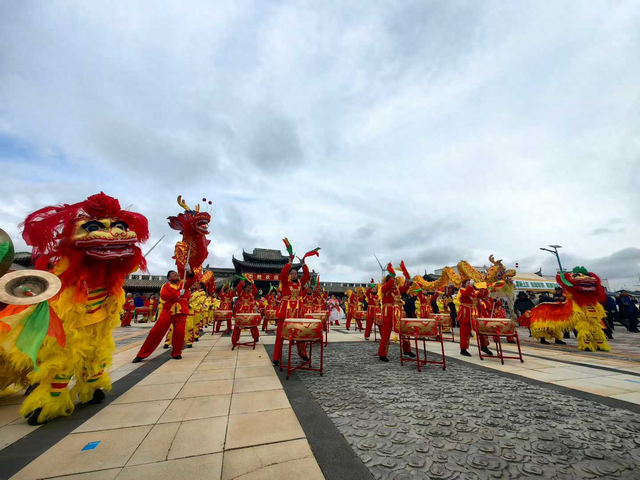
Core Viewpoint - The event "Happy Opening Smile, Prosperous Desheng Year" showcased the achievements of rural revitalization in Desheng Village, combining folk performances, public welfare, and cultural tourism to celebrate the New Year and foster community spirit [1][3]. Group 1: Event Highlights - The event featured vibrant folk performances, including a grand parade of folk dances, dragon and lion dances, and street performances, creating a lively atmosphere that attracted attendees [1][3]. - A special area for local cuisine was set up, offering traditional dishes that reflect the village's culture, while public welfare activities distributed "Fu" characters to convey New Year blessings [3]. - The night concluded with a dazzling lantern display and a bonfire gathering, where villagers and visitors celebrated together, enhancing the cultural experience [3]. Group 2: Economic Development - Desheng Village has developed three key industries: potatoes, photovoltaics, and homestays, with annual potato production exceeding 10 million yuan, stable income from photovoltaics over 600,000 yuan, and over 50,000 tourists hosted in homestays [5]. - The village's average annual income per capita is projected to reach 25,800 yuan by 2025, with collective annual income reaching 3.5 million yuan, marking a significant transformation from a poor village to a prosperous one [5]. - Efforts to strengthen cultural teams and improve cultural facilities have integrated traditional culture with modern civilization, enriching the village's cultural atmosphere [5].
固原农文旅推介,推动东西协作促消费
Xin Lang Cai Jing· 2026-02-12 22:40
Group 1 - The event "2026 Guyuan Agricultural, Cultural, and Tourism Promotion and Liupan Mountain New Year Goods Fair (Xi'an Station)" was held in Xi'an, focusing on the theme "Minning Together, Connecting Three Qin for a Win-Win Future" [1] - The fair featured 48 exhibition booths showcasing local agricultural products such as Liupan Mountain beef and lamb, cool-season vegetables, and potatoes, along with cultural tourism products [1] - A customized gift box named "Minning Family" was launched, including eight categories of New Year goods, and a green channel for corporate group purchases was established [1] Group 2 - Private enterprises from Shaanxi, including Zhuque Industrial Group, actively participated in various activities during the event, promoting one-on-one negotiations between businesses from both regions [2] - The Shaanxi Ningxia Chamber of Commerce emphasized its role in facilitating economic and cultural exchanges between Shaanxi and Ningxia, aligning with national regional development strategies [2] - Future efforts will focus on deepening cooperation with Guyuan City in areas such as agricultural, cultural, and tourism integration, as well as upgrading specialty industries [2]
湟水河畔“蔬”香远 高原沃土育“金”牌
Xin Lang Cai Jing· 2026-02-12 19:35
Core Insights - The goal of creating the largest high-quality vegetable production base in the province is being pursued by Haidong City's Ledou District, aiming for ecological beauty, industrial prosperity, and increased wealth for the people by 2025 [1] - The area has surpassed 120,000 acres of vegetable planting, accounting for nearly 40% of Qinghai's total production, with products reaching major cities and international markets [1] Group 1: Technological Empowerment - The Jiangwan Village green vegetable seedling base, covering over 100 acres, has an annual production capacity of 25 million seedlings, meeting local demand and supplying 7 million high-quality seedlings to neighboring areas, creating over 11,000 jobs with an average income increase of over 20% [1] - The district promotes integrated water and fertilizer technology across 10,500 acres of demonstration fields, achieving 65% water savings, 50% fertilizer savings, and over 20% increase in yield [1] Group 2: Brand Leadership - In 2025, Ledou District will sign direct contracts for potato exports to Russia and cabbage exports to Vietnam, establishing a closed-loop foreign trade system with a 30% reduction in logistics costs [2] - The district has certified 9 green food products, 9 organic products, and 19 geographical indication products, enhancing the marketability of "Ledou" agricultural products [2] Group 3: Agricultural Cooperation and Economic Growth - The cooperative model in Hongshui Town's Doumiao base has created jobs for over 20 villagers and attracted additional workers, with daily harvests of 2,000 pounds of fresh bean sprouts supplied directly to first-tier cities [3] - The district's new business entities have a radiation and driving rate of 36%, with an average income increase of 2,500 yuan per farmer, and collective economic benefits exceeding 55 million yuan [3]
山海同心 协作共谱振兴曲——2025年鲁甘东西部协作工作纪实
Xin Lang Cai Jing· 2026-02-12 04:07
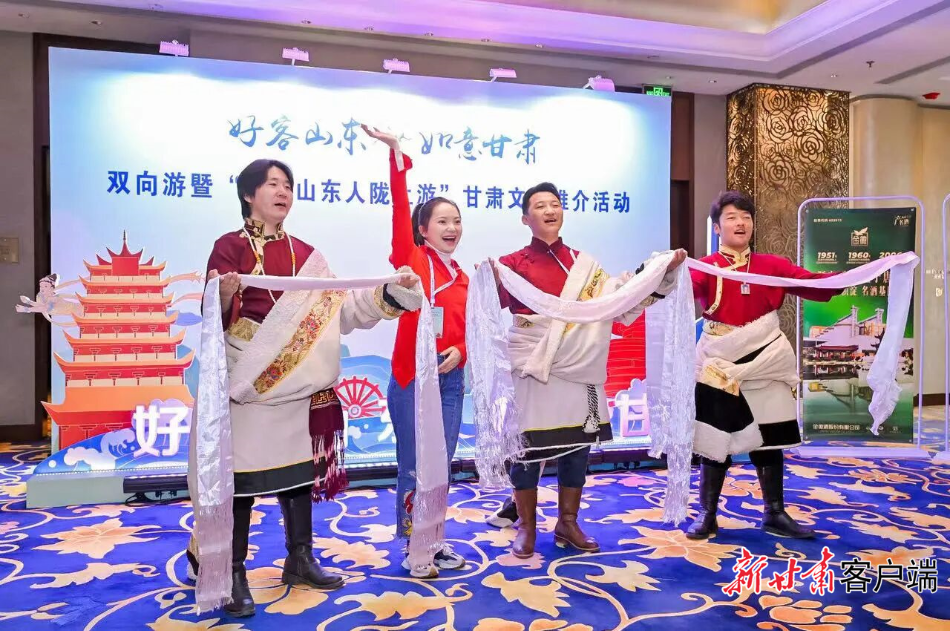
Core Viewpoint - The collaboration between Shandong and Gansu provinces focuses on consolidating poverty alleviation achievements and promoting rural revitalization through industrial cooperation, livelihood support, and regional synergy, with significant progress made in various sectors over the past year [2][9]. Industrial Cooperation - Shandong and Gansu have implemented 526 assistance projects, attracting 170 enterprises to invest in Gansu, leading to the employment and income increase of 65,800 rural laborers from Gansu [2][5]. - In Linxia Prefecture, Shandong invested 140 million yuan to support the development of the cattle and sheep industry cluster, resulting in a total industrial chain output value of 31.1 billion yuan [3]. - The two provinces are developing four major specialty agricultural industry belts, with a planting area of 1.77 million acres, enhancing market access for local products [3][5]. Livelihood Empowerment - The collaboration emphasizes improving living standards, with Shandong sending 70 officials and 744 technical professionals to Gansu, establishing medical and educational support programs [6][8]. - In 2025, the sales of Gansu agricultural products in Shandong are projected to reach 4.323 billion yuan, with 980 million yuan exported to countries like the USA, Japan, and South Korea [8][11]. Regional Synergy - A comprehensive cooperation mechanism has been established, with Shandong and Gansu forming partnerships between 19 counties in Shandong and 24 counties in Gansu, enhancing the effectiveness of collaborative efforts [9][11]. - The two provinces are focusing on four key actions: enhancing specialty industries, building industrial clusters, consumer support, and improving labor cooperation, expanding collaboration into multiple sectors [9][11]. Cultural and Tourism Integration - The collaboration has led to the creation of tourism routes and promotional activities, with Shandong tourists to Gansu expected to exceed 8.2152 million by 2025, marking a 6.93% increase [11][13]. - Efforts are being made to cultivate local talent in Gansu, ensuring sustainable development and self-reliance through technology transfer and management experience sharing [11][13].
“努力探索可持续的农业生产模式”
Ren Min Ri Bao· 2026-02-12 00:29
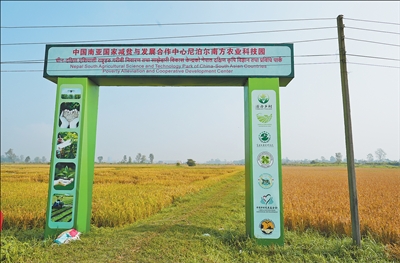
Core Insights - The article discusses the collaboration between China and Nepal in agricultural development, focusing on hybrid rice cultivation and technology transfer to enhance agricultural productivity in Nepal [2][4]. Group 1: Agricultural Development Initiatives - The China-Nepal Agricultural Technology Park in Chitwan County is a key project aimed at introducing and cultivating hybrid rice varieties from China [2]. - The Nepalese government is actively promoting agricultural modernization and resilience through various initiatives, including the development of drought and flood-resistant rice varieties [3]. - The project involves collaboration between Chongqing Agricultural Sciences Academy and Nepal Agricultural University to select suitable rice varieties for local conditions [4]. Group 2: Challenges in Agriculture - Approximately 60% of Nepal's population is engaged in agriculture, with rice accounting for about 20% of the agricultural output, impacting millions of rural households [2]. - The agricultural sector faces significant challenges, including low mechanization, reliance on natural rainfall, and vulnerability to climate change, which has led to a reduction in rice planting area by about 8% due to insufficient rainfall [3]. - The United Nations Food and Agriculture Organization estimates that Nepal's rice production will be 5.4 million tons in 2025, below the five-year average [3]. Group 3: Capacity Building and Training - The collaboration aims to cultivate local professionals who understand advanced agricultural techniques and promote sustainable practices among farmers [5]. - The Nepalese Ministry of Agriculture is providing early warning and meteorological information to farmers, along with promoting agricultural insurance plans to mitigate risks [3]. - Training programs and capacity-building initiatives are being implemented to enhance farmers' knowledge in scientific farming practices [5].
克罗地亚2025年小麦产量激增28.8%
Shang Wu Bu Wang Zhan· 2026-02-11 17:36
Core Viewpoint - Croatia's agricultural sector is experiencing a mixed performance in 2025, with significant increases in certain crop yields while others face declines due to reduced planting areas and lower yields [1] Group 1: Crop Production Increases - Wheat production in Croatia is projected to reach 1.05 million tons, marking a 28.8% increase year-on-year driven by expanded planting areas and improved yields [1] - Barley production is expected to grow by 19.5% to 356,000 tons [1] - Rapeseed production is forecasted to rise by 15.1% to 61,000 tons [1] - Sunflower production is anticipated to increase by 13.3% to 205,000 tons [1] Group 2: Crop Production Decreases - Corn production is projected to decline by 17.7% to 1.7 million tons [1] - Soybean production is expected to decrease by 21.6% [1] - Potato production is forecasted to drop by 17.9% [1]
【同心声影】1690个、4.96亿元!统一战线“地域+领域”组团式帮扶毕节答卷亮眼
Xin Lang Cai Jing· 2026-02-11 10:16
Core Insights - The unified front has implemented a total of 1,690 assistance projects since 2023, with direct funding of 496 million yuan and attracting over 60 billion yuan in various investments [1][9][12] - The year 2025 is significant as it marks the conclusion of the "14th Five-Year Plan" and aims to enhance the "regional + field" group assistance mechanism to support the economic and social development of the Bijie experimental zone [1][12] Group 1: Assistance Projects and Funding - In 2025, the Central United Front Work Department issued a plan for 275 assistance projects in Bijie, with 26.9 million yuan allocated for these projects, and 46,900 individuals trained [2][8] - By the end of December 2025, 269 projects were completed, with a total funding of 66.7 million yuan, and training for 46,900 individuals [2][8] - The Guizhou Provincial United Front Work Department also initiated 393 additional assistance projects, with funding of 112.25 million yuan and training for 147,000 individuals [2][8] Group 2: Sector-Specific Assistance Outcomes - Since the implementation of the assistance plan, nearly 761,000 individuals have been trained, with significant contributions from various organizations focusing on agriculture, education, and healthcare [3][9][10] - The Jiusan Society has targeted green agriculture in Weining, promoting the cultivation of potatoes and edible fungi to enhance local income [3][9] - The Agricultural Workers' Party has supported the development of the Tianma industry in Dafang County, establishing a complete industrial chain for this key agricultural product [10] Group 3: Education and Healthcare Initiatives - The Jiusan Society has developed a multi-dimensional educational assistance system, training 2,395 teachers through partnerships with quality schools [10][11] - The Zhejiang-Bijie Hospital, established through a collaboration between the Guizhou Provincial Government and Zhejiang Provincial People's Hospital, has attracted over 100,000 patients from outside Bijie since its establishment [5][11] - The Democratic Progressive Party has focused on improving the quality of education in the Qixingguan District, training all public school principals and key teachers [10][11] Group 4: Strategic Recommendations and Future Directions - The Bijie municipal government emphasizes the need for continued collaboration among various democratic parties to enhance the effectiveness of assistance projects [12] - Recommendations include establishing a "vertical and horizontal linkage" mechanism to coordinate efforts across different levels of government and sectors [12] - The unified front aims to deepen assistance mechanisms, expand areas of support, and improve the effectiveness of initiatives to foster multi-party cooperation in the new era [12]
辽宁省市场监督管理局关于食品安全抽检信息的通告(2026年第4期)
Xin Lang Cai Jing· 2026-02-09 05:10
Core Insights - The food safety inspection conducted by the market supervision department involved 792 batches of food products across 10 categories, with 770 passing and 22 failing the safety standards [3] Group 1: Inspection Results - A total of 792 food samples were tested, covering categories such as grain products, meat products, dairy products, frozen foods, candy, nuts, seafood, pastries, catering foods, and agricultural products [3] - Out of the 792 batches, 770 were found to be compliant with food safety standards, while 22 batches were deemed non-compliant [3] Group 2: Non-compliance Details - The non-compliant batches included various food items, with specific issues such as the presence of coliform bacteria and pesticide residues exceeding permissible limits [4][5] - The inspection revealed specific instances of non-compliance, such as the detection of coliform bacteria in food samples and pesticide levels in excess of the allowed limits [4][5]
今年春耕备耕期间兰州市将巡回开展“田间课堂”
Xin Lang Cai Jing· 2026-02-09 00:43
Group 1 - The core initiative for this spring's agricultural preparation in Lanzhou is the "Field Classroom" program, which aims to provide technical training on major crops like wheat, corn, and potatoes, targeting all cooperatives, family farms, and large households [1] - The city will focus on key aspects of spring farming, ensuring the implementation of various tasks to enhance agricultural production and food security [1] - A total of 174 leading crop varieties and 35 supporting technologies will be promoted, including high-yield and resilient wheat varieties such as "Longchun 30" and "Ningchun 4" [1] Group 2 - The city plans to promote green production models, aiming for a 65% coverage rate of green pest control technologies and an 80% recovery rate of pesticide packaging waste [2] - The agricultural department will collaborate with market regulation authorities to ensure stable supply and pricing of agricultural materials, combating price gouging and illegal practices [2] - The city has over 40,000 agricultural machines, with maintenance and repair efforts already 80% completed to ensure readiness for the spring farming season [2]