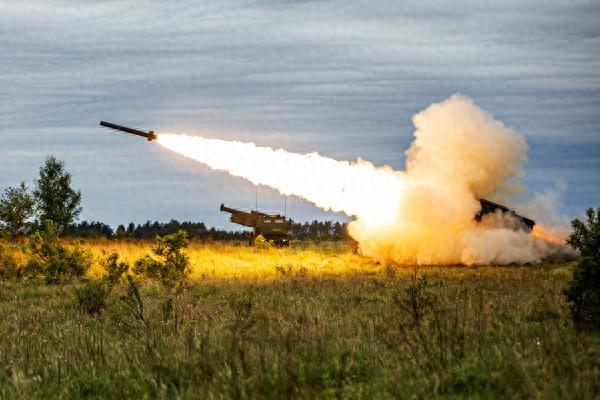
自行榴弹炮系统

Search documents
超110亿美元!特朗普为何推出史上最高金额对台军售?
Bei Jing Ri Bao Ke Hu Duan· 2025-12-19 23:39
Core Viewpoint - The U.S. State Department approved a record arms sale to Taiwan worth up to $11.1054 billion, marking the highest single arms sale since the Taiwan Relations Act in 1979, reflecting a significant shift in U.S. military support for Taiwan under the Trump administration [1][4]. Group 1: Scale and Frequency of Arms Sales - The recent arms sale is unprecedented in scale, surpassing the previous record of $6.4 billion set in 2010 during the Obama administration [5]. - Under Biden's administration, there have been 19 rounds of arms sales to Taiwan totaling approximately $8.4 billion, with the largest single sale being $1.988 billion in October 2024 [5]. - The current sale of $11.1054 billion is 5.6 times larger than the largest sale during Biden's term and represents 107% of the total arms sales from 2020 to 2024 [5]. Group 2: Nature and Content of Arms Sales - The arms sale includes a mix of defensive and offensive weaponry, indicating a shift from "ambiguous defense" to "clear armament" aimed at enhancing Taiwan's military deterrence capabilities [6][8]. - Key components of the sale include 82 High Mobility Artillery Rocket Systems (HIMARS), 420 Army Tactical Missile Systems, and 60 self-propelled howitzers, which can strike targets hundreds of kilometers away [6]. - The sale also focuses on enhancing Taiwan's anti-armor capabilities with additional orders for Javelin and TOW-2B anti-tank missiles, as well as over $1 billion in anti-armor drones [6][7]. Group 3: Systematic Military Empowerment - The arms sale reflects a systematic shift in U.S. military support for Taiwan, moving from "scattered supplements" to "systemic empowerment" of Taiwan's military capabilities [8]. - The inclusion of Taiwan Tactical Network (TTN) and Tactical Awareness Kit (TAK) aims to enhance real-time battlefield awareness and connectivity among combat units [8]. Group 4: Political and Economic Calculations - The timing of the arms sale is influenced by domestic political needs, economic interests, and regional strategic considerations, particularly as the U.S. midterm elections approach [9][10]. - The arms sales serve as a tool for U.S. administrations to gain political capital and support from conservative voters while benefiting the military-industrial complex [10][12]. Group 5: Strategic Implications - The arms sale is part of a broader strategy to strengthen Taiwan's military capabilities amid escalating U.S.-China tensions, with a clear tilt towards offensive weaponry [14][15]. - The U.S. aims to create a heavily armed "combat fortress" in the Taiwan Strait, which could significantly alter the regional security landscape [15].
超111亿美元,美国宣布史上最大对台军售,都有些啥?
Guan Cha Zhe Wang· 2025-12-19 03:16
Core Viewpoint - The Trump administration announced a historic arms sale to Taiwan valued at over $11.1 billion, marking the largest U.S. arms sale to Taiwan to date, and this is the second arms sale plan during Trump's tenure [1] Group 1: Arms Sale Details - The proposed arms sale includes 82 sets of HIMARS long-range precision strike systems and 420 sets of Army Tactical Missile Systems, with a total transaction value exceeding $4 billion [1] - Additional items in the sale include 60 self-propelled howitzers and associated equipment valued at over $4 billion, as well as drone equipment worth over $1 billion [1] - Other components of the arms package consist of military software valued at over $1 billion, Javelin anti-tank missiles and TOW missiles totaling over $700 million, helicopter spare parts worth $96 million, and Harpoon missile refurbishment components valued at $91 million [1] Group 2: Taiwan's Defense Spending Plans - Taiwan plans to increase its defense budget to 3.3% of its GDP next year, aiming to reach 5% by 2030 [2] - A supplementary defense budget of $40 billion for 2026 to 2033 has been proposed, which includes funding for a high-level detection and interception air defense system named "Taiwan Dome" [2] Group 3: Reactions from China - The Chinese government strongly condemned the arms sale, stating that Taiwan is a core interest and that the U.S. is violating the One China principle and damaging China's sovereignty and security [5][6] - Chinese officials warned that the arms sale sends a serious wrong signal to pro-independence forces in Taiwan and emphasized that any attempts at "Taiwan independence" would be met with strong resistance [5][6]