航空汽油

Search documents
种下科技种子 见证工业力量 兰州石化开放日让石化科技触手可及
Xin Lang Cai Jing· 2026-01-08 09:41
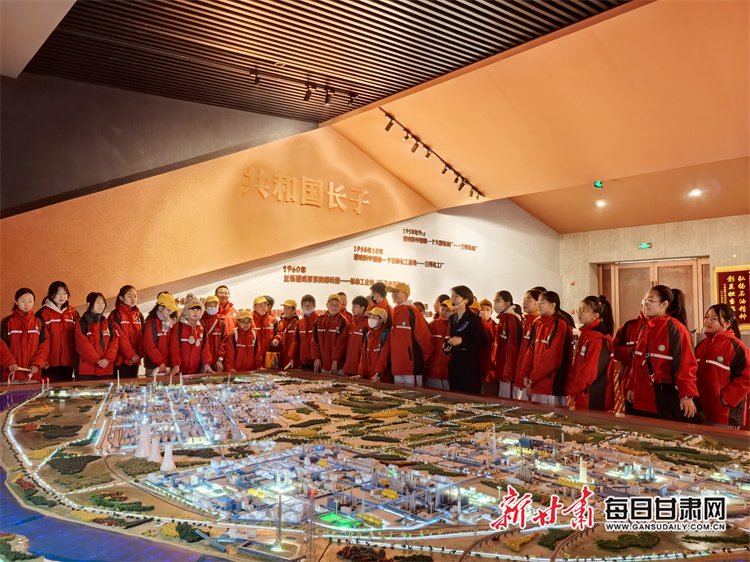
Group 1 - The event held by Lanzhou Petrochemical Company focused on the theme "Empowering Children through Science Popularization, Illuminating the Future with Petrochemicals" and aimed to engage students and media in understanding the company's contributions to society and technology [1][5] - The company plans to regularize public open days to invite students and citizens to learn about its achievements in green development, social responsibility, and technological transformation, aiming to eliminate misconceptions about the industry [5][13] - The event included a visit to the Petroleum Spirit Education Base, showcasing the history of China's refining and chemical industry through 411 display boards, over 1,000 historical photos, and more than 500 documents, highlighting significant milestones in the sector [3][5] Group 2 - Students learned about the applications of petrochemical products in various sectors such as automotive, home appliances, textiles, and pharmaceuticals, enhancing their understanding of the industry's relevance to daily life [9] - The event featured a demonstration of advanced firefighting equipment, including drones capable of carrying 30 kilograms, which impressed the students and showcased the technological advancements in safety [11][13] - The collaboration between the school and the company provided students with valuable insights and practical knowledge, reinforcing the importance of such initiatives in fostering a better understanding of the petrochemical industry [13]

派发106亿!中石化,加速布局7大新兴产业
DT新材料· 2025-08-21 16:06
Core Viewpoint - The rise of emerging industries in China is leading the next decade of polymer development, with opportunities in sectors such as new energy vehicles, aerospace, drones, robotics, and AI materials [2]. Financial Performance - In the first half of 2025, Sinopec reported a revenue of RMB 1.41 trillion, a decrease of 10.6% compared to RMB 1.58 trillion in the same period of 2024 [3]. - The total profit for the period was RMB 28.77 billion, down 43.4% from RMB 50.87 billion year-on-year [3]. - Net profit attributable to shareholders was RMB 21.48 billion, a decline of 39.8% from RMB 35.70 billion [3]. - Operating cash flow increased by 44.4% to RMB 61.02 billion compared to RMB 42.27 billion in the previous year [3]. Product Sales and Pricing - Sales of major chemical products in the first half of 2025 amounted to RMB 231.1 billion, a decrease of 3.2% year-on-year, accounting for 95.5% of the chemical division's revenue [3]. - Specific product sales volumes showed varied performance, with basic organic chemicals increasing by 6.1% to 25,657 thousand tons, while average prices fell by 14.6% [4]. - Synthetic resin sales rose by 9.2% to 8,821 thousand tons, but average prices decreased by 2.4% [4]. Strategic Initiatives - Sinopec aims to strengthen its market share in refined oil sales and expand its new energy business, focusing on hydrogen, solar, wind, and geothermal energy [4]. - The company is actively developing new materials for emerging industries, including electric vehicle batteries and synthetic biology applications [5]. - Sinopec has established an AI computing center and is developing a unified data governance system to enhance its AI capabilities [5]. New Material Developments - Sinopec has made significant advancements in battery materials, including high-nickel ternary cathode materials and silicon-carbon anodes, with production volumes expected to grow by 40% year-on-year [5]. - The company has successfully produced high-end graphite electrodes and is expanding its capabilities in graphene-based coatings and EVA materials [6][8]. Collaborations and Partnerships - Sinopec has signed strategic agreements with companies like CATL to enhance its battery swap station network and support the development of hydrogen energy infrastructure [7][8]. - The company is also investing in various hydrogen energy enterprises to establish a comprehensive hydrogen energy supply chain [8].

石油和化学工业开拓者徐今强的峥嵘岁月
Zhong Guo Hua Gong Bao· 2025-08-15 01:29
Core Points - Xu Jinqiang is recognized as a pioneer in China's petroleum and chemical industries, contributing significantly to the victory in the Anti-Japanese War and the establishment of the new China [1][7][19] Group 1: Contributions during the Anti-Japanese War - Xu Jinqiang joined the New Fourth Army in 1938 and played a crucial role in procuring military supplies, including disguising electronic tubes to transport them safely to the anti-Japanese base [3][6] - He facilitated the delivery of over 100 talents to the anti-Japanese base, significantly enhancing the capabilities of the New Fourth Army [6] Group 2: Establishment of New China's Petroleum Industry - After the establishment of the People's Republic of China, Xu was appointed to lead the takeover of the China Petroleum Company in Shanghai, where he identified the urgent need for domestic oil production [7][8] - He oversaw the construction of the Shanghai Refinery, which was the first refinery built after the founding of the PRC, with a processing capacity of 10,000 tons of crude oil annually [8][11] Group 3: Development of the Daqing Oilfield - Xu was appointed as the deputy minister of the Ministry of Petroleum and the commander of the Daqing oilfield campaign, which resulted in the establishment of one of the world's largest oil fields [15][18] - Under his leadership, the Daqing oilfield's crude oil production increased significantly, reaching 1,060,000 tons in 1966 [18] Group 4: Leadership in Chemical Industry - Xu served as the acting minister of the Ministry of Chemical Industry, focusing on increasing fertilizer production to meet agricultural needs, leading to the establishment of over 1,500 small nitrogen fertilizer plants by 1979 [19][20] - He initiated the import of advanced technology for large-scale fertilizer production, resulting in the establishment of China's first self-designed large nitrogen fertilizer plant [21][22] Group 5: Innovations and Achievements - Xu promoted the development of synthetic materials and advanced chemical processes, significantly enhancing the production capabilities of the chemical industry in China [22][24] - His leadership in the chemical sector contributed to the successful launch of China's first artificial satellite and the development of various chemical products for national defense [24]