荣耀号

Search documents
韩国、东南亚接棒日本 多家邮轮企业在华市场“转舵”
Xin Lang Cai Jing· 2025-12-19 20:27
Core Viewpoint - Several cruise companies are adjusting their operational plans for the Chinese mainland market in early 2026, focusing on routes to South Korea and Southeast Asia instead of Japan, reflecting a response to market demand and consumer preferences [2][3][5]. Group 1: Company Adjustments - Aida Cruises has canceled its routes to Japan for the "Aida·Magic City" and "Aida·Mediterranean" ships, redirecting them to South Korea and Southeast Asia [2][3]. - Royal Caribbean and MSC Mediterranean have also adjusted their routes, with Royal Caribbean eliminating some Japan destinations and increasing South Korea routes [2][4]. - Aida Cruises plans to offer multiple 5-day and 6-day international cruise routes from Shanghai and Guangzhou, focusing on popular destinations in South Korea and Vietnam [3][5]. Group 2: Market Growth - The Chinese cruise market has seen significant growth, with an annual growth rate of 45% and passenger numbers expected to exceed 85% of pre-pandemic levels by 2024 [2][6]. - The Shanghai International Cruise Economic Research Center reported a cruise economic index of 102.28 for 2025, indicating recovery above 2019 levels [6][8]. - The first three quarters of the year saw 344 cruise ship arrivals and departures, accommodating approximately 2.05 million passengers, marking a year-on-year increase of 17% and 28% respectively [6][8]. Group 3: Pricing Strategies - Some cruise companies have begun to lower prices for certain routes, with Aida Cruises offering prices as low as 1,700 yuan per person for South Korea routes and MSC Mediterranean's prices ranging from 2,300 to 2,700 yuan per person [5][6]. - The pricing strategy considers various factors such as route duration, destination, cabin type, and departure time to attract more Chinese consumers [6][7]. Group 4: Future Outlook - The second "golden decade" for the Chinese cruise industry is anticipated to begin in 2025, characterized by a shift from quantity to quality in growth, with a focus on high-quality development [6][8]. - Aida Cruises aims to enhance its market presence, with plans for the second domestic large cruise ship, "Aida·Flower City," to be delivered in 2026, further expanding operations in the Guangdong-Hong Kong-Macao Greater Bay Area [7][8]. - The cruise customer demographic is diversifying, with a growing emphasis on quality and personalized experiences, indicating a shift in consumer preferences [8].

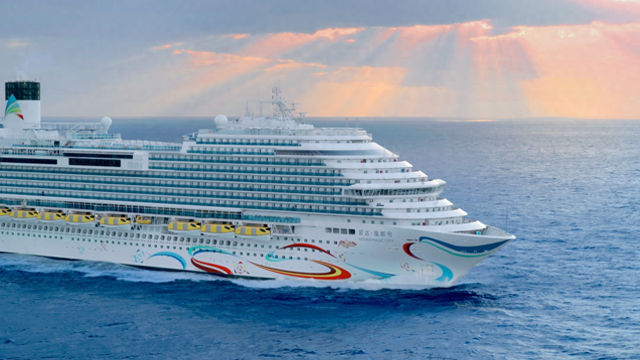
中国拼命建母港,邮轮却去了日本?
3 6 Ke· 2025-08-29 03:28
Core Insights - The article discusses the rapid development of cruise ports in various Chinese cities, likening it to a "hundred-city battle" for domestic cruise homeports by 2025 [1] - Cities like Xiamen and Qingdao are leading the charge with significant investments and infrastructure developments to attract cruise lines [4][6] - Despite the construction boom, there is a notable absence of international cruise companies operating regularly in China, with only two foreign companies currently active [8][10] Group 1: Infrastructure Development - Cities such as Nantong, Xiamen, and Qingdao are aggressively building cruise terminals and related infrastructure, with Xiamen's new terminal costing 730 million yuan and capable of accommodating three large cruise ships simultaneously [4][6] - Qingdao is also enhancing its cruise port area with new landmark projects and aims to attract over 20 billion yuan in investments this year [6] - Wuhan has announced plans to establish a "Yangtze River cruise homeport" to connect with other major cities [6] Group 2: Market Dynamics - The current landscape shows a stark contrast between the rapid development of cruise ports and the lack of international cruise ships docking in China, with many companies redirecting their operations to Japan [10][17] - The article highlights that the absence of major international cruise lines in China is due to economic considerations, as these companies find better profitability in Japanese ports [17][18] - The competition for cruise traffic is not just coastal but also includes inland ports, with significant investments being made in places like Chongqing [6][10] Group 3: Future Prospects - The article suggests that while the current situation appears bleak, there is potential for growth if cities focus on improving their service standards and tourist experiences [22][23] - Cities like Qingdao and Xiamen are seen as potential gateways for international tourism, with efforts to enhance their appeal to foreign visitors [19][20] - The long-term success of these cruise ports will depend on their ability to attract international cruise lines by demonstrating high levels of customer satisfaction and operational readiness [23]