
藏书票

Search documents
书籍、非遗、美食与年俗齐登场
Xin Lang Cai Jing· 2026-02-06 23:03
Group 1 - The event "Good Luck Plus Horse, Read More and More Good" is organized by the Cultural, Radio, Television and Tourism Bureau of Huzhou and hosted by the city library, aiming to create a unique cultural experience by integrating books, intangible cultural heritage, food, and traditional customs [1][2] - The event features a special "shopping list" where participants can complete interactive tasks at booths to receive customized red envelopes containing different book vouchers, enhancing the reading experience while enjoying the market [1] - Various local bookstores, including Xinhua Bookstore and Sanlian Bookstore, showcase a rich selection of niche literature and art books, while the library offers a "You Choose the Book, I Pay" initiative, allowing citizens to select books for the library to purchase for lending [1][2] Group 2 - The market also displays Huzhou's unique New Year goods and intangible cultural heritage foods, with each booth cleverly combining related books and poetry, creating a festive atmosphere [2] - Children participate in hands-on activities such as paper-cutting and writing auspicious characters, indicating strong community engagement and interest in cultural traditions [2] - The event continues over the next two days, providing more opportunities for citizens to experience the blend of reading and New Year festivities [2]
2025年山东省藏书大会暨中华传统晒书活动开幕
Da Zhong Ri Bao· 2025-09-28 01:04
Core Viewpoint - The 2025 Shandong Province Book Collection Conference and the traditional book-sharing event aim to promote and preserve Chinese traditional culture through exhibitions and cultural exchanges [2][3]. Group 1: Event Overview - The event features two exhibitions: "Lu Bi Chong Guang: Precious Ancient Books from the Tang and Song Dynasties" and "Reading Scenery - The Artistic World of Bookplates," showcasing rare ancient books and cultural artifacts [2][4]. - The exhibitions are held at the Confucius Museum, attracting experts, scholars, and collectors from across the country [2][3]. Group 2: Cultural Significance - The concept of "book-sharing" reflects the wisdom of ancient book preservation and has evolved into a significant form of knowledge and thought exchange in modern society [3][4]. - Shandong, as a key birthplace of Chinese civilization and Confucian culture, has implemented the "Chinese Ancient Book Protection Plan," leading to the collection of approximately 120,000 ancient books and nearly 2 million volumes [2][4]. Group 3: Exhibition Details - The "Lu Bi Chong Guang" exhibition features over 130 rare texts and artifacts from various public and private collections, including unique editions and first-time displays [4]. - The exhibition is divided into three sections: "Written Treasures," "Ancient Printing Techniques," and "Preserving Collections," highlighting the evolution of Chinese book production from handwritten to printed forms [4]. Group 4: Bookplate Exhibition - The "Reading Scenery" exhibition displays 633 bookplates, showcasing the cultural significance of book ownership across different eras and themes [5]. - The bookplates include historical examples and contemporary works, emphasizing regional characteristics and artistic styles [5]. Group 5: Future Activities - The "Lu Bi Chong Guang" exhibition will run for three months, while the "Reading Scenery" exhibition will last for one month [5][6]. - A seminar on the inheritance of ancient texts in the AI era was also held, focusing on innovative practices in ancient book utilization and promotion [6].
申遗成功!这条7.8公里的“龙脉”,藏着北京的千年密码
凤凰网财经· 2025-08-26 13:26
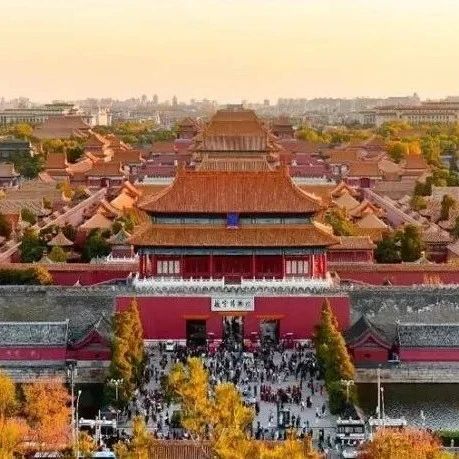
Core Viewpoint - The article celebrates the one-year anniversary of the successful UNESCO World Heritage application for Beijing's central axis, highlighting its historical significance and cultural value as a representation of Chinese civilization [1][3][6]. Group 1: Historical Significance - The Beijing central axis is described as the longest and most complete urban axis in the world, predating Paris's Champs-Élysées by 500 years and Washington's axis by 3,000 years [16]. - Spanning 7.8 kilometers from Yongdingmen to Bell and Drum Towers, it connects over 20 landmarks, each with its own historical narrative [18][20]. - The Forbidden City, located on this axis, houses 1.8 million cultural relics, each telling a story of Chinese civilization [22]. Group 2: Cultural Artifacts - The article introduces the "Zhongzhou National Treasures" postage stamp album, featuring 80 stamps and 5 bookplates that encapsulate the essence of the Forbidden City's treasures [10][13]. - Each stamp serves as a "mobile museum," allowing collectors to engage with Chinese history and culture [15][28]. - The collection includes various categories of cultural artifacts, such as paintings, ceramics, metals, jade, and furniture, showcasing the richness of Chinese heritage [69]. Group 3: Limited Edition and Collectibility - The "Zhongzhou National Treasures" album is limited to 2,000 sets, each with a unique serial number, enhancing its collectible value [88][92]. - The album is presented in a luxurious dark red hard shell packaging, symbolizing the grandeur of the Forbidden City [89]. - The opportunity to own this collection is framed as a rare chance to connect with China's cultural legacy, especially in light of the central axis's recent recognition [96][98].

上城:36岁的彭埠“小白菜”焕新
Hang Zhou Ri Bao· 2025-05-09 02:33
Group 1 - The core idea revolves around the cultural revitalization of the "Little Cabbage" literary society in Pengbu, which has evolved over 36 years from a local photography studio to a cultural symbol connecting the community's memories and stories [1][2] - The initiative led by Huang Jiangqi aims to modernize and popularize local folklore through innovative cultural expressions, targeting younger audiences by creating engaging characters and multimedia content [1][2] - The "Little Cabbage" has expanded into various cultural products and educational programs, including a comic magazine and community courses, enhancing local cultural awareness and participation [2][3] Group 2 - Huang Jiangqi's efforts include the development of a series of courses and micro-lessons that have reached over 2,000 residents, promoting the understanding of local culture and traditions [2] - Plans are in place to establish "Little Cabbage" sub-societies in 20 communities, aiming for comprehensive cultural engagement and the creation of cultural landmarks [3]