蛋白亚单位疫苗

Search documents
中国科学院院士高福:专注于蛋白亚单位疫苗的研究取得突破
Guan Cha Zhe Wang· 2025-12-22 09:32
Core Insights - The research on protein subunit vaccines has made significant progress, expanding the structure of the COVID-19 RBD subunit vaccine to octamers or hexamers, enhancing its broad-spectrum efficacy [1] - The COVID-19 pandemic has accelerated foundational research and industrialization in the fields of immunology and vaccines, emphasizing the importance of understanding basic research to shorten product development timelines [1] Group 1: Research and Development - Understanding the interaction mechanisms between viruses and cells is crucial for developing antiviral drugs and vaccines [3] - Research on how influenza viruses enter cells via sialic acid receptors can aid in creating drugs that block this process, while studying how viruses activate host immune responses can lead to more effective vaccines [3] - High-level breakthroughs in pathogen microbiology and immune response are driving innovative vaccine design and drug development [4] Group 2: Vaccine Effectiveness and Challenges - Vaccine effectiveness remains a significant issue in the vaccine industry, particularly with influenza vaccines due to the rapid mutation of respiratory viruses [4] - Various vaccine development strategies have been implemented since the outbreak of COVID-19, including inactivated vaccines, live attenuated vaccines, protein subunit vaccines, viral vector vaccines, mRNA vaccines, multivalent vaccines, and virus-like particle vaccines [4] Group 3: Public Health and Misinformation - Understanding virus transmission and pathogenic mechanisms is essential for formulating effective public health interventions, such as mask-wearing and social distancing [3] - The emergence of "infodemics" during biological outbreaks poses a challenge, with misinformation being as harmful as the viruses themselves, highlighting the need for scientific literacy as a societal vaccine [4]


中科院院士高福:专注于蛋白亚单位疫苗的研究取得突破
Guan Cha Zhe Wang· 2025-12-22 09:30
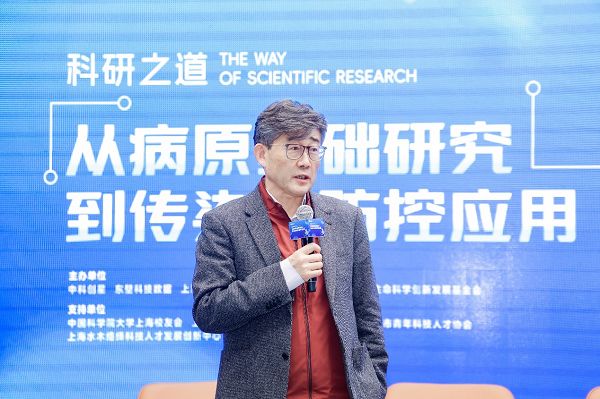
Core Viewpoint - The recent advancements in protein subunit vaccines, particularly the expansion of the COVID-19 RBD subunit vaccine structure to octamers or hexamers, enhance its broad-spectrum efficacy [1] Group 1: Research and Development - The laboratory focuses on protein subunit vaccine research, achieving breakthroughs that improve vaccine broad-spectrum capabilities [1] - Understanding the interaction mechanisms between viruses and host cells is crucial for developing antiviral drugs and vaccines [3] - Various vaccine development strategies have been established, including inactivated vaccines, live attenuated vaccines, protein subunit vaccines, viral vector vaccines, mRNA vaccines, multivalent vaccines, and virus-like particle vaccines [4] Group 2: Public Health Implications - Knowledge of virus transmission and pathogenic mechanisms aids in formulating effective public health interventions, such as mask-wearing and social distancing [3] - The World Health Organization reports an increase in respiratory infections during the winter months in the Northern Hemisphere, emphasizing the importance of ongoing research in this area [3] - The concept of "information epidemics" highlights the need for public education to combat misinformation during biological outbreaks, suggesting that scientific literacy acts as a societal vaccine [4] Group 3: Event and Collaboration - The "Good Hope Science Salon" serves as a platform for interdisciplinary exchange, bringing together over 130 participants from academia, industry, and technology transfer to discuss recent research and investment logic [1]

如何提高疫苗有效性与安全性?“好望角科学沙龙”探讨传染病防控新路径
Huan Qiu Wang Zi Xun· 2025-12-22 03:33
Group 1 - The discussion focused on improving vaccine effectiveness and safety, highlighting the limitations of current mucosal immune mechanisms and basic immunology research in developing efficient and long-lasting vaccines [1][3] - The event, part of the "Cape of Good Hope Science Salon," gathered over 130 participants, including experts, entrepreneurs, and investment leaders, to explore the latest research and investment logic in pathogen research and infectious disease prevention [1][3] Group 2 - Gao Fu, a prominent immunologist and academician, emphasized that the viruses likely to cause future large-scale outbreaks are influenza and coronaviruses due to their respiratory nature and propensity for mutation [3] - He discussed various vaccine development strategies adopted in China post-COVID-19, including inactivated, live attenuated, protein subunit, viral vector, mRNA, multivalent, and virus-like particle vaccines, with a focus on protein subunit vaccines [4] - Recent breakthroughs in vaccine research include the development of the world's first recombinant subunit vaccine for COVID-19, with advancements in design strategies to enhance broad-spectrum efficacy [4]