蜂鸟众包

Search documents
外卖骑手的时间被谁“偷”走了?
Xin Lang Cai Jing· 2026-01-11 00:40
Core Viewpoint - The claim that delivery platforms are "stealing time" from riders has been debunked, but issues related to timing rules and declining income are genuine concerns for delivery riders [1][4][6]. Group 1: Timing Rules and Delivery Pressure - A viral video claimed that a countdown of "1 minute" on the Taobao Flash Purchase app only equated to 42 seconds in real time, but this was proven to be a hoax [1][2]. - The current mainstream platforms use a "total time flat rate" timing rule, where the countdown starts from the moment an order is placed, encompassing the time taken by the merchant to prepare the food, the rider to pick it up, and the delivery itself [4][5][6]. - Many riders express concerns that the compressed timing creates a "psychological urgency," pressuring them to work beyond their limits, which raises safety risks [2][6]. Group 2: Rider Income and Workload - The number of delivery riders has increased significantly, with Meituan reporting a rise from 4.7 million in 2020 to 7.45 million in 2023, while Ele.me has over 4 million active riders [6]. - Despite the increase in riders, the average payment per order has decreased from approximately 8 yuan in 2020 to around 6 yuan now, leading to financial strain on riders [6][7]. - Riders report that the time constraints imposed by the platforms have reduced their delivery efficiency, with many stating they can only complete three to four orders in the time they previously managed seven to eight [6][7]. Group 3: Rider Demands and Platform Response - Riders are calling for a separation of the time allocated for food preparation and delivery, arguing that they should only be responsible for the time they can control [7]. - Complaints have been widespread regarding the timing system, which often starts the countdown before the merchant has even begun preparing the order, leaving riders with insufficient time for delivery [7].
QuestMobile:外卖竞争激活关联场景消费,电影演出、酒旅等平台月活双位数增
Jing Ji Wang· 2025-10-31 08:11
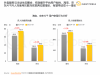
Core Insights - The report by QuestMobile highlights significant growth in the food delivery market driven by competition, which is expected to boost sales during the upcoming Double 11 shopping festival [1][2]. Group 1: Market Dynamics - The food delivery market has seen rapid growth since July, with platforms like JD and Taobao entering the market, leading to a new competitive landscape [1]. - Daily order volume in the food delivery market surged from approximately 100 million in May to over 200 million by August [1]. - Taobao's flash purchase feature reached a peak of 120 million daily orders in August, with monthly active users nearing 370 million [1]. Group 2: User Engagement - In Q3, monthly active users for Taobao, Meituan, and JD experienced significant growth, with Taobao's monthly active users approaching 1 billion in August and September, marking a historical high [1]. - The average usage frequency and duration per user for Taobao and JD saw double-digit growth in September [1]. Group 3: Advertising and Revenue - The rapid development of food delivery services has significantly increased the advertising value for platforms, with Taobao's advertising revenue market share rising by approximately 2 percentage points compared to last year [1]. Group 4: Broader Market Impact - The food delivery boom has positively impacted related sectors, with active users in tourism, performances, and hotel services showing notable growth of 11.9% and 16.1% year-on-year in September [5]. - The overall online retail growth rate has rebounded to 9.8%, with online service consumption increasing by 20.2% from January to September [8]. Group 5: Competitive Landscape - The market is becoming increasingly competitive, with consumers opting for multiple platforms for comparison. The overlapping user base among Taobao, Meituan, and JD grew by nearly 20% year-on-year in September [8]. - The number of active delivery riders has expanded significantly, with a 140% increase in monthly active users for rider apps compared to January [8]. Group 6: Industry Standards - In response to intense competition, platforms are focusing on building food safety ecosystems and enhancing service quality, with continuous upgrades to rider support and protection systems [11].