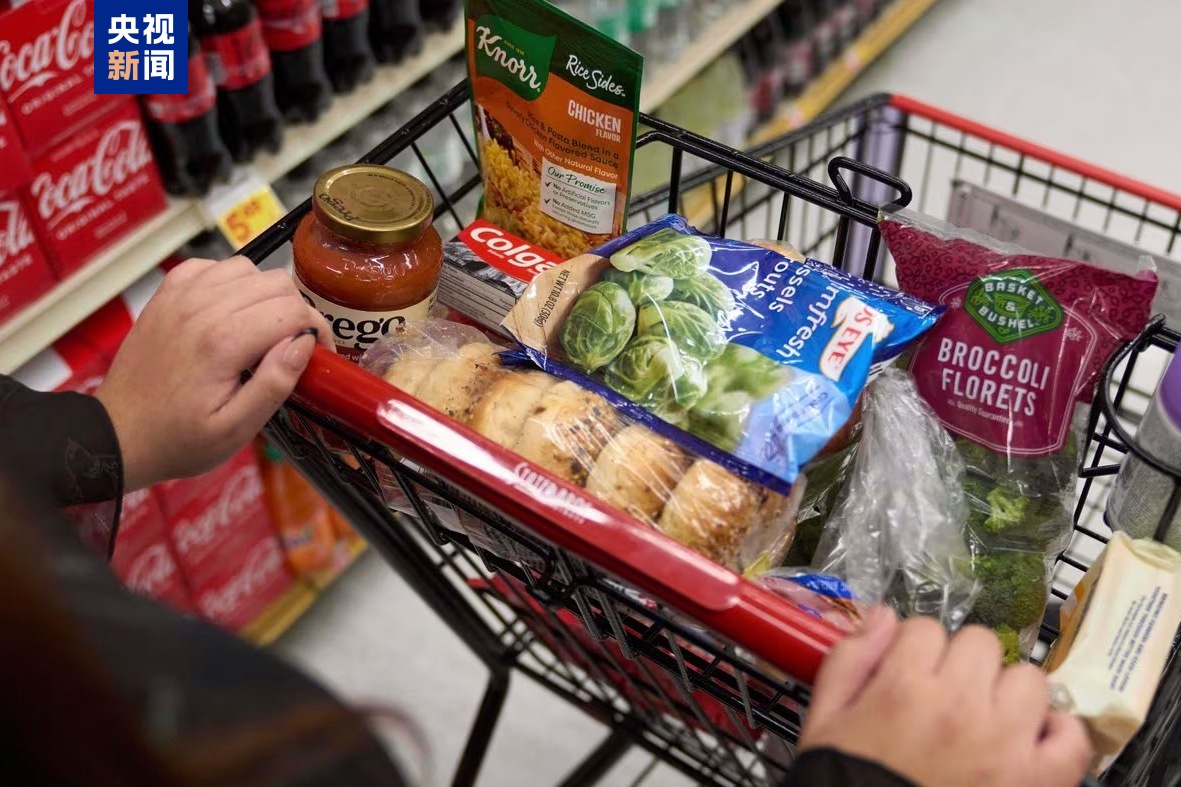
补充营养援助计划(食品券)

Search documents
美国政府长达43天的“停摆”结束 经济民生已遭巨大创伤
Zhong Guo Xin Wen Wang· 2025-11-13 05:24
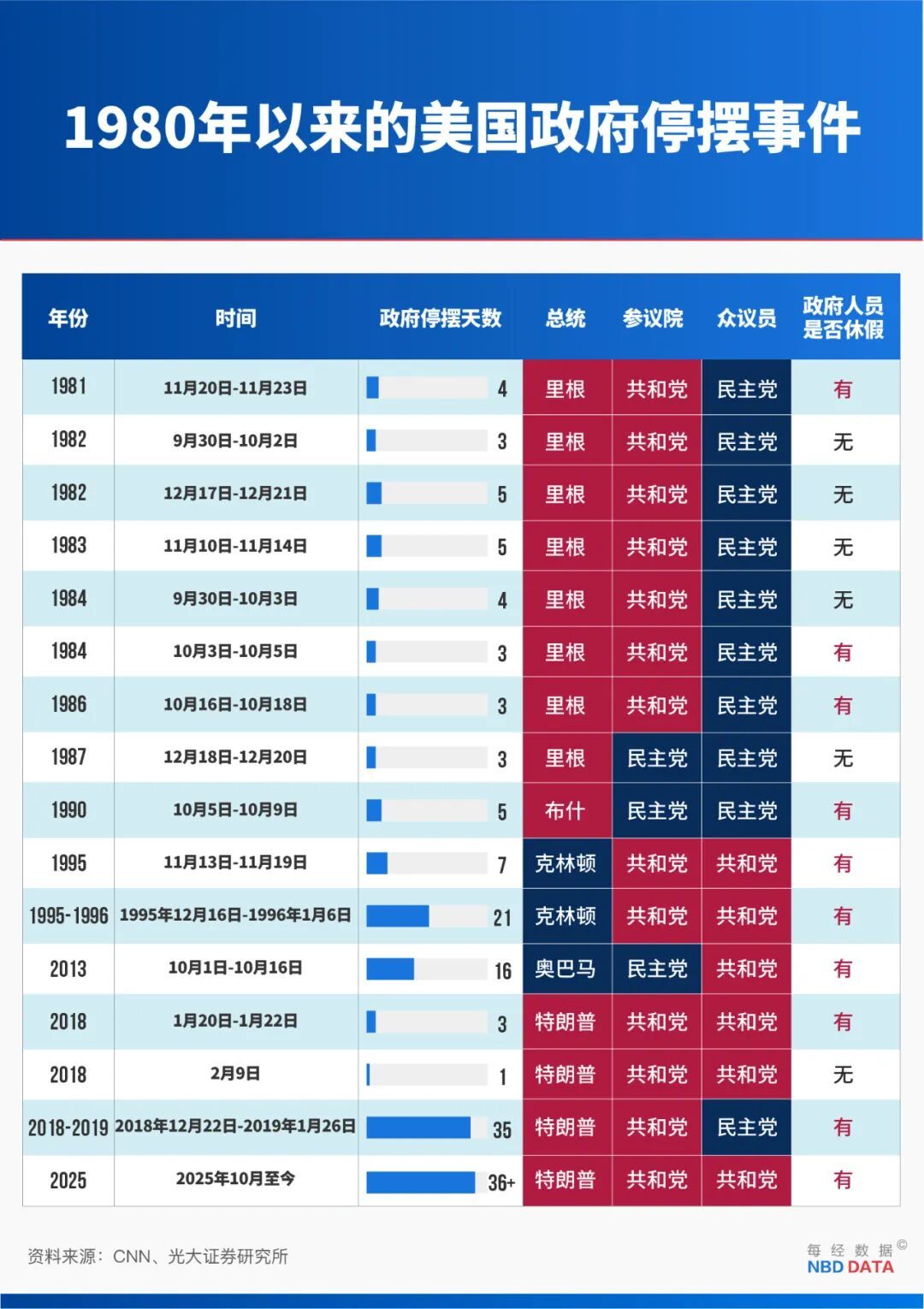
Core Points - The U.S. government shutdown lasted for 43 days, marking the longest in U.S. history, and has now ended with President Trump signing a temporary funding bill [1] Group 1: Impact on Public Welfare - The shutdown directly affected ordinary Americans, particularly low-income families, with the Supplemental Nutrition Assistance Program (SNAP) impacting around 42 million people [4] - Over 1 million federal employees faced unpaid leave, with some required to work without pay, raising concerns about whether they would receive back pay [4] - The political struggle was described as using the suffering of the public for political gain, with comments highlighting the cruelty of the situation for the poor [4] Group 2: Economic Consequences - The aviation industry was severely impacted, with the Federal Aviation Administration (FAA) forced to reduce flight volumes at 40 major airports by up to 10% due to staff shortages [6] - Daily flight cancellations exceeded 2,800, with delays surpassing 10,000, leading to significant disruptions in air travel [6] - The Congressional Budget Office projected a 1-2 percentage point decrease in the annualized growth rate of U.S. GDP by the fourth quarter of 2025 due to the shutdown, with permanent economic losses estimated between $7 billion and $14 billion [6] Group 3: Political Dynamics - The shutdown stemmed from increasing "veto politics" between the two major parties, with a lack of compromise on key issues such as government funding and healthcare subsidies [9] - Historical context shows that since 1976, there have been 20 funding gaps leading to 10 government shutdowns, indicating a pattern of political dysfunction [9] - The crisis has eroded consumer confidence, with the potential for government shutdowns becoming a normalized occurrence, undermining public trust and national cohesion [9]

36天,美国联邦政府“停摆”创纪录!航空濒临关闭,债务增超6000亿美元……
Mei Ri Jing Ji Xin Wen· 2025-11-05 04:59
Core Points - The U.S. federal government shutdown has reached its 36th day, marking the longest shutdown in history, primarily due to partisan disagreements over key issues like healthcare subsidies [1] - The Congressional Budget Office (CBO) warns that the shutdown could reduce the annual GDP growth rate by 1 to 2 percentage points in the fourth quarter [1][12] - Key pressure points driving negotiations include disruptions in air traffic, the suspension of food stamp benefits for 42 million people, and impending military pay issues [1][21] Group 1: Government Shutdown Dynamics - The shutdown began on September 30 after Congress failed to pass any temporary funding bills, leading to 14 failed votes in the Senate over the past month [1][5] - The inability to reach a compromise stems from deepening partisan divides, particularly regarding the extension of enhanced subsidies under the Affordable Care Act (ACA) [4][11] - The current political stalemate is exacerbated by the procedural tool of "filibuster," which allows unlimited debate unless a supermajority is reached [10][11] Group 2: Economic Impact - The CBO estimates that a six-week shutdown could result in a permanent loss of approximately $11 billion in economic output, with losses increasing to $14 billion if the shutdown lasts eight weeks [12][13] - The economic costs are compounded by the absence of critical economic data releases due to the shutdown, creating uncertainty for the Federal Reserve's decision-making [16][19] - The market's confidence in potential interest rate cuts by the Federal Reserve has diminished, with expectations dropping from 90.5% to 69% for a December rate cut [17][19] Group 3: Pressure Points for Resolution - The aviation sector is facing significant disruptions, with a high absenteeism rate among air traffic controllers leading to flight delays and cancellations [21][23] - The suspension of the Supplemental Nutrition Assistance Program (SNAP) has created a direct political pressure on Republican lawmakers, as many beneficiaries reside in Republican-controlled states [21][24] - Military pay issues are also looming, with uncertainty surrounding the next scheduled payment on November 15, which could further compel action from Congress [24][27] Group 4: Potential Outcomes - Analysts suggest that a compromise may involve a "clean" continuing resolution in exchange for future negotiations on healthcare subsidies, allowing both parties to save face [27] - Observing the reconvening of the House and positive developments in Senate negotiations could signal that an agreement is nearing [27]
美法官裁定政府不得在“停摆”期间暂停食品援助
Yang Shi Xin Wen· 2025-10-31 19:06
Core Points - A federal judge ruled that the Trump administration cannot suspend the Supplemental Nutrition Assistance Program (SNAP) benefits during the government shutdown, as it may violate federal law [1] - The SNAP program ran out of funds on October 31, affecting approximately 42 million people in the U.S., which is about one-eighth of the total population, with most recipients living below the poverty line [1] - Beneficiaries of SNAP can use federal food assistance to purchase food at designated stores [1]
视频丨美加州官员称民众忍饥挨饿成政治筹码
Yang Shi Xin Wen Ke Hu Duan· 2025-10-30 03:03
Core Points - The California Attorney General Rob Bonta announced a lawsuit against the U.S. Department of Agriculture and Secretary Brooke Rollins for illegally suspending the Supplemental Nutrition Assistance Program (SNAP) during the federal government shutdown, affecting over 41 million Americans, including approximately 5.5 million Californians [2] - California is allocating $80 million to food banks to address current needs, although Governor Newsom acknowledged that this amount is insufficient [2] - The U.S. Department of Agriculture announced on October 26 that due to the government shutdown, funding for federal food assistance and related benefits will run out, with no disbursements starting November 1 [2] - On October 28, 25 Democratic-led states and Washington D.C. filed a lawsuit against the federal government, seeking to utilize federal emergency funds to maintain the SNAP program [2]
政府“停摆”致暂停食品援助 美多州提起诉讼
Yang Shi Xin Wen· 2025-10-28 16:52
Core Points - A coalition of states led by the Democratic Party has filed a lawsuit to block the Trump administration from suspending food assistance benefits during the ongoing government shutdown starting November 1 [1] - The lawsuit was initiated after the U.S. Department of Agriculture announced it would not utilize $6 billion in emergency funds to pay for the Supplemental Nutrition Assistance Program (SNAP), also known as food stamps [1] - This food assistance program provides support to over 41 million low-income Americans [1]
政府“停摆”持续,美低收入人群食品援助要停了
Yang Shi Xin Wen· 2025-10-27 00:16
Core Points - The U.S. Department of Agriculture announced that the Supplemental Nutrition Assistance Program (SNAP) will cease operations on November 1 due to depleted funds [1][3] - Approximately 42 million individuals benefit from SNAP, primarily low-income groups, including the disabled and elderly, who use government-subsidized food vouchers to purchase food at designated stores [3] Group 1 - The SNAP program will stop issuing benefits starting November 1 due to a lack of funding [1][3] - The program serves around 42 million people, focusing on low-income individuals, the disabled, and the elderly [3]