话剧《茶馆》

Search documents
刘敏涛谈话剧俗世奇人
Xin Lang Cai Jing· 2026-01-18 14:17
Core Viewpoint - The play "Suxi Qiren" is a creative adaptation of Feng Jicai's award-winning short story collection, showcasing the unique characters and stories from the late Qing and early Republic periods in Tianjin, with a focus on the character Guanzijie played by Liu Mintao, who adds depth to the narrative [1] Group 1: Production Insights - The play is directed by Zhong Hai and produced by Liu Zhongkui, with a significant effort put into the adaptation process, including purchasing the rights from Feng Jicai twice over ten years [1] - The character Guanzijie, not present in the original work, was created to connect the various stories and characters, highlighting the creative liberties taken in the adaptation [1] - Liu Mintao's portrayal of Guanzijie reflects her extensive research into the character's traits, drawing inspiration from other performances to embody the essence of a strong female lead [1] Group 2: Performance and Reception - Since its premiere in 2022, "Suxi Qiren" has been performed over 50 times, indicating a strong reception and interest in the production [1] - Liu Mintao received the 18th Wenhua Performance Award for her role in the play, showcasing her talent and the play's impact on the audience [1] - The collaborative approach in rehearsals, focusing on discussions and character exploration, has been emphasized as a key to the performance's success [1]
“不要内耗”的陈明昊:话剧《第七天》用未知世界慰藉当下
Xin Lang Cai Jing· 2026-01-08 00:26
Core Perspective - The return of the play "The Seventh Day" signifies a confirmation of the relevance of theater in a changing world, emphasizing the importance of human connection and interaction in contemporary society [1][15]. Group 1: Theatrical Significance - "The Seventh Day" is not merely a revival but a reflection on whether theater remains a meaningful space for audiences [2][15]. - The play, adapted from Yu Hua's novel, explores themes of life and death, and is seen as a construction of an unknown world that offers solace in the present [8][18]. - The theater serves as a space for interaction and awakening, allowing both actors and audiences to engage in a shared experience [10][12]. Group 2: Actor's Experience - The actor Chen Minghao expresses that the stage is a place to temporarily retreat from reality, providing a sense of stability and clarity [10][20]. - He emphasizes the importance of the live performance experience, where every show is unique and unpredictable, allowing for a genuine connection with the audience [11][22]. - Chen Minghao's approach to acting involves a continuous exploration of physical expression and emotional authenticity, viewing mistakes as an integral part of the performance [11][25]. Group 3: Audience Engagement - The interaction with the audience is crucial, as it transforms the theater into a space of mutual recognition and shared experience [10][22]. - Chen Minghao aims to prevent audiences from becoming too immersed in the story, encouraging them to reflect on their own perceptions and experiences [11][22]. - The essence of theater lies in its ability to evoke awareness and connection, rather than merely creating illusions [10][12].
剧场何以“圈粉”年轻人
Xin Lang Cai Jing· 2025-12-21 01:12
Core Insights - The theater industry is increasingly attracting young audiences, with a significant rise in attendance from the post-90s and post-00s generations, who now represent a substantial portion of theatergoers [1][2]. Group 1: Audience Engagement - Young audiences are actively engaging with theater, as evidenced by their participation in discussions and social media interactions surrounding performances [1]. - The report from the China Performance Industry Association indicates that over 23% of ticket buyers for immersive performances, musicals, and stand-up comedies are from the post-00s demographic [1]. Group 2: Emotional Connection - The theater serves as an emotional outlet for young people, allowing them to resonate with performances that reflect their life experiences and challenges [2]. - Comedic performances in particular provide a platform for young audiences to laugh at their own struggles, alleviating stress and fostering a sense of community [2]. Group 3: Innovative Content - Traditional art forms are being revitalized to appeal to younger audiences, with innovative adaptations of classic works attracting significant attendance, such as the youth-oriented Yue opera "My Grand View Garden," which had 98% of its audience under 30 [2]. - The integration of contemporary aesthetics and narratives into traditional performances is crucial for engaging young viewers, as it aligns with their cultural preferences [2]. Group 4: Accessibility and Opportunities - The theater industry is making efforts to remain accessible to young audiences through initiatives like student tickets and community outreach programs, ensuring that the doors of theaters are open to them [3]. - The emergence of flexible small theater formats and diverse theater festivals provides young enthusiasts with a variety of options to explore [3].
剧场何以“圈粉”年轻人?
Xin Lang Cai Jing· 2025-12-21 01:12
Core Insights - The theater industry is successfully attracting a growing number of young audiences, particularly those from the post-90s and post-00s generations, who are becoming the mainstream viewers of performances [1][2] Group 1: Audience Engagement - Young audiences are increasingly participating in theater, with over 23% of ticket buyers for immersive performances, musicals, and stand-up comedy being from the post-00s demographic [1] - The trend of young people viewing theater as a social activity is rising, with phrases like "dragging a suitcase to see a play" and "dining out is less appealing than going to the theater" becoming popular among this demographic [1] Group 2: Emotional Connection - The theater serves as an emotional outlet for young people, allowing them to resonate with performances that reflect their life challenges, such as workplace and family issues, through humor and relatable content [2] - Productions that address the existential concerns and emotional states of young audiences are gaining traction, with genuine expressions triggering a sense of connection [2] Group 3: Innovation in Traditional Arts - Traditional Chinese operas are revitalizing their appeal to younger audiences by incorporating innovative elements, with productions like the youth version of "My Grand View Garden" attracting 98% young viewers [2] - The integration of contemporary aesthetics in stage design and storytelling, along with the involvement of young actors, is essential for engaging the youth demographic [2] Group 4: Accessibility and Opportunities - The theater industry is making efforts to remain accessible to young audiences through student tickets and public welfare performances, ensuring that the doors of theaters are always open to them [3] - The increasing variety of theater offerings, including flexible small theater formats and diverse drama festivals, provides young enthusiasts with more choices [3]
剧场何以“圈粉”年轻人(青年观)
Ren Min Ri Bao· 2025-12-20 22:09
Core Insights - The theater industry is successfully attracting a younger audience, particularly those born in the 1990s and 2000s, as evidenced by the popularity of classic plays like "Teahouse" and the increasing attendance of young viewers at various performances [1][2] Group 1: Audience Engagement - The report from the China Performance Industry Association indicates that over 23% of ticket buyers for immersive performances, musicals, and stand-up comedies are from the post-2000 generation [1] - Young adults aged 25-29 have become the primary audience for comedy and suspense plays, indicating a shift in demographic engagement within the theater [1] - Social media platforms are being utilized by young audiences to share their theater experiences, leading to a new form of social interaction centered around theater attendance [1] Group 2: Emotional Connection and Content - The theater is leveraging emotional value as a key driver for consumption, providing a space for young people to express their emotions and find resonance with their experiences [2] - Performances often address the challenges faced by young adults in their personal and professional lives, creating a relatable atmosphere that fosters laughter and alleviates stress [2] - The emergence of innovative traditional performances, such as youth-oriented adaptations of classic operas, has successfully captured the interest of younger audiences, with 98% of attendees for the premiere of "My Grand View Garden" being young viewers [2] Group 3: Accessibility and Opportunities - The theater industry is making efforts to remain accessible to young audiences through initiatives like student tickets and public welfare performances, ensuring that the doors of the theater are always open to them [3] - The combination of diverse theater formats and rich drama festivals provides young theater enthusiasts with a variety of choices, enhancing their engagement with the art form [3] - The ongoing dialogue between traditional arts and contemporary youth culture is fostering a vibrant theater scene that continuously attracts younger generations [3]
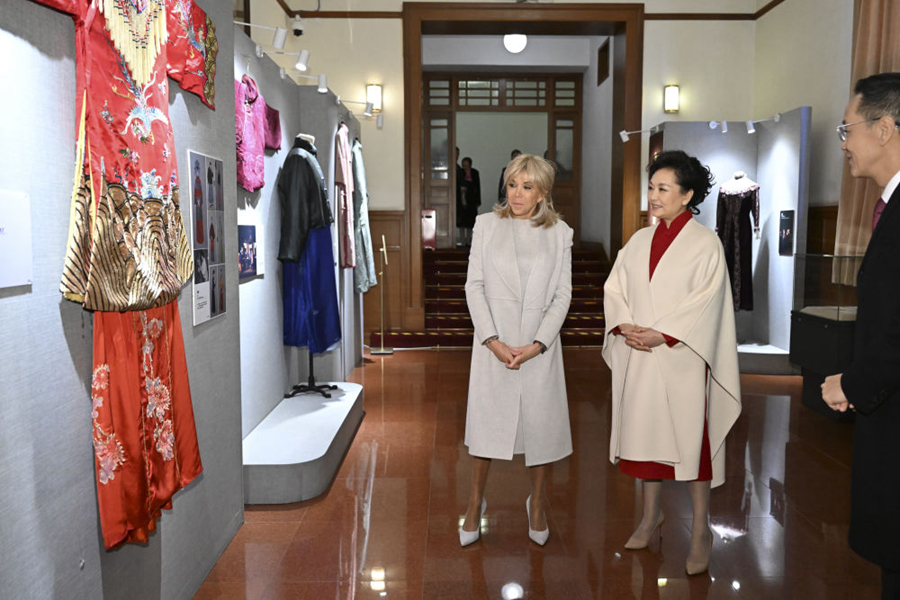
彭丽媛同法国总统夫人布丽吉特参观北京人民艺术剧院
Xin Hua She· 2025-12-04 09:21
Group 1 - The core viewpoint of the article highlights the cultural exchange between China and France, as demonstrated by the visit of Brigitte Macron to the Beijing People's Art Theatre alongside Peng Liyuan [2][4][6] - The two first ladies engaged in discussions about the development of Chinese drama and its interactions with French theatrical traditions, emphasizing the importance of cultural collaboration [4][6] - Peng Liyuan expressed the hope that artists from both countries would strengthen their exchanges and create more outstanding artistic works, reflecting the shared cultural heritage of China and France [6] Group 2 - The visit included a viewing of the classic play "Teahouse," showcasing the rich tradition of Chinese drama and its innovative approaches [4][6] - Brigitte Macron expressed gratitude for the arrangements made by Peng Liyuan and praised Chinese drama, indicating a willingness to promote cultural exchanges between the two nations [6]

东西问·北京文化论坛|埃及汉学家:话剧《茶馆》何以成为文明交流互鉴的“社会镜像”?
Zhong Guo Xin Wen Wang· 2025-09-21 11:38
Core Viewpoint - The play "Teahouse" serves as a "social mirror" for cultural exchange and understanding, highlighting the commonality of human experiences across different cultures [3][4][6]. Group 1: Insights from the Play - The teahouse in the play represents a microcosm of society, showcasing various characters from different walks of life, reflecting their hopes and anxieties about the future [4][6]. - The character Wang Lifafa embodies the struggle of small business owners who wish to maintain stability amidst societal turmoil, illustrating the universal challenges faced by individuals in changing times [6][7]. - "Teahouse" is not only a historical drama but also a humanistic one, prompting reflections on the dignity of ordinary people in the face of larger societal changes [6][7]. Group 2: Cultural Exchange and Understanding - The play can help Egyptian students understand modern China by providing insights into Chinese history, character traits, and emotional responses to change, making it more relatable than traditional history books [7][8]. - Effective translation is crucial for conveying the cultural nuances of the play, ensuring that the audience grasps both the language and the underlying cultural context [8]. - Creating an immersive atmosphere through stage design and performance can enhance the audience's experience, making it easier for them to connect with Chinese culture [8][10]. Group 3: Broader Implications of Cultural Dialogue - The importance of cultural dialogue in fostering mutual trust between nations is emphasized, suggesting that collaboration is essential to address global challenges [11]. - The integration of cultural exchanges, such as China's Belt and Road Initiative and Egypt's Vision 2030, exemplifies how cultural understanding can lead to tangible cooperation and deeper emotional connections between countries [11].