
语音控制系统

Search documents
外资缘何青睐中国小而精企业?路畅科技、鑫科材料等受追捧
Sou Hu Cai Jing· 2025-08-26 12:12
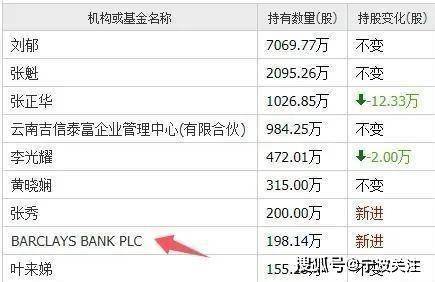
Core Insights - A group of small and medium-sized Chinese companies has unexpectedly attracted significant attention from top global capital, including major financial institutions like UBS, JPMorgan, and Goldman Sachs [1] - The influx of foreign investment into these companies indicates a strong interest in China's high-end manufacturing and technology sectors [1][5] Group 1: Investment Highlights - Luochang Technology, specializing in automotive smart devices, has seen four foreign institutions collectively purchase nearly 2 million shares, with total investments exceeding 45 million yuan [2][5] - Xinke Materials, a high-performance copper alloy manufacturer, attracted substantial investments from Barclays and JPMorgan, acquiring 4.17 million and 3.18 million shares respectively [5][6] - Shuangyi Technology, focused on wind power equipment, has also gained foreign interest, with UBS purchasing 1.48 million shares, making it the sixth-largest shareholder [3][6] Group 2: Industry Trends - The wind power sector is experiencing rapid growth, prompting foreign investors to recognize significant investment opportunities in companies like Shuangyi Technology [3] - The cable industry leader Jinlongyu is gaining attention for its development of next-generation solid-state batteries, with Barclays and Goldman Sachs investing heavily [7] - The commercial real estate sector is also attracting foreign capital, as seen with the company Xintiandi, which has developed a mixed-use project that has become a new urban landmark [7] Group 3: Broader Implications - The collective investment from both foreign and domestic institutions in companies like Zhejiang Huaye indicates a synchronized capital influx, enhancing the growth potential of these firms [6][7] - The strategic selection of companies by foreign investors reflects a careful consideration of their core competencies and market potential, suggesting a positive outlook for the future of these Chinese SMEs [7]


新合资时代,中国人掌舵?
Zhong Guo Qi Che Bao Wang· 2025-06-30 01:09
Core Insights - GAC Toyota has announced the establishment of the "China ONE R&D" system, transferring decision-making power for China-exclusive models from Japan to local teams, marking a significant shift in power dynamics within multinational automotive companies [2] - Nissan plans to invest 10 billion yuan to expand its technology center in China, allowing local teams to lead vehicle development, while BMW aims to integrate insights from Chinese R&D teams into its next-generation models by 2026 [2][3] - The shift towards local R&D leadership is driven by the rapid evolution of electric and intelligent vehicle technologies in China, necessitating a deeper understanding of local consumer needs [3][4] Industry Dynamics - The unique demands and technological advancements in the Chinese market have become crucial for local teams to gain leadership roles in multinational companies [2][4] - Chinese consumers' expectations for smart connectivity features are pushing multinational companies to adapt their decision-making processes, with BMW's strategy reflecting this trend [3] - The establishment of local R&D capabilities is seen as essential for multinational companies to remain competitive in China's fast-paced automotive market [4] Challenges and Conflicts - The transfer of power is not merely a technical adjustment; it also involves inherent conflicts between global strategies and local market demands [5] - Organizational changes may lead to internal power struggles, as local teams gain decision-making authority, challenging the traditional roles of headquarters [6] - Disparities in interests between joint venture partners regarding profit sharing and resource allocation could complicate collaboration efforts [7] Market Impact - If more joint ventures follow this trend of power transfer, it could reshape the competitive landscape, with local technologies increasingly influencing multinational brands [8] - Brands lacking local R&D capabilities may face accelerated exit from the market, as evidenced by the decline of Korean brands in China [8] - The global R&D framework may undergo transformation, with Chinese innovations potentially setting new standards for multinational companies [9] Future Outlook - The transition to a "new joint venture era" signifies a pivotal moment for the Chinese automotive industry, reflecting its rising influence in global automotive dynamics [9] - The success of this transformation will depend on the ability of joint venture partners to overcome cultural barriers and redefine profit-sharing mechanisms [9]
