
货架

Search documents
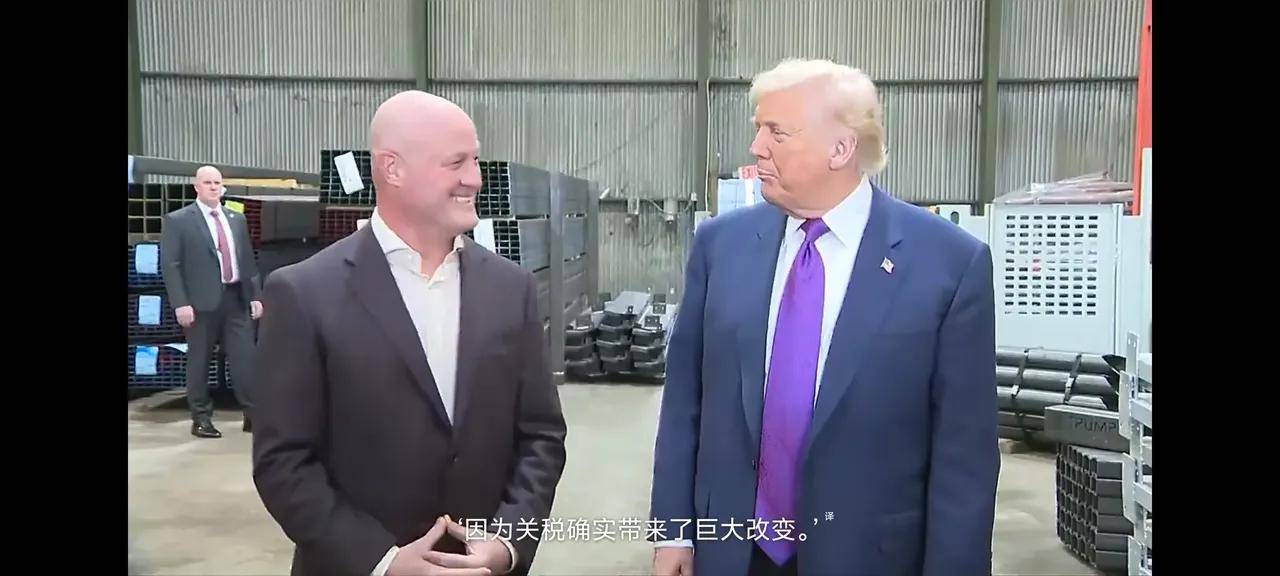
美高层视察的一家美国钢铁制品公司老板诉苦,以前他在与东大的竞争中苦苦挣扎。
Sou Hu Cai Jing· 2026-02-21 04:23
Group 1 - The core issue highlighted is the lack of competitiveness of the U.S. manufacturing industry against low-priced foreign products, with domestic production costs significantly higher at $150 compared to $90 for imports [1] - The implementation of tariff policies has led to increased prices for consumers, with similar products now exceeding $150 and delivery times extending to 36 weeks, indicating a direct impact on consumer costs [1] - Economic experts argue that trade barriers created through administrative means effectively subsidize specific industries at the expense of overall consumer welfare, raising concerns about the long-term viability of domestic industries without international competition [1] Group 2 - While some level of trade protection is deemed necessary, there is a warning against using such measures to sustain outdated production capacities, which ultimately harms societal economic efficiency [3] - The article emphasizes the importance of consumer feedback regarding high prices and long delivery times, suggesting that the ultimate test of economic policy should be the well-being of the populace [3]

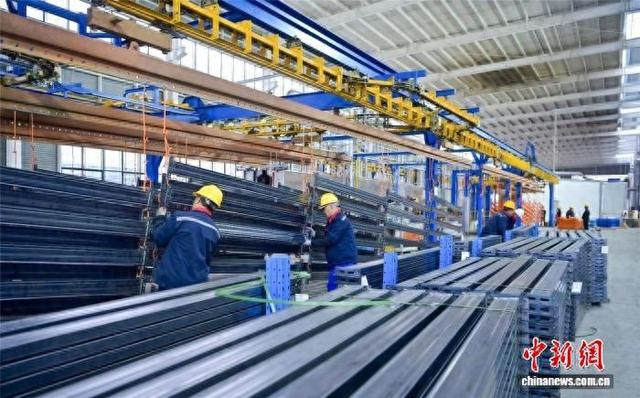
(新春走基层)“中原货架之乡”的“归雁经济”
Xin Lang Cai Jing· 2026-02-14 12:22
Core Viewpoint - The article highlights the development of the "returning geese economy" in Sheqi County, Nanyang, which has transformed the local shelf manufacturing industry into a significant economic driver, creating jobs and fostering entrepreneurship among returning residents [1][3]. Group 1: Industry Development - The shelf industry in Sheqi County has evolved significantly, with over 500 related enterprises and more than 20,000 employees, generating an annual output value of 5 billion yuan, capturing over 70% of the domestic market share [7]. - The local government has implemented a "returning project" and established a 305-acre shelf industrial park, creating a "4-hour industrial circle" for raw material supply, production, and logistics [5][7]. Group 2: Entrepreneurial Initiatives - Many former "shelf men" have returned to their hometowns to start businesses, such as Jiang Wanlai, who founded a company that employs nearly 100 locals, and a young couple who established an e-commerce business with annual sales exceeding 90 million yuan [5][7]. - The local government aims to achieve a 10 billion yuan industrial cluster by 2030 and is promoting the establishment of a shelf industry college in collaboration with universities to enhance the transition from "Sheqi manufacturing" to "Sheqi intelligent manufacturing" [7].
兰剑智能:工业机器人产品大部分实现自研自制
Zheng Quan Ri Bao Zhi Sheng· 2026-01-15 13:40
Core Viewpoint - The company, Lanjian Intelligent, emphasizes its competitive advantages in self-research and production across the entire product chain, focusing on industrial robots and related equipment [1] Group 1: Competitive Advantages - Self-research and self-manufacturing of the entire product chain: The majority of the company's industrial robot products are self-developed and manufactured, including core devices such as shuttle robots, storage robots, and handling robots, as well as shelves, conveyor equipment, and motion controllers, which allows for cost control [1] - Technological innovation: The company aims to create superior products by enhancing product performance and quality through design and process optimization, while also saving energy and materials [1] - Solution innovation: The company selects the most suitable solutions from a technical perspective to provide the highest quality services [1]

2026-2032年中国互联网+货架市场全景调研与前景趋势报告
Sou Hu Cai Jing· 2025-12-05 04:51
Group 1 - The report titled "2026-2032 China Internet + Shelf Market Panorama Research and Prospect Trend Report" provides a comprehensive overview of the shelf industry in China, including market development environment, operational status, competitive landscape, key enterprise analysis, and future trends and investment forecasts [2][3] - The data in the report is sourced from national statistics, customs data, survey data, and databases from the Ministry of Commerce, ensuring a robust foundation for analysis [2] - The report consists of twelve chapters covering various aspects of the shelf industry, including definitions, industry chain analysis, economic environment, social environment, and policy regulatory environment [2][3] Group 2 - Chapter one introduces the definition of shelves, development description, and industry characteristics, along with an analysis of the upstream and downstream industries [2] - Chapter two discusses the economic environment, including macroeconomic conditions, industrial trends, and fixed asset investment in China [3] - Chapter three compares the global shelf industry development from 2021 to 2025, analyzing competitive landscapes and characteristics in different regions [3][4] Group 3 - Chapter four provides a comprehensive analysis of the operational status of the shelf market, including management systems and the impact of policies and regulations [3][4] - Chapter five analyzes economic indicators related to the shelf industry, including the number of enterprises, production and sales analysis, and financial indicators [4][5] - Chapter six focuses on regional market development analysis and forecasts, examining key regional markets and their competitive status [4][5] Group 4 - Chapter seven analyzes the competitive structure of the shelf industry, including existing competition, potential entrants, and the bargaining power of suppliers and customers [4] - Chapter eight evaluates the operational status and strategic planning of key shelf enterprises, providing insights into their competitive advantages and marketing networks [5] - Chapter nine discusses the market outlook for the shelf industry from 2026 to 2032, including market capacity, favorable and unfavorable policies, and future development predictions [5][6] Group 5 - Chapter ten identifies favorable and unfavorable factors affecting the shelf industry from 2026 to 2032, along with investment opportunities and potential barriers for new entrants [5][6] - Chapter eleven analyzes the development environment and channel strategies for the shelf industry, focusing on macroeconomic data and competitive channel models [7] - Chapter twelve provides marketing strategy analysis and recommendations for the shelf industry, including operational and production models [7][8]
