贵重金属

Search documents
《中欧班列发展报告(2025)》发布:有力保障国际产业链供应链稳定
Zhong Guo Xin Wen Wang· 2025-11-19 01:12
Core Insights - The "China-Europe Railway Express Development Report (2025)" highlights the stability and efficiency of the railway service, which has become a new model for international transportation and trade, significantly contributing to the stability of global supply chains [1][2] Group 1: Development and Impact - By October 2025, the China-Europe Railway Express is expected to have operated 118,600 trains, transporting 11.7 million TEUs (Twenty-foot Equivalent Units), with a logistics service network covering the entire Asia-Europe region [1] - The range of goods transported has expanded to 53 categories and over 50,000 types of products, with high-value items like automotive parts, machinery, and electronics accounting for over 60% of exports from China via this railway by 2024 [1] - The rapid development of the China-Europe Railway Express has made the Belt and Road Initiative more tangible, fostering the growth of logistics and related industries, and creating new industrial and commercial centers that provide more job opportunities and income for local populations [1] Group 2: New Business Models and Economic Growth - The emergence of new service models such as "Railway + Supermarket" has enabled a "buy global, sell global" approach, allowing Chinese consumers to purchase high-quality European products directly [2] - The railway has significantly boosted the economy of border towns, with places like Malaszewicze in Poland becoming key logistics hubs, and Duisburg in Germany transforming into an important European logistics center [2] - From 2013 to 2024, the value of goods transported by the China-Europe Railway Express has increased approximately 33 times, with its share of total China-Europe trade rising from 0.4% to 8.5% [2]
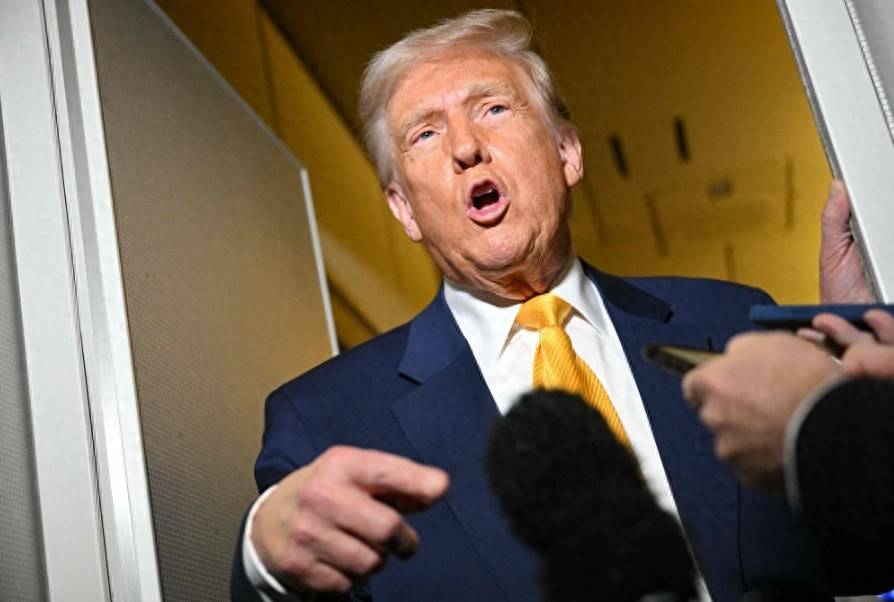
150多国放弃挣扎后,特朗普点名3国“定生死”,韩国真的赢了吗
Sou Hu Cai Jing· 2025-08-04 03:27
Core Points - The article discusses the recent tariff decisions made by Trump against Brazil, India, and South Korea, highlighting the implications for these countries and their economies [1][3][5]. Group 1: Tariff Decisions - Trump announced a 40% tariff on Brazil, with a total tariff rate reaching 50%, excluding certain products like wood pulp and oil [3][5]. - India faces a 25% tariff along with unspecified penalties due to a lack of compromise during trade negotiations [6][8]. - South Korea is subjected to a 15% tariff, which is lower than that imposed on India, but comes with significant financial commitments to the U.S. [10][12]. Group 2: Economic Implications - The high tariffs on Brazil could strain U.S. importers who rely on Brazilian products, creating a challenging situation for both countries [5]. - India's response to the tariffs may be to emphasize the importance of U.S.-India relations, despite the punitive measures [8]. - South Korea's commitment to invest $350 billion and procure $100 billion in energy products is seen as a way to mitigate the impact of tariffs, but it may lead to domestic backlash against the government [10][12]. Group 3: Political Reactions - Brazilian President Lula has indicated that Brazil will retaliate against U.S. tariffs, suggesting a tit-for-tat approach [5]. - Indian Prime Minister Modi has stated that the door for negotiations remains open, indicating a desire to maintain relations despite the tariffs [8]. - South Korean President Lee Jae-myung may face significant domestic criticism for conceding to U.S. demands, especially given the contrasting policies of his predecessor [12].