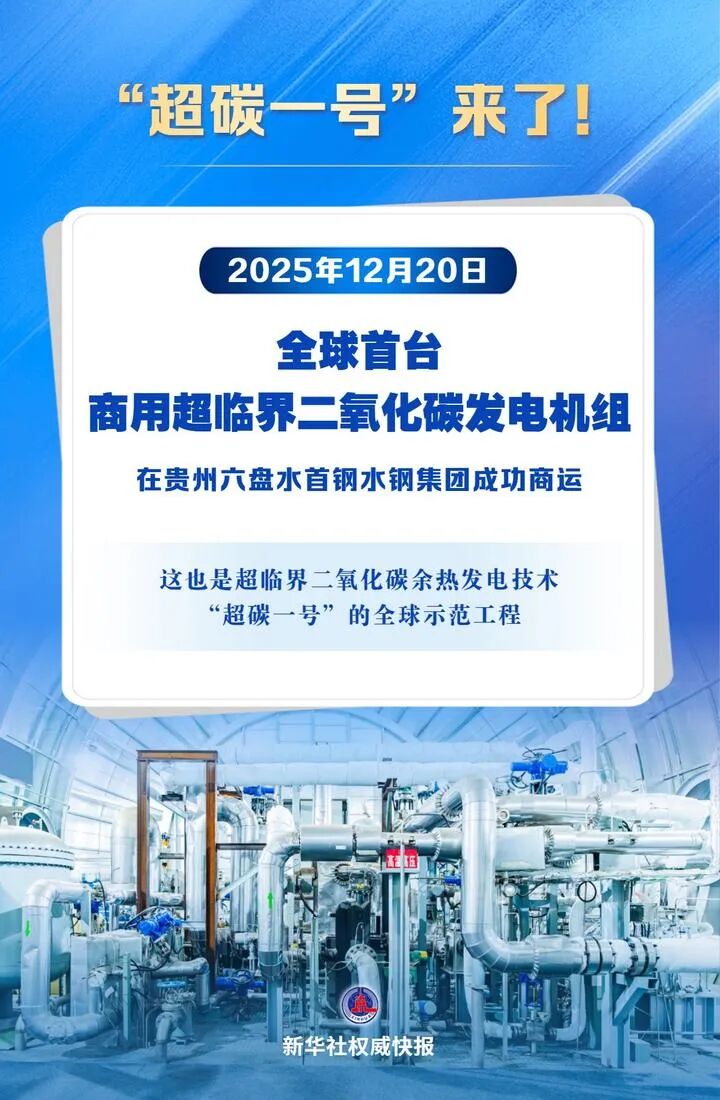
超临界二氧化碳余热发电技术‘超碳一号’

Search documents
机械工业强基拓新增动能
Jing Ji Ri Bao· 2025-12-25 22:05
Core Viewpoint - The mechanical industry is a foundational and strategic sector for national economic development, achieving significant progress in scale, foreign trade, and innovation capabilities during the "14th Five-Year Plan" period, laying a solid foundation for new industrialization [1][2]. Group 1: Industry Achievements - The first commercial supercritical carbon dioxide power generation unit has been successfully operated in Guizhou, achieving over 85% efficiency improvement compared to existing technologies [2]. - The mechanical industry has shown steady growth during challenging times, with enhanced resilience in supply chains and significant improvements in the supply capacity of major technical equipment [2]. - By the end of 2024, the number of large-scale enterprises in the mechanical industry is expected to increase from 92,000 to 132,000, with the industry's share of national industrial output rising from 24.1% to 25.8% [3]. Group 2: Global Expansion - The launch of the "BYD Changsha" roll-on/roll-off cargo ship marks the beginning of regular exports of electric vehicles to Europe, indicating a deepening global layout of China's mechanical industry [4]. - The mechanical industry has achieved a historic leap in foreign trade, with exports and imports exceeding $1 trillion for four consecutive years, projected to reach $1.17 trillion in 2024 [4]. Group 3: Digital and Intelligent Transformation - The launch of the first open robot leasing platform in Shanghai signifies a shift towards an ecological model in the robot rental industry, with plans to expand coverage to over 200 cities by 2026 [7]. - The mechanical industry's digital transformation is evident, with over 90% of enterprises expected to adopt digital design tools by 2024, and significant advancements in smart factories and high-precision machining technologies [7]. Group 4: Strategic Recommendations - To enhance the mechanical industry's digital capabilities, it is recommended to fully integrate new information technologies like artificial intelligence, promoting a transition towards high-end, intelligent, green, and integrated manufacturing [8]. - The focus should be on developing service-oriented manufacturing and deepening the integration of manufacturing and service sectors to boost value creation in the industry [8].
不用“烧开水”,这项发电技术成功商运!
Xin Hua Wang· 2025-12-20 15:00
Core Viewpoint - The successful operation of the world's first commercial supercritical carbon dioxide power generation unit, "Super Carbon No. 1," in Liupanshui, Guizhou, marks a significant advancement in power generation technology, utilizing supercritical carbon dioxide for waste heat recovery [3][4]. Group 1: Technology Overview - "Super Carbon No. 1" is a 15-megawatt supercritical carbon dioxide waste heat power generation project developed by China National Nuclear Corporation and other partners [3]. - The technology operates by using supercritical carbon dioxide, which is maintained at temperatures above 31 degrees Celsius and pressures exceeding 73 atmospheres, to drive turbines and generate electricity [3][4]. - This innovative method departs from traditional steam-based power generation, enhancing efficiency by over 85% compared to previous waste heat steam power generation technologies [4]. Group 2: Economic Impact - The new system is expected to generate an additional 70 million kilowatt-hours of electricity annually, translating to an increase in revenue of nearly 30 million yuan [4]. - The compact design and high efficiency of the "Super Carbon No. 1" system allow for a 50% reduction in space requirements, making it a viable option for various industries [4]. Group 3: Industry Implications - The steel and cement industries, which are major energy consumers and carbon emitters, stand to benefit significantly from the implementation of this technology, contributing to carbon reduction efforts [4]. - The technology's potential application across the country could lead to transformative changes in waste heat utilization in not only the steel industry but also in cement and glass sectors [4]. - Future projects, such as the "molten salt energy storage + supercritical carbon dioxide power generation" demonstration, are already in the pipeline, with expectations for completion by 2028 [4][5].