
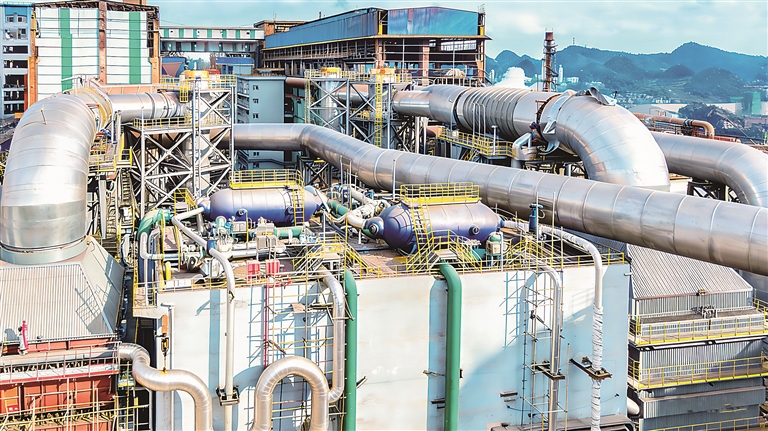
超临界二氧化碳发电机组

Search documents
高质量发展的生态底色更加鲜明
Jing Ji Ri Bao· 2026-02-24 22:08
Group 1: Green Transformation and Achievements - By 2025, China aims to complete land greening tasks covering 12.7 million hectares, including afforestation of 5.345 million hectares and restoration of 7.39 million hectares of degraded grasslands, with a current forest coverage rate of 25.09% and a forest stock volume of 20.988 billion cubic meters [2][3] - China has become the fastest-growing country in terms of greening, supported by planning, technology, engineering, and social participation, as highlighted by the National Forestry and Grassland Administration [2][3] - The ecological benefits are increasingly translating into economic and social benefits, with the forestry industry expected to generate nearly 11 trillion yuan in total output value by 2025, and direct employment for over 60 million people [3] Group 2: Clean Energy Development - By the end of 2025, the world's first commercial supercritical carbon dioxide power generation unit will be operational in Guizhou, achieving over 85% efficiency improvement compared to existing technologies [4] - China has established the world's largest clean power supply system, with renewable energy generation capacity exceeding 600 million kilowatts, accounting for over 60% of total power generation [4][5] - Energy investments are projected to exceed 3.5 trillion yuan in 2025, with a year-on-year growth of nearly 11%, driven by green transition investments and private sector participation [5] Group 3: Traditional Industry Transformation - The textile industry has made significant strides in green transformation, with companies like Shandong Jifa Group achieving waterless dyeing processes that reduce carbon emissions by approximately 50% [5] - Major energy-consuming industries, including construction materials and steel, have seen a notable decrease in energy consumption per unit of added value compared to 2024 [5][6] - The manufacturing sector is experiencing a surge in demand for energy-efficient and environmentally friendly equipment, driven by policy support and market needs [6] Group 4: Circular Economy and Resource Recovery - The circular economy is being promoted as a key strategy for reducing emissions, with projects like the electronic waste recycling facility in Guangdong processing approximately 39 tons of e-waste in 2025 [6] - The focus on transforming waste into valuable resources is a significant aspect of China's industrial system's shift towards sustainability [6]
走近大国重器丨用二氧化碳发电——探访“超碳一号”示范工程
Zhong Yang Ji Wei Guo Jia Jian Wei Wang Zhan· 2026-02-02 00:51
Core Viewpoint - The "Supercritical Carbon Dioxide" (S-CO2) power generation technology, developed by China National Nuclear Corporation (CNNC), has successfully transitioned from laboratory to commercial application, marking a global first in utilizing supercritical CO2 for power generation [7][17]. Group 1: Technology Overview - The S-CO2 power generation system can improve power generation efficiency by over 85% and increase net power output by more than 50% compared to traditional steam-based systems [8]. - The technology simplifies the system, reduces equipment requirements, and cuts operational space by 50% [8]. - The process involves compressing, heating, expanding, and cooling supercritical CO2, which operates at temperatures above 31°C and pressures exceeding 73 standard atmospheres [10]. Group 2: Development Journey - The development of S-CO2 technology began in 2009, with the team facing significant challenges due to a lack of existing research and experience in this field [11]. - The team overcame various technical hurdles, including creating a unique sealing structure to prevent leaks under high temperature and pressure conditions [12]. - The project took nearly a decade to develop a comprehensive dynamic control system to ensure efficient operation [12]. Group 3: Commercial Application and Impact - The "Supercarbon One" demonstration project has been operational since December 20, 2025, at Shougang Water Steel, successfully converting waste heat from steel production into clean electricity [9][17]. - The project is expected to generate an additional 70 million kWh of electricity annually, increasing revenue by nearly 30 million yuan and reducing carbon emissions by several tons [17]. - The technology is positioned to support China's "dual carbon" goals and is included in key national energy innovation plans [15][18]. Group 4: Future Prospects - The CNNC plans to expand the application of S-CO2 technology to various energy sources, including thermal, nuclear, and renewable energy systems, aiming for modular and intelligent power generation solutions [17]. - A 50 MW demonstration project combining molten salt storage with S-CO2 power generation is set to begin in 2024, highlighting the ongoing commitment to innovation in this field [18].

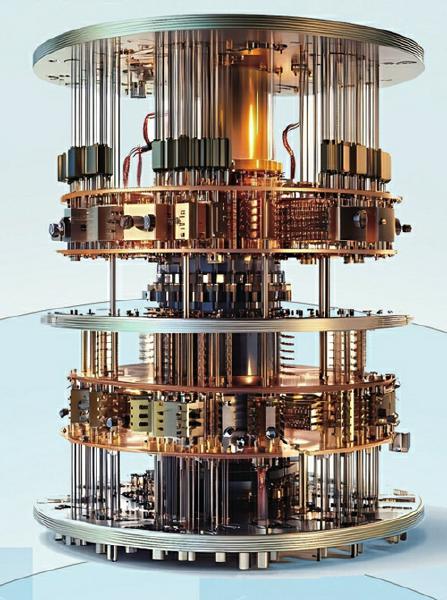
深耕实验室 破界生长
Xin Lang Cai Jing· 2026-01-26 21:05
Group 1: Technological Innovations - The new generation artificial sun "China Fusion No. 3" achieved significant breakthroughs, including the first realization of nuclear temperatures of 117 million degrees Celsius and electron temperatures of 160 million degrees Celsius, marking a step towards the burning experimental phase of fusion research [10] - The first domestic quantum computing measurement and control system, ZW-QCS580 series, was launched by Sichuan company Zhongweidaxin, enhancing the commercial viability of quantum technology [8] - The world's first AI-assisted robotic surgery was successfully performed over a distance of 5,000 kilometers, showcasing advancements in remote surgical technology [9] Group 2: Space and Energy Developments - Sichuan's "Lasso" observatory detected high-energy gamma-ray signals from micro-quasars, providing insights into the origins of cosmic rays [14] - The successful launch of the world's first space computing constellation, consisting of 12 satellites, represents a significant advancement in space-based computing capabilities [11] - The first commercial supercritical carbon dioxide power generation unit was successfully operated, achieving an efficiency improvement of over 85% compared to existing technologies [18] Group 3: Medical and Biological Advances - The first case of interspecies kidney transplantation in Asia was successfully conducted, with the transplanted pig kidney functioning for 261 days, setting a record for the longest survival time [15] - A new therapeutic target for esophageal squamous cell carcinoma was identified, leading to the development of a novel small molecule candidate that enhances the tumor suppressor function [16] Group 4: Future Industry Development Plans - Sichuan's government issued a plan to develop emerging industries and accelerate the cultivation of future industries, identifying 23 key breakthrough directions across various sectors including AI, robotics, and quantum technology [6][7]
山东一线报道 |“超碳一号”,年可发电1.2亿度
Xin Hua Wang· 2026-01-24 02:17
Core Viewpoint - The "Supercritical Carbon Dioxide Working Fluid High-Efficiency Power Generation Technology" is being promoted by leading steel and chemical companies in Shandong, aiming to accelerate green, low-carbon, and high-quality development [1][2]. Group 1: Technology and Development - The "Supercarbon No. 1" is the world's first commercial supercritical carbon dioxide power generation unit, achieving full industry chain autonomy and has operated safely for 1500 hours without faults [1]. - This technology represents a significant transformation in steam power generation, leading Western countries by at least five years [1]. - The technology offers higher efficiency, a more compact system, flexible response, and environmental friendliness, aligning with the green transformation needs of traditional industries in Shandong [1]. Group 2: Economic Impact - The investment payback period for "Supercarbon No. 1" is approximately five years, with an expected annual power generation of 120 million kWh and annual revenue exceeding 70 million yuan, while saving around 20,000 tons of standard coal annually [2]. - The technology can be widely applied in industries such as steel, coking, and cement, effectively converting heat sources generated during production into electricity [2]. Group 3: Industry Collaboration and Future Plans - Several companies, including Shandong Steel Group and Shandong Hengxin Group, have signed agreements to construct supercritical carbon dioxide power generation units by 2026 [2]. - Shandong Hengxin Group plans to integrate this technology into a new gas-steam combined cycle power generation system, while Shandong Steel Group will apply it in a new sintering machine at its Rizhao premium steel base [2]. Group 4: Policy and Strategic Importance - Shandong is focusing on becoming a pioneer in green, low-carbon, and high-quality development, emphasizing the importance of energy technology transformation and the need for a clean, low-carbon energy transition [3]. - The development of "Supercarbon No. 1" reflects the integration of technological and industrial innovation, positioning the company as a leader in green low-carbon technology engineering [3].

超临界二氧化碳发电技术成功商运(探一线)
Ren Min Ri Bao· 2026-01-23 22:30
Core Insights - The world's first commercial supercritical carbon dioxide power generation unit successfully commenced operation in Liupanshui, Guizhou by Shougang Water Steel Group by the end of 2025, marking a significant advancement in supercritical carbon dioxide waste heat power generation technology [1] - The "Super Carbon No. 1" demonstration project, developed by China National Nuclear Corporation (CNNC) and partners, boasts an efficiency improvement of over 85% in power generation compared to existing sintering waste heat steam generation technology, with a net power output increase of over 50% [1][2] Group 1 - The traditional steam power generation technology faces limitations in system complexity, efficiency, compactness, and response speed due to the use of water as a medium [1] - The supercritical state of carbon dioxide, achieved at a pressure of 7.38 MPa and a temperature of 31 degrees Celsius, offers a dual advantage of high density and low viscosity, making it suitable for power generation [1] - The development of supercritical carbon dioxide power generation technology has been a "from 0 to 1" process, with significant technical challenges overcome by the team since 2009 [2] Group 2 - In 2023, CNNC and JISCO constructed two 15 MW supercritical carbon dioxide waste heat power generation units, utilizing high-temperature sintering flue gas waste heat, achieving a 50% reduction in space requirements and an 85% increase in power generation efficiency compared to traditional methods [2] - The establishment of a comprehensive industrial chain for supercritical carbon dioxide power generation technology in China has been achieved, with conditions for full engineering application now in place [2] - A molten salt energy storage supercritical carbon dioxide power generation demonstration project is set to be initiated by CNNC in 2024, with construction expected to begin in 2026 [2]

热电效率高于传统电厂,“超碳一号”为全球能源格局注入中国变量
2 1 Shi Ji Jing Ji Bao Dao· 2026-01-21 10:55
Core Viewpoint - The successful commercial operation of the world's first supercritical carbon dioxide (S-CO2) power generation unit in Guizhou marks a significant breakthrough in energy technology, showcasing China's advancements in this field [2][3]. Industry Overview - The S-CO2 power generation technology has gained global attention, being recognized as a strategic frontier technology in the energy sector by the U.S. in 2017 [2]. - China has prioritized this technology in its "14th Five-Year Plan" for energy innovation, indicating its importance in the national energy strategy [2]. Technological Advancements - The "Super Carbon No. 1" unit has achieved over 85% waste heat utilization and a net power generation increase of over 50% compared to existing steam power generation technologies [3]. - Future applications of S-CO2 technology are expected in various fields, including solar thermal and nuclear reactors, expanding its potential beyond steel waste heat scenarios [3][4]. Market Dynamics - The successful operation of the S-CO2 unit is accelerating the industrialization process of this technology, prompting several listed companies to engage actively in the market [5]. - Companies like Guodian Nanzi and Dongfang Electric have expressed their capabilities in adapting their systems for S-CO2 power generation, indicating a growing interest in this technology [6]. Collaborative Efforts - The development of the S-CO2 technology involves collaboration among various entities, including the China Nuclear Power Research Institute and other industrial partners, highlighting the importance of a coordinated approach in advancing this technology [3][5]. Investment and Contracts - Companies are entering into contracts to develop S-CO2 systems, such as the agreement between Jintongling and the Institute of Thermal Physics, which aims to develop a 10MWe S-CO2 system [7]. - The total contract value for the first set of S-CO2 system equipment is reported to be 6.5 million yuan, reflecting the financial commitments being made in this sector [7].
中央企业推动关键产业向新向优
Xin Lang Cai Jing· 2026-01-03 19:18
Core Insights - Central enterprises are expected to enhance their roles in serving the national economic development and improving people's livelihoods, as emphasized by General Secretary Xi Jinping [1] Group 1: Scale and Strength - The total assets of central enterprises have exceeded 90 trillion yuan, marking significant growth during the "14th Five-Year Plan" period [2] - Central enterprises have made notable advancements in innovation, with 134 pilot verification platforms providing specialized services and achieving 121 significant results in original technology [2] - Research and development expenditures have surpassed 5 trillion yuan, with investments in emerging industries growing at an annual rate of over 20% [2] Group 2: Industrial Upgrading - Central enterprises have made progress in 438 technology breakthroughs aimed at enhancing industrial innovation and self-sufficiency [3] - The implementation of the "Artificial Intelligence +" initiative has led to over 800 application scenarios and the establishment of 1,854 smart factories [3] - Energy efficiency has improved, with energy consumption per unit of output and carbon dioxide emissions per unit of output decreasing by 12.8% and 13.9%, respectively, during the "14th Five-Year Plan" [3] Group 3: Strategic Functionality - Nine new central enterprises have been established, focusing on market-oriented restructuring and integration of state-owned assets [4][5] - The governance of central enterprises has become more standardized and efficient, with management levels controlled within four tiers [5] - The State-owned Assets Supervision and Administration Commission (SASAC) has implemented a more scientific regulatory approach, including a tailored assessment for each enterprise [5]
将扩大有效需求 作为高质量发展的关键抓手
Xin Lang Cai Jing· 2025-12-30 20:11
Core Viewpoint - The Sichuan Provincial Economic Work Conference emphasizes the importance of expanding effective demand as a key strategy for promoting high-quality economic development, particularly in Chengdu as the core engine of the Chengdu-Chongqing economic circle [1] Consumption Expansion and Quality Improvement - Chengdu aims to enhance consumer spending through policies and innovative consumption scenarios, targeting a retail sales total of 8,291.7 billion yuan by the third quarter of 2025, reflecting a 6.5% year-on-year growth, surpassing the national average of 4.5% [1] - The "trade-in" policy has been pivotal in stimulating large-scale consumption, with over 58,000 applications for vehicle subsidies in the first half of 2025, leading to new car sales of 40 billion yuan [2] - Innovative consumption scenarios are reshaping the urban consumption ecosystem, with a 197.2% increase in retail sales of communication equipment and a 22.2% growth in sports and entertainment products by 2025 [3] Investment Precision and Infrastructure Development - Chengdu focuses on major projects in infrastructure, industry upgrades, and public welfare to enhance investment scale and efficiency, with significant infrastructure projects like the completion of the Jinsha River Silver River Hydropower Station by December 2025 [5] - The city is advancing new productive forces through investments in artificial intelligence and other emerging industries, with the first commercial supercritical carbon dioxide generator set to operate in 2025 [6] Social Investment and Quality of Life - Investment in public services such as education, healthcare, and elderly care is increasing, with plans to build or expand 20 schools and add 30 community elderly care complexes by 2025 [7] - This investment strategy aims to alleviate residents' financial burdens in education, healthcare, and elderly care, thereby enhancing consumer confidence and spending capacity [7] Regional Collaborative Development - Chengdu is breaking the urban-rural dual structure and promoting regional collaboration to extend the internal demand market from cities to rural areas, with rural residents' disposable income projected to grow by 5.8% by 2025 [8] - The Chengdu-Chongqing economic circle is expected to see a retail sales total exceeding 3 trillion yuan by 2025, becoming one of the fastest-growing regional consumer markets in the country [9] Reform and Innovation - Continuous optimization of consumption policies is essential to enhance consumer confidence and capability, with plans to expand the scope of trade-in subsidies and improve the quality of consumption scenarios [11] - The focus on breaking down barriers to resource allocation and promoting regional integration is crucial for expanding internal demand and enhancing market efficiency [12]
稳经营、提质效 中央企业推动关键产业向新向优
Ren Min Ri Bao· 2025-12-26 05:45
Core Insights - Central enterprises are expected to play a crucial role in supporting the high-quality development of the economy and improving people's livelihoods, as emphasized by General Secretary Xi Jinping [1] Group 1: Strengthening Scale and Capability - The total assets of central enterprises have exceeded 90 trillion yuan, marking significant growth [2] - Central enterprises have successfully launched various innovative projects, including the world's first commercial supercritical carbon dioxide power generation unit and the largest green hydrogen-ammonia integrated project [2] - Research and development expenditures have surpassed 5 trillion yuan, with an annual investment growth rate in emerging industries exceeding 20% [2] Group 2: Industrial Upgrading and Innovation - Central enterprises are focusing on technological innovation to enhance industrial capabilities, with 438 technology breakthroughs reported this year [3] - The implementation of AI technologies has led to the establishment of over 800 application scenarios and the creation of 1,854 smart factories [3] - Energy efficiency has improved, with energy consumption and carbon emissions per unit of output decreasing by 12.8% and 13.9% respectively during the "14th Five-Year Plan" period [3] Group 3: Strategic Function and Governance - Nine new central enterprises have been established as part of the ongoing reform of state-owned enterprises, with a focus on strategic restructuring [4] - The management levels of central enterprises have been streamlined to a maximum of four tiers, enhancing operational efficiency [5] - The State-owned Assets Supervision and Administration Commission (SASAC) has implemented a more scientific regulatory approach, including a tailored assessment for each enterprise [5]
中央企业推动关键产业向新向优(经济新方位)
Ren Min Ri Bao· 2025-12-26 00:37
Core Insights - Central enterprises are expected to enhance their roles in serving the national economic development and improving people's livelihoods, contributing significantly to China's modernization efforts [1] Group 1: Strengthening Scale and Capability - Central enterprises have seen their total assets exceed 90 trillion yuan, with significant advancements in various projects such as the world's first commercial supercritical carbon dioxide power generation unit and the largest green hydrogen-ammonia integrated project [2] - The focus on quality improvement and value creation has led to a stable economic performance, with R&D expenditures surpassing 5 trillion yuan and investments in emerging industries growing at an annual rate of over 20% [2] - The number of technology talents has increased by nearly 50%, enhancing the scale, value creation capability, and brand influence of central enterprises [2] Group 2: Industrial Upgrading and Innovation - Central enterprises are actively promoting industrial innovation through technological advancements, with 438 technology breakthroughs reported this year [3] - Key projects such as the "Deep Sea No. 1" phase II and "Guohe No. 1" demonstration project have improved the self-sufficiency of the industrial chain [3] - The implementation of AI technologies has led to over 800 application scenarios and the establishment of 1,854 smart factories, driving digital transformation [3] Group 3: Strategic Function and Governance - The year marks the completion of major reforms in state-owned enterprises, with nine new central enterprises established to enhance strategic functions [4] - The restructuring efforts have led to the establishment of a mobile phone safety recycling system and the recycling of retired photovoltaic components [4] - Governance has become more standardized and efficient, with management levels controlled within four tiers and improved procurement transparency [5]