
超导量子电路

Search documents
2025年度十大科技突破:DeepSeek带来“Aha Moment”,脑机芯片滑入大脑皮层
Xin Lang Cai Jing· 2025-12-26 06:24
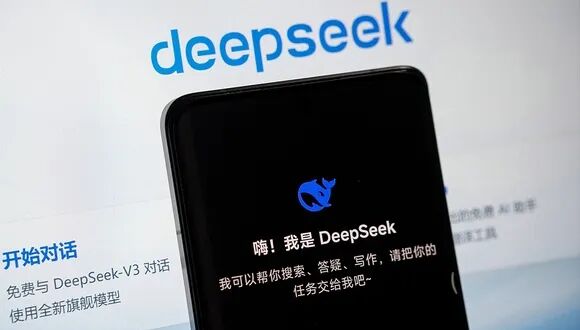
Core Insights - 2025 is designated as the "International Year of Quantum Science and Technology" by UNESCO, marking a pivotal moment in China's "14th Five-Year Plan" and a shift in computational paradigms towards quantum computing and advanced materials [1][22] Quantum Computing Breakthroughs - The DeepSeek-R1 model, released on January 20, 2025, utilizes reinforcement learning to enhance reasoning capabilities and achieves performance comparable to OpenAI's models at a low computational cost [3][24] - The Nobel Prize in Physics awarded in October recognizes the foundational role of superconducting quantum circuits in modern computing, highlighting the work of John Clarke, Michel H. Devoret, and John M. Martinis [5][26] - The Helios quantum computer, launched by Quantinuum, features 98 physical qubits with a fidelity of 99.9975% for single-qubit operations, making it the most precise commercial quantum computer to date [9][30] Advanced Materials and Technologies - The BISC chip, developed by a collaboration between Columbia University and Stanford, integrates 65,536 electrodes into a flexible CMOS chip, enabling unprecedented wireless data transmission rates of up to 100 Mbps [8][29] - A new type of hollow-core optical fiber, reported by the Lumenisity research team, demonstrates a loss of only 0.091 dB/km at a wavelength of 1550 nm, promising advancements in long-distance communication [11][32] - The development of "atomic manufacturing" techniques has pushed metal materials to the Ångström scale, opening pathways for new quantum and electronic devices [13][34] Environmental and Energy Innovations - SSAB's Zero™ steel has become the first product to meet the near-zero emissions threshold set by the International Energy Agency, utilizing hydrogen reduction technology to eliminate carbon emissions [17][38] - The EAST nuclear fusion experiment achieved a world record of 1 billion degrees Celsius for 1066 seconds, demonstrating the feasibility of future fusion reactors [18][39] - Research on the Bennu asteroid samples revealed the presence of essential life-building components, suggesting that the building blocks of life may have been distributed across early Earth and other planets [21][42]


今年的诺贝尔物理学奖,为超导量子计算机铺平道路
Hu Xiu· 2025-10-07 12:22
Core Viewpoint - The 2023 Nobel Prize in Physics was awarded to John Clarke, Michel H. Devoret, and John M. Martinis for their groundbreaking experiments demonstrating macroscopic quantum tunneling effects and energy quantization phenomena in electrical circuits, paving the way for advancements in quantum technologies such as quantum computing and quantum cryptography [1][2][3]. Group 1: Award Significance - The award recognizes the ability to observe quantum mechanical effects at a macroscopic scale, addressing a fundamental question in physics regarding the maximum size of a system that can exhibit quantum behavior [1][2]. - The experiments conducted by the laureates illustrate that quantum properties can manifest in systems large enough to be handled, such as superconducting circuits, which are practical applications of quantum technology [1][2][3]. Group 2: Experimental Insights - The laureates' work involved constructing a superconducting circuit that allowed for the observation of quantum tunneling, where charged particles behave collectively as a single entity, demonstrating quantum effects in a system containing billions of Cooper pairs [1][2][37]. - Their experiments showed that the system could escape a zero-voltage state through quantum tunneling, producing measurable voltage, thus confirming the quantum nature of the system [21][24][39]. Group 3: Future Implications - The findings from this research are expected to significantly impact the development of next-generation quantum technologies, including quantum computers and quantum sensors, by providing a deeper understanding of quantum mechanics at larger scales [1][2][42]. - The work lays a foundation for future advancements in quantum computing, as it allows for the use of quantized energy states in superconducting circuits as qubits, which are essential for building practical quantum computers [43][44].
