
车载激光雷达光源

Search documents
源杰科技A+H:销管费用率达20%、资金长期入不敷出 存货跌价占营收10%、募投项目均延期|CPO融资潮
Xin Lang Cai Jing· 2025-12-19 09:46
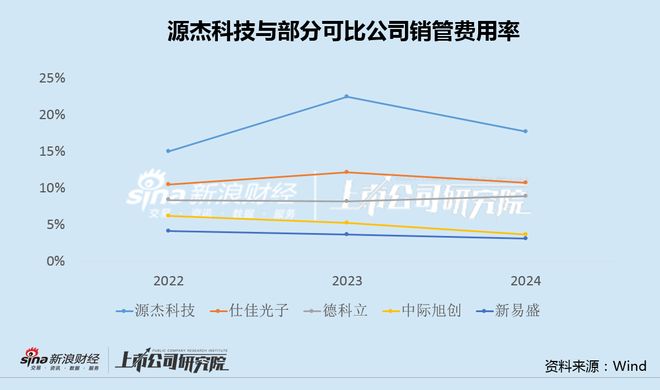
Core Viewpoint - The capital heat in the optical communication industry is expanding from the secondary market to IPOs, private placements, and mergers and acquisitions, driven by the demand for AI computing power and the emergence of CPO technology as a core infrastructure [2][11]. Company Overview - Yuanjie Technology is planning an A+H listing, having achieved a turnaround in the first three quarters of the year with a revenue of 383 million, a year-on-year increase of 115.09%, and a net profit of 106 million, marking a return to profitability [3][11]. - The company specializes in the research, design, production, and sales of optical chips, including products for telecommunications, data centers, and automotive laser radar markets [3][5]. Financial Performance - Despite the revenue growth, Yuanjie Technology has experienced significant performance volatility, particularly in 2024, where it faced losses amid substantial industry growth [3][6]. - The company's sales and management expense ratios are around 20%, significantly higher than peers, which erodes profits [3][6]. IPO and Fund Utilization - Yuanjie Technology's IPO in December 2022 raised 1.5 billion for three projects, all of which have been delayed, with the 50G optical chip project seeing only 44.85% of planned investment completed [7][11]. - The company has faced inventory write-down losses amounting to approximately 10% of revenue, attributed to ongoing product price declines [5][11]. Market Context - The CPO market is projected to reach $8.1 billion by 2030, with a compound annual growth rate of 137%, indicating a rapidly growing sector [11]. - The competition in the optical chip field is intensifying, necessitating continuous investment in capacity expansion and technological research [5][11].



源杰科技A+H:销管费用率达20%、资金长期入不敷出 存货跌价占营收10%、募投项目均延期|C...
Xin Lang Cai Jing· 2025-12-19 09:30
Core Viewpoint - The capital market is experiencing a surge in interest in the optical communication industry, driven by the demand for AI computing power and the emergence of companies like Source Technology planning to list in Hong Kong, despite facing significant operational challenges and financial instability [1][11]. Company Overview - Source Technology specializes in the research, design, production, and sales of optical chips, including products for telecommunications, data centers, and automotive laser radar markets [2]. - The company reported a revenue of 383 million, a year-on-year increase of 115.09%, and a net profit of 106 million, marking a turnaround from previous losses [3]. Financial Performance - Despite the revenue growth, Source Technology has experienced significant volatility in its financial performance, with high sales and management expense ratios around 20%, which is considerably above industry peers [3][5]. - The company has struggled with cash flow, maintaining a collection ratio between 60% and 90% since 2021, leading to a situation where operating cash flow is significantly lower than capital expenditures [5]. IPO and Fund Utilization - Source Technology's IPO in December 2022 raised 1.5 billion for various projects, but all three fundraising projects have faced delays, with only 44.85% and 28.22% of the planned investments made in the 50G optical chip industrialization and R&D center projects, respectively [8][10]. - The company is in a critical phase of capacity expansion and technological development, necessitating continuous funding to support rapid technological iterations in the optical chip sector [7]. Market Context - The CPO market is projected to reach $8.1 billion by 2030, with a compound annual growth rate of 137%, indicating a significant growth opportunity within the optical communication industry [11]. - The ongoing capital operations in the optical communication sector raise questions about whether they represent a necessary step to secure technological leadership or if they are indicative of potential overcapacity and irrational market positioning [11].
源杰科技A+H:销管费用率达20%、资金长期入不敷出 存货跌价达营收10%、募投项目均延期|CPO融资潮
Xin Lang Cai Jing· 2025-12-19 09:23
Core Viewpoint - The capital heat in the optical communication industry is shifting from secondary market stock price surges to IPOs, private placements, and mergers and acquisitions, driven by the demand for AI computing power and the emergence of CPO technology as a core infrastructure [2][15]. Company Overview - SourceJ Technology is planning an A+H listing, having recently turned a profit in the first three quarters of the year, with revenue of 383 million and a net profit of 106 million, marking a year-on-year increase of 115.09% [4][17]. - The company specializes in the research, design, production, and sales of optical chips, including products for telecommunications, data centers, and automotive laser radar markets [17]. Financial Performance - Despite the revenue growth, SourceJ Technology has experienced significant performance volatility, with a sales and management expense ratio around 20%, which is considerably higher than its peers, eroding profits [4][19]. - The company has faced challenges with cash flow, maintaining a collection ratio between 60% and 90% since 2021, and its operating cash flow has consistently fallen short of capital expenditures [7][19]. IPO and Fund Utilization - SourceJ Technology's IPO in December 2022 raised 1.5 billion for projects including the construction of production lines for 10G/25G optical chips and the industrialization of 50G optical chips, but all three fundraising projects have been delayed [8][22]. - As of June 2023, only 44.85% and 28.22% of the planned investment for the 50G optical chip industrialization project and the research center construction project, respectively, have been completed [8][22]. Market Context - The CPO market is projected to reach $8.1 billion by 2030, with a compound annual growth rate of 137%, indicating a rapidly growing sector within the optical communication industry [12][27]. - The ongoing capital operations in the optical communication industry raise questions about whether they represent a necessary path to secure technological leadership or if they are indicative of potential overcapacity and speculative behavior [12][27].