
车辆运动控制软件cubiX

Search documents
采埃孚全球首发AI道路感知软件系统解决方案
Yang Shi Wang· 2026-01-08 03:41
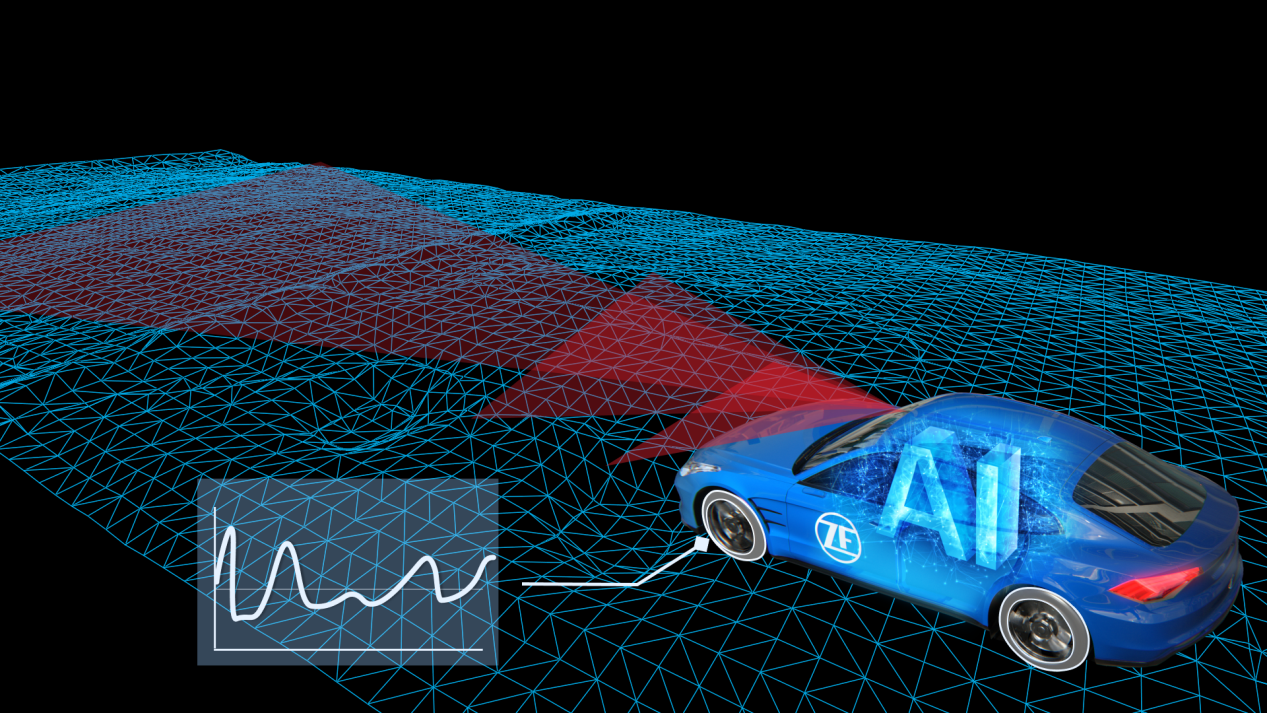
Group 1 - The core focus of the news is the launch of ZF's AI road perception software system during the 2026 CES, which aims to enhance vehicle safety, comfort, and personalization through advanced software and AI technology [1][2] - ZF's "Chassis 2.0" strategy is driving the digital transformation of chassis systems, integrating hardware advantages with advanced software and AI to create a foundation for software-defined vehicles [1][2] - The AI road perception system can adapt to various road conditions, including icy, unpaved, and mixed surfaces, by utilizing advanced sensors to adjust the chassis in real-time [2][3] Group 2 - The system features three scalable configurations: a basic version that identifies road types via CAN bus signals, a mid-tier version that includes camera data for predictive analysis, and a high-end version that integrates LiDAR technology for detailed terrain modeling [2] - The system automatically activates a "snow start" mode on slippery surfaces to prevent wheel spin, and it intelligently selects optimal driving strategies in off-road scenarios [3] - ZF emphasizes the importance of intelligent connectivity, rapid advancements in autonomous driving technology, and the growing role of software as a driving force for innovation in future mobility [3]

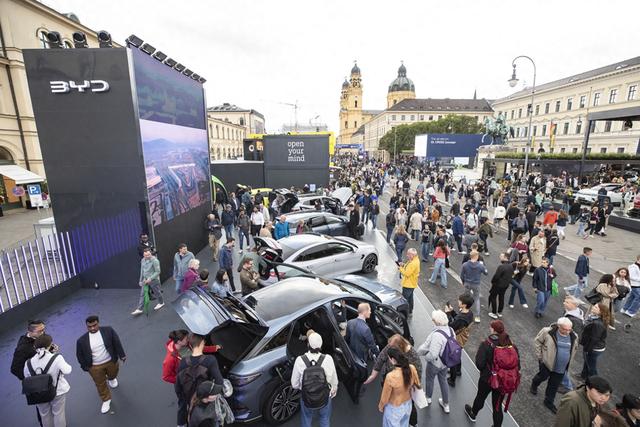
从慕尼黑车展看汽车产业技术转型三大趋势
Bei Jing Ri Bao Ke Hu Duan· 2025-09-11 12:56
Core Insights - The 2025 Munich International Motor Show highlights three major trends in the automotive industry: deepening electrification, software-defined digitalization, and AI-driven intelligence [1][3][9] Electrification - Electrification is no longer an emerging trend but has developed more deeply in both technology and market aspects. Battery technology and alternative power systems are now core focuses, with safety and sustainability of power battery systems being emphasized at the show [3][4] - Chinese companies showcased significant innovations, such as BYD's 1 MW charging platform, achieving the world's highest mass production charging power and speed [4] - Other notable exhibits include CATL's NP3.0 battery safety technology and EVE Energy's standardized cylindrical batteries with digital identification [4] Digitalization - Digitalization is a key driver of the entire mobility ecosystem, with software-defined vehicles being a major technical focus. ZF Group presented software-defined chassis and electric mobility technologies [6][7] - Bosch showcased high-performance onboard computers and flexible vehicle architectures to accelerate automotive digital transformation [7] - NVIDIA emphasized the shift from horsepower to computing power in vehicles, integrating comprehensive safety systems for autonomous driving [7] Intelligence - The show indicates a new phase of automotive intelligence driven by AI and software, with smart driving moving towards large-scale production. Chinese companies are emerging as significant players in this field [9][10] - XPeng Motors displayed a range of technologies, including smart electric vehicles and flying cars, highlighting their advanced technological layout [9] - Yuanrong Qihang presented its latest auxiliary driving platform, showcasing its ability to adapt to various traffic systems and cultures [10]
【环球财经】从慕尼黑车展看汽车产业技术转型三大趋势
Xin Hua She· 2025-09-11 12:36
Group 1: Core Trends in the Automotive Industry - The 2025 Munich International Motor Show highlights three major trends in the automotive industry: deepening electrification, software-defined digitalization, and AI-driven intelligence [1] - Electrification is no longer an emerging trend but is developing more deeply in both technology and market aspects, with a focus on battery technology and alternative power systems [2] - Hydrogen energy and solid-state batteries are also significant topics at the show, showcasing the industry's exploration of diverse energy technologies [3] Group 2: Electrification Developments - Chinese companies demonstrated strong innovation and technical capabilities, with BYD launching a passenger car platform capable of a global maximum charging power of 1 megawatt and a peak charging speed of 2 kilometers per second [2] - CATL introduced a battery safety technology that does not produce open flames or smoke during thermal runaway, enhancing vehicle safety [2] - Major German automakers like Mercedes-Benz, BMW, and Volkswagen showcased new electric vehicle models, emphasizing advancements in electric architecture and battery management systems [2] Group 3: Digitalization and Software-Defined Vehicles - Digitalization is a key driver in the entire mobility ecosystem, with software-defined vehicles being a focal point of the show [4] - ZF Group presented software-defined chassis and electric mobility technologies, including a variable software connection for steering systems that enhances control and safety [4] - Bosch showcased high-performance onboard computers and flexible vehicle infrastructure to accelerate automotive digitalization [4] Group 4: AI and Intelligent Driving - The show indicated a shift towards AI-driven and software-enabled automotive intelligence, with Chinese companies emerging as significant players in this field [5] - XPeng Motors exhibited a range of technologies, including smart electric vehicles and flying cars, highlighting their technological advancements [5] - A dedicated testing area for L3 and L4 autonomous driving capabilities was established to demonstrate various applications of vehicle-road collaboration [6]




国际观察丨从慕尼黑车展看汽车产业技术转型三大趋势
Xin Hua Wang· 2025-09-11 12:24
Group 1: Core Trends in Automotive Industry - The Munich Auto Show highlights three major trends in the automotive industry's technological transformation: deepening electrification, software-defined digitalization, and AI-driven intelligence [1] Group 2: Electrification - Electrification is no longer an emerging trend but is developing more deeply in both technology and market aspects. Battery technology and alternative power systems are emphasized as core components for future vehicles [2] - Chinese companies showcased significant innovations, such as BYD's 1 MW charging platform, CATL's fire-free battery safety technology NP3.0, and EVE Energy's standardized large cylindrical batteries with digital identification [2] - Major German automakers like Mercedes-Benz, BMW, and Volkswagen presented new electric vehicle models, including the Mercedes-Benz GLC SUV with an 800V architecture and BMW's iX3 SUV featuring an intelligent battery management system [2] Group 3: Alternative Power Systems - Hydrogen energy and solid-state batteries emerged as important topics, with companies like Renault and Rimac showcasing hydrogen fuel cell range-extended concept cars and solid-state battery units [3] Group 4: Software-Defined Digitalization - Digitalization is a key driving force in the entire mobility ecosystem, with software-defined vehicles being a significant focus. ZF Group presented software-defined chassis and vehicle motion control software [4] - Bosch showcased high-performance onboard computers and flexible vehicle infrastructure to accelerate automotive digitalization [4] - Nvidia emphasized the shift from horsepower to computing power in vehicles, presenting a comprehensive safety system integrating vehicle architecture, AI models, and software [4] Group 5: AI-Driven Intelligence - The show indicated that automotive intelligence is advancing towards AI-driven and software-enabled stages, with Chinese companies becoming significant players in automotive intelligence [5] - XPeng Motors displayed a range of technologies, including smart electric vehicles and flying cars, while highlighting 2026 as a critical point for AI in automobiles [6] - Yuanrong Qihang presented its latest driving assistance platform, showcasing its VLA model's capabilities in adapting to various driving environments [6] - A dedicated testing area for L3 and L4 autonomous driving capabilities was established on the A94 highway to demonstrate vehicle-road collaboration in real-world scenarios [6]