轨道结构减振产品

Search documents
61岁浙江富豪被刑拘,妻子刚套现3.27亿
Xin Lang Cai Jing· 2025-12-26 09:20
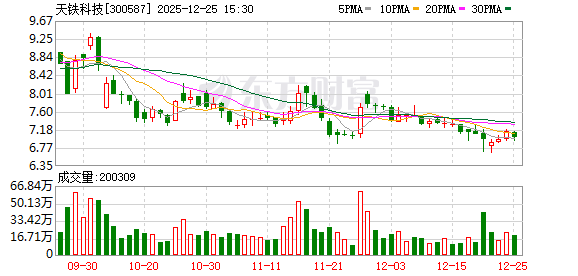
Core Viewpoint - The sudden criminal detention of Xu Jiding, a major shareholder and actual controller of Tian Tie Technology, has led to a significant drop in the company's stock price, raising concerns about its future and market perception [1][3][25]. Company Overview - Xu Jiding, the founder of Tian Tie Technology, has been involved in the rubber industry since 1986 and established the company in 2003, which focuses on rail structure vibration reduction and noise reduction products [6][32]. - The company went public on the Shenzhen Stock Exchange in 2017 and has diversified into three main sectors: rail structure vibration reduction, lithium materials, and building isolation [6][32]. - Xu Jiding holds 94.19 million shares, representing a 7.25% stake, making him the largest shareholder [7][32]. Recent Developments - Xu Jiding was detained by the police on December 25, with family members stating that the investigation is personal and unrelated to the company's operations [3][28]. - Despite the company's assurance that the detention will not affect daily operations, the stock price fell nearly 15% after the news, resulting in a market value loss of approximately 1.2 billion [3][28]. Financial Performance - Tian Tie Technology has faced declining performance, with net profits showing losses of 627 million and 48 million for the years 2023 and 2024, respectively [15][39]. - For the first three quarters of 2025, the company reported revenues of 1.232 billion, a year-on-year decrease of 30.69%, and a net loss of 58 million, a decline of 340.02% [17][41]. Shareholder Actions - Xu Jiding's wife, Wang Meiyu, has significantly reduced her holdings, cashing out approximately 327 million through share sales, while much of the family's stock is under pledge [20][44]. - The company has been under scrutiny for various regulatory issues, including fund misappropriation and undisclosed related-party transactions [8][32]. Market Reaction - The stock price of Tian Tie Technology has seen significant volatility, with a rise of over 171% from 3.54 yuan to a peak of 9.59 yuan before the recent drop [23][46]. - The market is now reassessing the company's value in light of the recent developments and the ongoing financial struggles [25][48].

300587 实控人被刑拘
Shang Hai Zheng Quan Bao· 2025-12-25 16:11
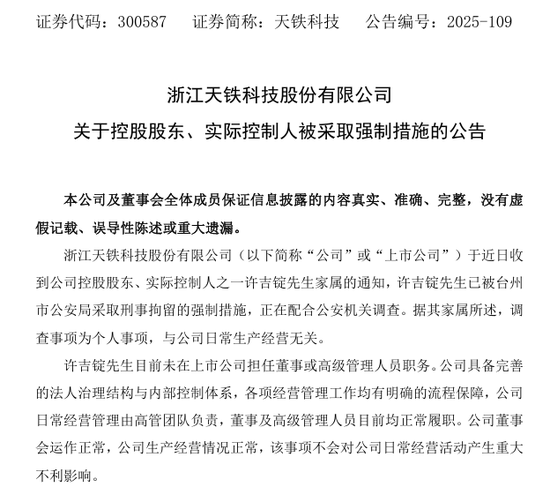
Group 1 - The core point of the article is that Xu Jiding, a controlling shareholder and actual controller of Tian Tie Technology, has been criminally detained by the police, which is currently under investigation [2][3] - Xu Jiding's family stated that the investigation is a personal matter and unrelated to the company's daily operations [4] - The actual controllers of Tian Tie Technology are Wang Meiyu, Xu Jiding, and Xu Kongbin, with the relationships being based on family ties [4] Group 2 - The company maintains a sound corporate governance structure and internal control system, ensuring that daily operations are managed by the executive team [4] - Tian Tie Technology is actively focusing on two main business directions: vibration reduction and lithium-based new energy [5] - The company has established a strategic partnership with Xinjie Energy to develop solid-state batteries, with agreements for material supply and investment in production lines [6][7]
新藏铁路若开建,哪些标的有望受益?
GOLDEN SUN SECURITIES· 2025-08-10 08:10
Investment Rating - The report maintains a "Buy" rating for key companies in the construction and infrastructure sector, particularly those benefiting from the Xinjiang transportation infrastructure projects [9][26]. Core Viewpoints - The establishment of the Xinjiang-Tibet Railway Company, with a registered capital of 95 billion RMB, is expected to catalyze significant investment opportunities in the Xinjiang transportation infrastructure sector [1][12]. - The Xinjiang region is anticipated to receive increased policy support and major project investments, particularly in transportation infrastructure, due to its strategic importance to national energy security and ethnic unity [17][12]. - The report emphasizes the potential for substantial returns from leading construction companies such as China Railway, China Railway Construction, and China Communications Construction, as well as local firms like Xinjiang Communications Construction and Beixin Road and Bridge [1][8]. Summary by Sections Industry Investment Rating - The report recommends a "Buy" rating for major construction companies involved in Xinjiang's infrastructure projects, highlighting their strong market positions and expected growth [9][26]. Key Beneficiaries - Major construction central enterprises such as China Railway, China Railway Construction, and China Communications Construction are identified as primary beneficiaries of the Xinjiang infrastructure projects [18][24]. - Local companies like Xinjiang Communications Construction and Beixin Road and Bridge are also highlighted for their significant roles in regional infrastructure development [21][22]. Project Details - The Xinjiang-Tibet Railway, approximately 2010 kilometers long, is projected to require an investment of 96 billion RMB, with construction expected to commence in 2025 [1][12]. - The report outlines the timeline for project milestones, including geological surveys and construction start dates, indicating a structured approach to project execution [13][17]. Financial Metrics - Key financial metrics for recommended companies include projected earnings per share (EPS) and price-to-earnings (PE) ratios, with China Railway and China Railway Construction showing favorable valuations [27][28]. - The report provides detailed financial forecasts for these companies, indicating strong potential for growth and returns on investment [9][26].


财说丨实控人减持抽身,天铁科技新能源“锂想”崩塌
Xin Lang Cai Jing· 2025-07-29 00:37
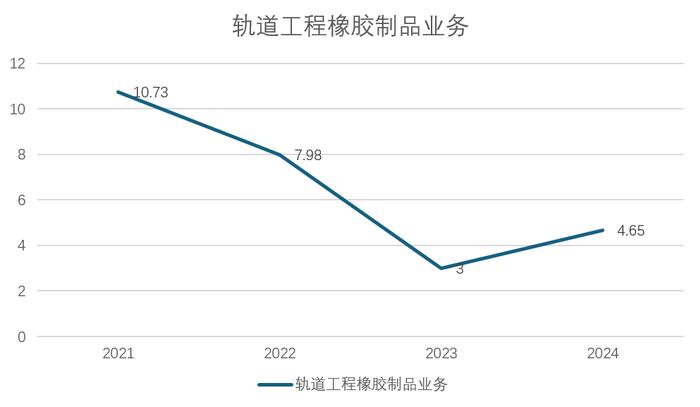
Core Viewpoint - Tian Tie Technology's controlling shareholder Wang Meiyu plans to reduce his stake in the company, which raises concerns about the company's financial health and future prospects as the stock price reaches new highs [1][15]. Group 1: Shareholder Actions - Wang Meiyu, the largest shareholder with a 7.55% stake, intends to reduce his holdings by up to 38.948 million shares, representing 3% of the total share capital [1]. - The stock price of Tian Tie Technology reached a year-high of 7.79 yuan per share, with a market capitalization exceeding 10 billion yuan, reflecting a 56% increase year-to-date [1]. Group 2: Financial Health - As of June 19, 2025, Wang Meiyu and five other concerted actors hold a total of 273 million shares, with 162 million shares pledged, resulting in a pledge ratio of 59.34% [2]. - The company has a significant external guarantee balance of 836 million yuan, which constitutes 34.66% of the audited net assets for 2024, indicating substantial financial risk [2]. - Operating cash flow has been negative for three consecutive years, with cumulative losses of 1.13 billion yuan from 2022 to 2024 [2]. Group 3: Business Performance - Tian Tie Technology's main business, which focuses on rail engineering rubber products, has seen a decline in revenue due to reduced infrastructure investment, with revenues dropping from 1.073 billion yuan in 2021 to 300 million yuan in 2023 [3]. - The lithium materials business, acquired through significant investments, has become a financial burden, with losses reported at 60.52 million yuan in 2024 and further losses in 2025 [6][7]. Group 4: Profitability and Cash Flow - In 2024, Tian Tie Technology reported a revenue of 2.136 billion yuan, a 41.69% increase, but the net profit of 15.204 million yuan was largely due to non-recurring gains, masking ongoing core business losses [8][9]. - The company has experienced a continuous cash flow deficit, with a net cash flow from operating activities of -1.4 billion yuan in 2024, indicating deteriorating profitability quality [9][12]. Group 5: Debt and Expansion Plans - The company's debt ratio has increased from 35.95% in 2021 to 56.68% by the first quarter of 2025, nearing the 60% warning line [12]. - Despite financial struggles, the company announced a 1.45 billion yuan investment in a new project, raising concerns about its ability to manage existing debts while pursuing expansion [14][15].