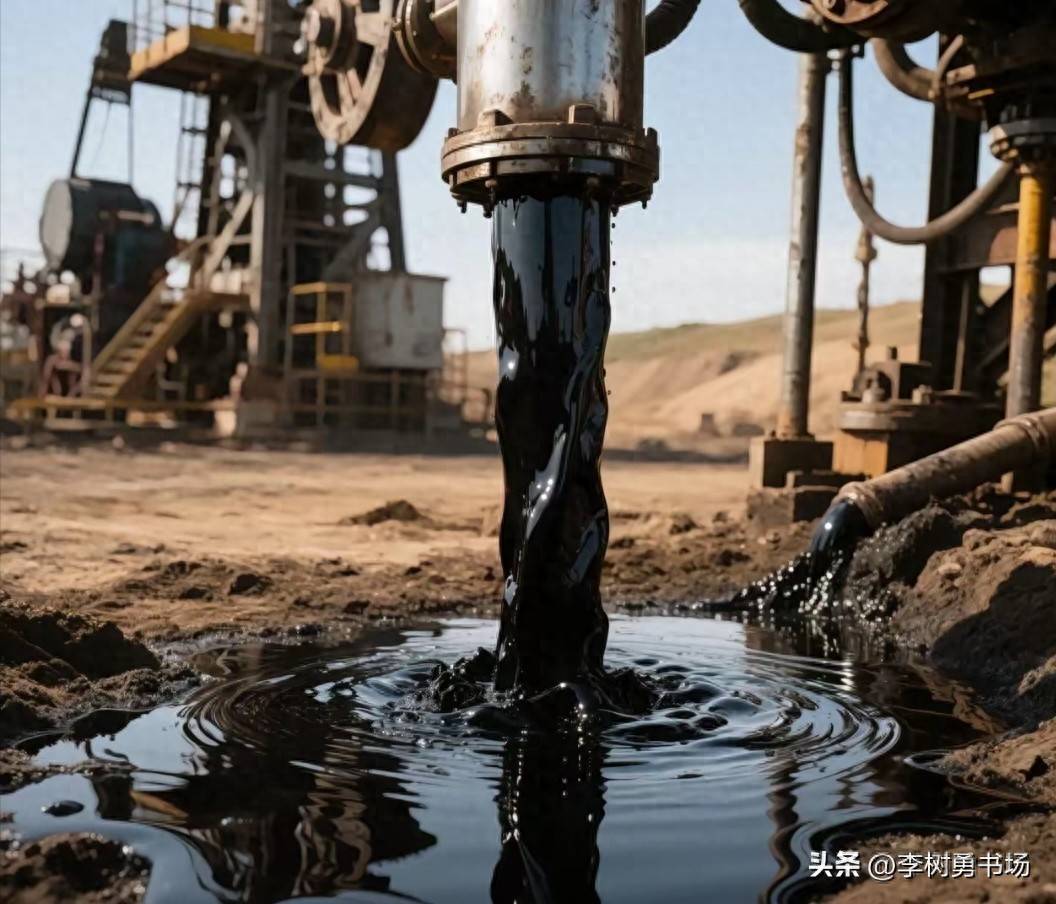
轻质石油

Search documents
不止抢总统!委内瑞拉被美军控制后,全球石油秩序再遭冲击
Sou Hu Cai Jing· 2026-01-13 04:40
Core Insights - The U.S. military's sudden attack on Venezuela in January 2026 aims to seize control of the country's vast oil reserves, which are the largest in the world, representing 17% of global oil reserves [1][6]. - Despite the geopolitical conflict, oil prices have not surged as expected due to a global oversupply and market expectations of increased production from Venezuela [15][17]. Group 1: U.S. Interests in Venezuelan Oil - The U.S. has long coveted Venezuela's oil resources due to their complementarity with U.S. light crude production, as Venezuela primarily produces heavy crude, which is more versatile for refining [8][10]. - Venezuela's proven oil reserves are approximately 303 billion barrels, significantly surpassing the U.S. reserves of 81 billion barrels, making control over Venezuela's oil a strategic advantage for the U.S. [6][11]. Group 2: Oil Price Dynamics - Historically, geopolitical conflicts in major oil-producing countries lead to price spikes; however, the current market context shows an oversupply, with Brent crude prices hovering around $60 per barrel [15][17]. - The expectation of increased Venezuelan oil production, once stability is restored, contributes to a bearish outlook on oil prices, with predictions of a further decline of about $10 per barrel in 2026 [18][20]. Group 3: Changes in Global Oil Order - The U.S. control over Venezuela could reshape global oil trade flows, with a potential shift in export focus towards the U.S. refining industry, impacting Asian and European countries reliant on Venezuelan heavy crude [24][26]. - The geopolitical landscape may lead to a more fragmented energy supply chain, where countries prioritize energy security over cost efficiency, complicating global energy trade [26][31]. Group 4: Implications for Energy Governance - The U.S. aims to weaken OPEC's influence by controlling Venezuelan oil production, thereby enhancing its own leverage in global energy markets [28][30]. - This situation serves as a warning for countries to diversify their energy sources and invest in clean energy technologies to mitigate reliance on fossil fuels [31].


开采成本高,冶炼难度大!为什么美国要抢委内瑞拉的垃圾油?
Sou Hu Cai Jing· 2026-01-07 13:06
Core Insights - Venezuela's oil is often referred to as "junk oil" due to its extraction difficulties and high refining costs [1][3] Group 1: Characteristics of Venezuelan Oil - Venezuelan oil is primarily heavy and extra-heavy crude, which is more challenging to extract compared to light crude oil found in the Middle East [1][3] - The extraction process for Venezuelan heavy oil requires significant technological investment, with costs exceeding $20 per barrel, and total costs from extraction to refining can exceed $40 to $50 per barrel [3] Group 2: Demand for Venezuelan Oil - Despite its classification as junk oil, heavy oil can produce a wide range of chemical products, making it valuable for industrial applications [5] - The U.S. lacks sufficient heavy oil and relies on imports to support its heavy industry, creating a demand for Venezuelan oil [7] - China also imports Venezuelan heavy oil due to its own reliance on heavy crude and the need for chemical feedstocks, highlighting the oil's industrial value [7] Group 3: Strategic Interests - The U.S. aims to control Venezuelan oil to revitalize its manufacturing sector and enhance control over critical minerals, contrasting with China's investment-driven approach [7]