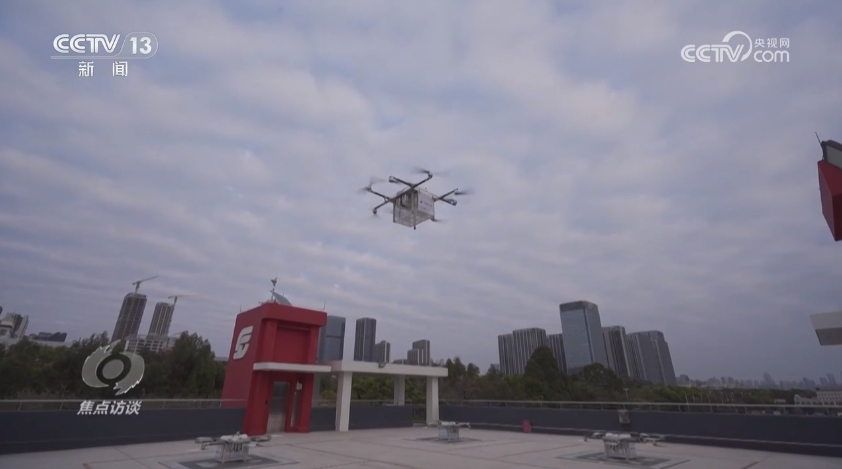
载货无人机

Search documents
海南加快打造跨区域创新链产业链价值链
Hai Nan Ri Bao· 2025-12-13 00:24
Core Viewpoint - Hainan is accelerating the development of cross-regional innovation chains, industrial chains, and value chains, promoting collaboration with regions such as the Guangdong-Hong Kong-Macao Greater Bay Area and the Yangtze River Economic Belt to enhance mutual benefits and synergies [9][10][11]. Regional Cooperation - Hainan is strengthening its collaboration with the Guangdong-Hong Kong-Macao Greater Bay Area and other regions, aiming to integrate into the Belt and Road Initiative and enhance high-level openness [8]. - The establishment of logistics routes, such as the cross-sea drone delivery service, exemplifies the physical connectivity being developed between Hainan and other regions [12][13]. Cross-Regional Collaboration - A series of agreements and memorandums have been signed with various regions, indicating a commitment to deepen cooperation and mutual development [10][11]. - The successful launch of cross-sea logistics routes and the establishment of industrial parks highlight the ongoing efforts to facilitate cross-regional industrial cooperation [17][18]. Innovation and Development - Hainan is leveraging its unique advantages to attract international projects and enhance local production capabilities, as seen in the case of innovative drugs and agricultural products [13][14]. - The establishment of shared models and mechanisms for cooperation is aimed at optimizing resource allocation and enhancing collaborative development [18]. Future Prospects - The upcoming full closure of Hainan's free trade port is expected to create unprecedented opportunities for cross-regional cooperation, leading to deeper resource sharing and rule alignment [18].


焦点访谈|千磨万击还坚劲 现代服务业为中国经济注入新动能
Yang Shi Wang· 2025-04-12 13:42
Core Viewpoint - The article emphasizes that China's economy remains resilient and robust despite external pressures, particularly highlighting the growth and potential of the modern service industry as a key driver of economic development [1][10]. Group 1: Economic Resilience and Growth - The unilateral tariffs imposed by the U.S. violate international trade rules and disrupt the global economy, yet China's economic foundation is stable and resilient [1]. - The service sector's contribution to GDP has been increasing, showcasing its role as a primary engine for economic growth [1][7]. - In 2024, China's service industry added value reached 76.56 trillion yuan, growing by 5.0% year-on-year, contributing 56.2% to national economic growth [7]. Group 2: Modern Logistics and Technological Advancements - China is the largest logistics market globally, with over 10,000 A-level logistics companies and more than 2,700 large-scale logistics parks [5]. - The integration of drones and smart logistics systems has significantly improved delivery efficiency, achieving a fourfold increase compared to traditional ground transportation [3]. - The logistics industry is undergoing rapid smart transformation, with advancements in low-altitude transportation and cold chain logistics reflecting the sector's growth potential [6][12]. Group 3: Consumer Market and Domestic Demand - With a population of 1.4 billion, China has the world's largest consumer market, which is increasingly being stimulated by high-quality development initiatives [9]. - The silver economy, driven by the aging population, is projected to grow from 7 trillion yuan to 30 trillion yuan by 2035, indicating a significant market opportunity [26]. - The cultural tourism sector is thriving, with innovative consumption scenarios and integration of various industries contributing to economic vitality [19][21]. Group 4: Policy Support and Future Outlook - The Chinese government is actively promoting policies to boost consumption and investment, with a focus on expanding domestic demand [22]. - The development of modern service industries is supported by national strategies aimed at enhancing market connectivity and technological integration [15][17]. - The continuous evolution of the service sector, including e-commerce and financial technology, is expected to drive substantial economic growth and job creation [17][27].