
辅助诊断系统

Search documents
让老百姓更健康,杭州做对了什么?这份立法实践让健康场景融入每个人
Hang Zhou Ri Bao· 2025-12-30 12:42
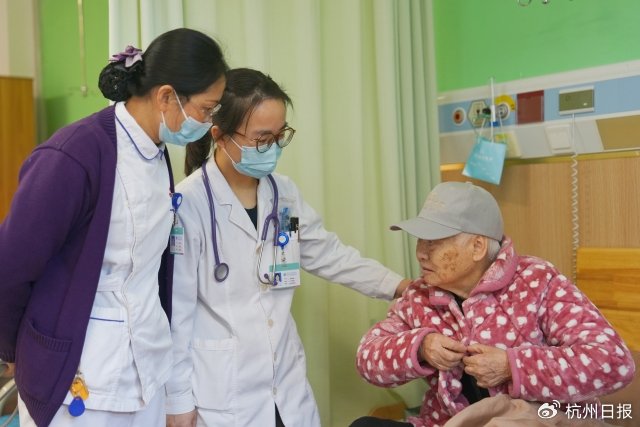
Core Insights - The article highlights the successful implementation of the "Hangzhou Municipal Health Promotion Regulations," which aims to enhance public health and well-being in the city, achieving a health literacy level of 46.52% and a life expectancy of 84.18 years by 2024 [1][6] Legislative Framework - The "Hangzhou Municipal Health Promotion Regulations," effective from January 1, 2026, establishes a comprehensive health security network with 54 articles, transforming the concept of "health priority" into a binding obligation [1][4] - The introduction of a dedicated chapter on "Health Impact Assessment" makes Hangzhou the first city in China to formalize this system through local legislation [1][2] Public Health Initiatives - The regulations emphasize inclusivity, ensuring that migrant workers are included in medical insurance, which has been positively received by non-local workers in the city [4] - The establishment of smart health stations in rural areas allows for online access to health records, ensuring that even remote communities benefit from precise medical services [4] Community Health Services - The "Health Village Chief" initiative in rural areas provides free medical consultations and health education, demonstrating the practical application of the health regulations [7] - The development of 20 health "premium routes" integrates health education into recreational activities, promoting a healthier lifestyle among citizens [9] Technological Integration - The use of AI in health services enhances efficiency, with all grassroots medical institutions connected to diagnostic support systems, conducting over 2.22 billion quality control checks on medical records [13][16] - Digital platforms like "Family Doctor Appointment" have engaged over 1.17 million residents, facilitating communication and health reminders, showcasing the integration of technology in health management [16] Overall Impact - The comprehensive health governance model in Hangzhou illustrates the importance of integrating health into all policies, leading to improved public health outcomes and community well-being [11][17]


人民日报创新谈:为人工智能治理注入中国智慧
Bei Jing Ri Bao Ke Hu Duan· 2025-08-04 01:57
Core Insights - China is actively contributing to global governance of artificial intelligence (AI) by proposing practical measures such as the "Global AI Governance Action Plan" and establishing the "Global AI Innovation Governance Center" [1][3] - The rapid development of AI technologies is highlighted, showcasing advancements in various fields such as large models, quadruped robots, and diagnostic systems, indicating AI's increasing role in both production and daily life [1][2] - The risks associated with AI, including its opacity, unpredictability, and potential misuse, necessitate a balanced approach between development and safety [2][3] Group 1: Global Cooperation and Governance - The development and application of AI pose cross-border risks, emphasizing the need for international communication and cooperation to ensure safety, reliability, and fairness [3][4] - China advocates for AI to be an international public good, focusing on inclusive benefits and shared advancements in technology [3][4] - The establishment of initiatives like the China-ASEAN AI Innovation Cooperation Center aims to bridge the digital divide and enhance capacity building in developing countries [4] Group 2: Legal and Ethical Framework - China is progressively establishing legal frameworks and systems to address issues related to data security, algorithmic bias, privacy protection, and intellectual property in AI [3][4] - The "Global AI Governance Initiative" proposed by China in October 2023 reflects its commitment to leading the healthy development of AI globally [3][4]