达利园糕点

Search documents
当消费分层遇见产业升级:透视达利创新模式的样本价值
Sou Hu Wang· 2026-01-29 06:47
Core Insights - The article discusses the evolving landscape of China's consumer market, highlighting a "dumbbell" structure characterized by rational consumption focused on cost-effectiveness and an upgrade wave willing to pay premiums for health, technology, and emotional value [1] - Dali Food Group's strategic choice of transitioning from inclusive innovation to leading innovation is presented as a response to these market dynamics, rooted in the company's mission to provide quality food to as many families as possible [1] Group 1: Evolution of Innovation Models - Prior to 2016, the Chinese market was focused on "from nothing to something" and "from something to better," with a core contradiction between massive demand and effective supply, leading to Dali's "inclusive innovation" model [2] - Inclusive innovation aims to reshape the value of mature categories and ensure efficient market supply of verified quality products at affordable prices, addressing basic consumer needs [2][4] - Post-2016, with GDP per capita surpassing $8,000, the market shifted towards value recognition, prompting Dali to adopt "leading innovation" to define future consumption trends and provide health solutions [4] Group 2: Synergy of Innovation Models - Inclusive innovation represents the breadth and depth of Dali's innovation, while leading innovation showcases its height and sharpness, with both models supporting each other [5] - The foundation of inclusive innovation provides stability and cash flow, allowing for the risk-taking necessary for leading innovation, which in turn enhances brand strength and technical capabilities [6] - Leading innovation, exemplified by products like "Dou Ben Dou," redefines standards in the plant-based protein sector, making advanced health concepts accessible to a broader consumer base [6] Group 3: Strategic Resilience - Dali's dual innovation approach reveals a strategic logic that requires both efficiency-driven inclusive capabilities and research-driven leading capabilities to navigate a complex market [9] - Focusing solely on inclusive innovation may lead to low-profit margins, while an exclusive focus on leading innovation risks alienating the broader market [9] - The ultimate goal of both innovation models is to provide better, healthier, and more reliable food choices for Chinese families, reflecting the evolution of consumer needs from basic availability to quality exploration [9]

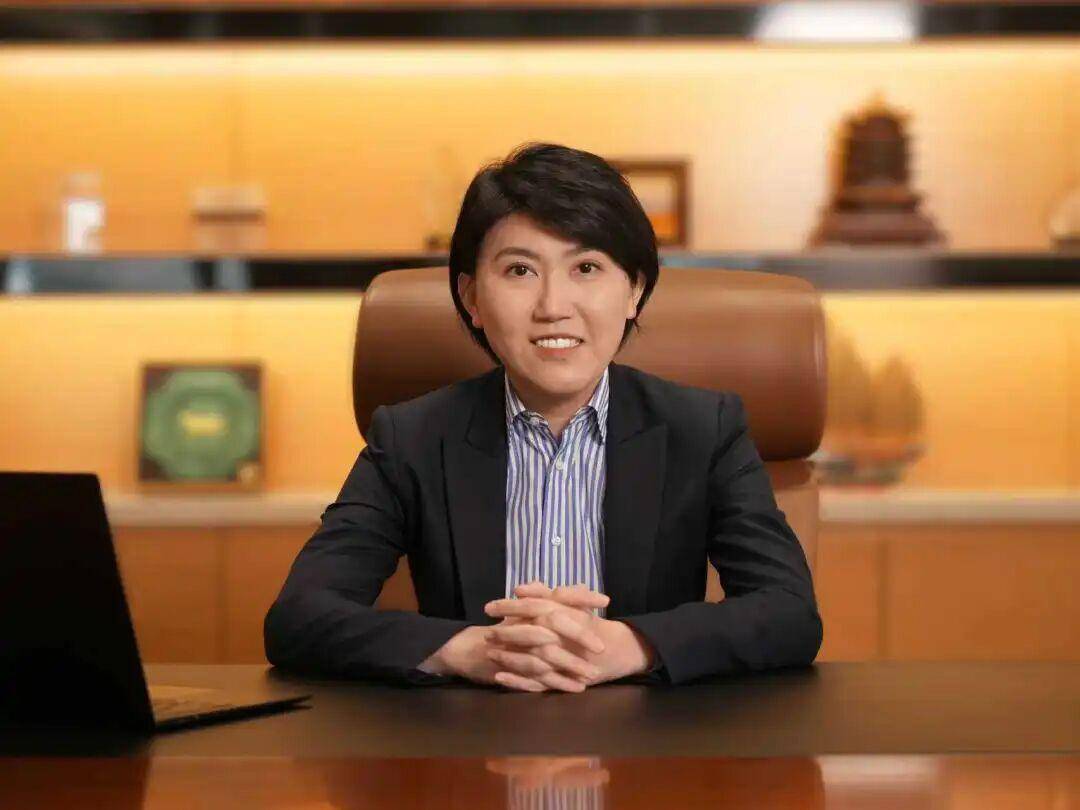
达利食品创始人之女许阳阳接任总裁:“80后”毕业于厦大,从基层做起曾主导公司上市
Sou Hu Cai Jing· 2025-11-14 09:18
Core Viewpoint - Dali Food Group has successfully completed a generational transition with Xu Yangyang officially taking over as president, following the legacy of her father Xu Shihui, amidst challenges in performance and market dynamics [1][5]. Group 1: Company Overview - Dali Food Group, founded in 1989, has evolved into a major player in the food industry with nearly 20 billion yuan in annual revenue, focusing on both food and beverage sectors [1]. - The company’s brand portfolio includes well-known names such as "Dali Garden" pastries, "Haochidian" biscuits, "Kebike" chips, and "Heqizheng" herbal tea [1]. - Dali Food was listed on the Hong Kong Stock Exchange in 2015, and the Xu family was recognized as the richest in Fujian province from 2016 to 2019 [1]. Group 2: Leadership Transition - Xu Yangyang, born in 1983, has been with Dali Food for 17 years, gaining extensive experience across various roles, including management, production, and brand operations [1][3]. - She has been instrumental in significant company milestones, including leading the successful IPO in 2015, which was the largest consumer goods IPO that year [3]. Group 3: Strategic Challenges and Opportunities - Dali Food has faced declining revenue from 2020 to 2022, with figures of 20.96 billion yuan, 22.29 billion yuan, and 19.96 billion yuan respectively, alongside a drop in net profits [5]. - The company is now focusing on revitalizing its brand image and exploring new growth avenues to overcome stagnation, particularly in light of a recent decline in revenue to 18.07 billion yuan in 2024 [5]. - Xu Yangyang is tasked with executing the company's overseas expansion strategy, which has established production bases in Indonesia, Thailand, Vietnam, and Saudi Arabia [3].