酷态科充电宝

Search documents
罗永浩回应其播客节目广告过多
3 6 Ke· 2025-12-08 11:13
Core Viewpoint - The discussion between Zhang Peng and Luo Yonghao at the "Geek Park Innovation Conference 2026" highlighted the controversy surrounding excessive advertising in Luo's podcast "Luo Yonghao's Crossroads," where he denied that guests need to pay large sums to appear on the show [2][3]. Group 1: Podcast Advertising and Content Integrity - Luo Yonghao acknowledged that advertising is essential for the podcast's free operation but insisted it does not compromise content quality [2][3]. - He refuted rumors that guests must pay to appear on the podcast, labeling such claims as slander and emphasizing that the podcast is not a pay-to-play platform [2][3]. - Luo expressed that if he were to accept payment for guest appearances, it would lead to content interference, undermining the quality and integrity of the show [2][3]. Group 2: Podcast Development and Audience Engagement - The podcast "Luo Yonghao's Crossroads" was inspired by suggestions from industry peers and aims to feature deep conversations with tech leaders and entrepreneurs [3][4]. - As of now, the podcast has garnered 775,000 followers, with average episode views around 10 million, peaking at 30 million for some episodes [4]. - Luo indicated that if the podcast's performance continues to excel, there may be a shift to increase the frequency of episodes from once a week to twice a week [4]. Group 3: Future Aspirations and Industry Context - Luo Yonghao expressed excitement about the current AI revolution, viewing it as a significant opportunity for innovation and product development [5]. - He mentioned that his company, "Xihongxian," focuses on AR technology and plans to unveil an AI software developed internally by the end of the year [4][5].


传北京多所高校禁用罗马仕充电宝,罗马仕称交由法务部门进行跟进,这到底是怎么回事?
Xin Lang Cai Jing· 2025-06-16 12:24
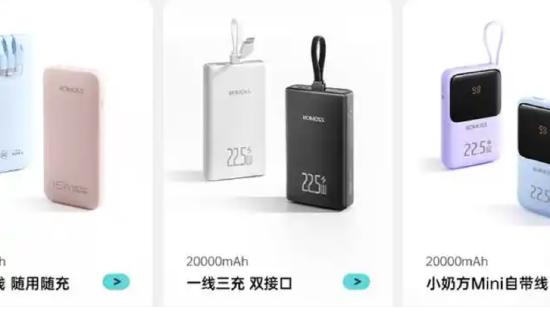
Core Viewpoint - The recent ban on Romoss brand power banks in Beijing universities highlights ongoing safety concerns and the long-standing struggle between technology choices and quality control in the power bank industry [2] Group 1: Safety Risks and Technical Choices - Romoss power banks utilize a "medium to low battery cell basic protection scheme," lacking critical safety features such as an NTC temperature detection module and only a single-layer overvoltage protection circuit, which contrasts sharply with competitors like Xiaomi that offer dual-layer protection [3] - The choice of an "economic route" by Romoss has resulted in a significant reduction in manufacturing costs by approximately 30%, but this compromises the safety of the product under abnormal conditions [3] Group 2: Trust Crisis and Historical Issues - Romoss has faced safety issues before, notably a 2019 incident involving a power bank catching fire in a university dormitory, which revealed the absence of overheating protection and sparked discussions on industry safety standards [4] - Despite achieving an average annual market growth rate of 15% from 2020 to 2022 and capturing a 38% market share in campuses, the lack of upgrades in critical safety modules has led to a complete loss of trust from educational institutions [4] Group 3: Industry Evolution and Market Dynamics - The power bank market is undergoing a transformation as new brands like Kootai and Shanjiji introduce advanced manufacturing standards from the smartphone industry, offering products priced 30-50% higher but featuring superior safety technologies [5] - In 2023, the market share of high-end safety power banks surged by 217%, while the repurchase rate for traditional economic products dropped to 19%, indicating a shift in consumer awareness towards safety [6] - The recent events reflect a broader industry transition from chaotic growth to regulated development, emphasizing the importance of safety over price in consumer electronics [6]