量化权益产品

Search documents
股东“出钱”又“出人” 中小公募谋求新出路
Zhong Guo Zheng Quan Bao· 2025-11-27 23:32
Core Insights - The article discusses the recent trend of significant shareholder changes and capital increases among small and medium-sized public funds in China, driven by strong new shareholders aiming to revitalize these companies in a competitive market [1][2][4]. Group 1: Shareholder Changes and Capital Increases - Since 2023, multiple public funds have reported changes in shareholders holding more than 5% of shares, including Guoxin Guozheng Fund, Xinhua Fund, and Pioneer Fund, among over twenty companies [2]. - For instance, after Guiding Compass became the main shareholder of Pioneer Fund, the registered capital increased from 150 million to 230 million yuan through two rounds of capital increases [2]. - Guoxin Guozheng Fund's registered capital rose from 200 million to 410 million yuan after Guoxin Capital became the main shareholder, contributing an additional 210 million yuan [2]. Group 2: Governance and Strategic Changes - New shareholders are optimizing governance structures as a first step in transformation, with Xinhua Fund restructuring its management and governance after state-owned capital entered [4]. - The management team at Xinhua Fund has developed a new strategy focusing on differentiated high-quality development, emphasizing active management, fixed income products, and quantitative investments [4]. - The entry of strong shareholders not only provides capital but also brings management experience and resources, which are crucial for small public funds to enhance their research and service capabilities [4][5]. Group 3: Focused Business Strategies - Small and medium-sized fund companies are adopting more focused strategies, with Huayin Fund concentrating on niche markets and developing distinctive product lines [6]. - Huayin Fund aims to strengthen its performance in fixed income and focus resources on emerging industries and leading companies through in-depth research [6]. - The company has revised its internal mechanisms, including a performance incentive plan for core research personnel and a longer assessment cycle to emphasize long-term performance [6].
股东“出钱”又“出人”,中小公募谋求新出路
Zhong Guo Zheng Quan Bao· 2025-11-27 14:28
Core Insights - The recent trend of significant shareholder changes and capital increases among small and medium-sized public funds indicates a strategic shift to enhance competitiveness in a challenging market environment [1][2][4] Group 1: Shareholder Changes and Capital Increases - Since 2023, multiple public funds have reported changes in shareholders holding more than 5% of shares, including Guoxin Guozheng Fund, Xinhua Fund, and Pioneer Fund, among over twenty companies [2] - For instance, after becoming the main shareholder of Pioneer Fund, Zhinan Compass increased its registered capital from 150 million to 230 million yuan through two rounds of capital injection [2] - Guoxin Guozheng Fund's registered capital rose from 200 million to 410 million yuan after Guoxin Capital became the main shareholder, contributing 210 million yuan [2][3] Group 2: Governance and Strategic Restructuring - New shareholders are driving significant governance and management changes within the funds, as seen with Xinhua Fund, which has restructured its management team and governance framework following the entry of state-owned capital [4] - The new management team at Xinhua Fund aims to develop a differentiated and high-quality growth strategy, focusing on active management, fixed income products, and quantitative investments [4] - The entry of strong shareholders not only provides financial support but also brings management experience and resources, which are crucial for small public funds to enhance their research and service capabilities [4][5] Group 3: Focused Business Strategies - Small and medium-sized funds are adopting more focused strategies to enhance their market competitiveness, with Huayin Fund emphasizing niche markets and distinctive product lines [6] - Huayin Fund plans to strengthen its performance in fixed income and concentrate resources on emerging industries and leading companies through in-depth research [6] - The company has revised its internal compensation and assessment systems to promote long-term performance and investor satisfaction, while also expanding its online distribution channels [6]
外资理财规模逆势攀升,法巴、贝莱德突破500亿大关
Di Yi Cai Jing· 2025-07-15 12:45
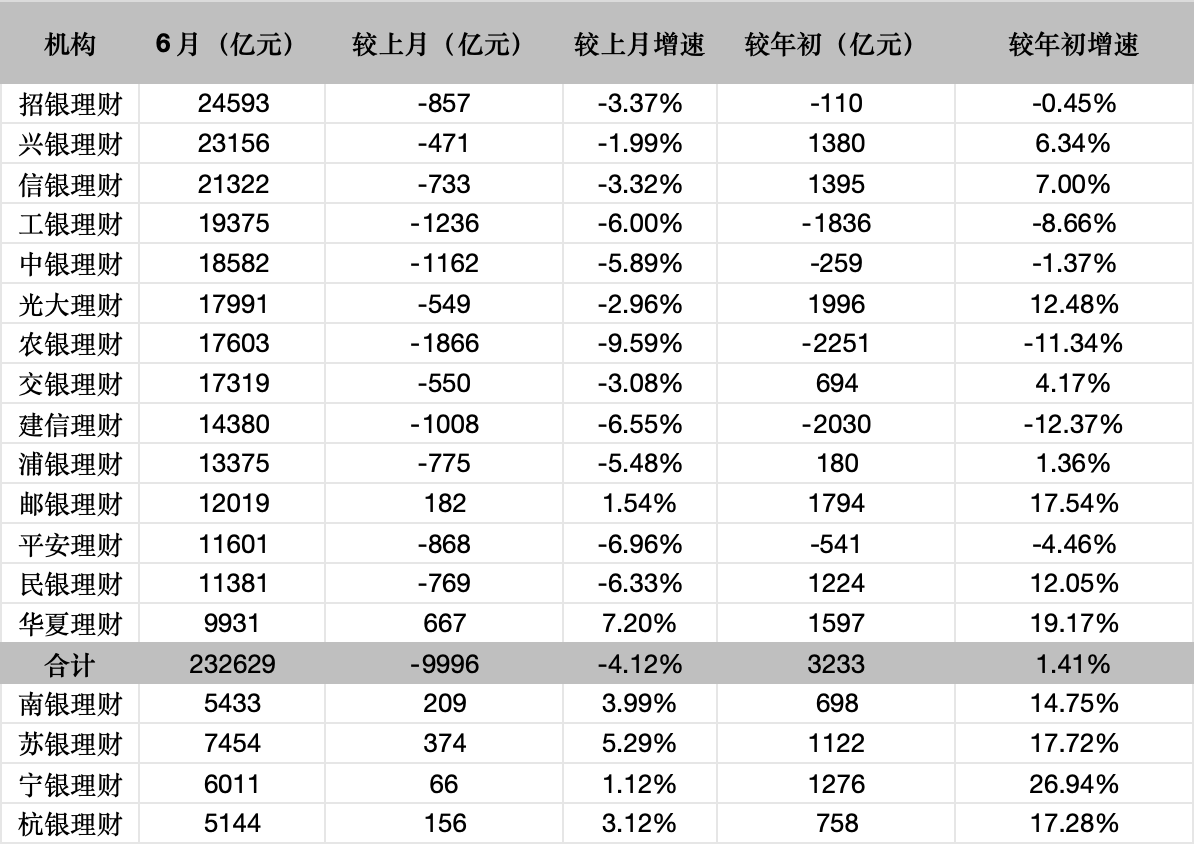
Core Insights - The growth of foreign-controlled joint venture wealth management companies in China has been notable, with firms like BNP Paribas and BlackRock's joint venture surpassing 500 billion yuan in total assets, and the former exceeding 600 billion yuan in July [1][3] - In contrast, many domestic wealth management companies experienced a decline in scale in June, attributed to a recovering stock market and low bond yields [1][3] - Fixed income assets are crucial for institutions to expand their scale, especially in a low-interest-rate environment, with the 10-year government bond yield dropping from around 3% at the beginning of 2023 to approximately 1.6% [3][8] Foreign Wealth Management Expansion - Foreign wealth management firms in China have seen a resurgence in scale over the past two years, with BlackRock's joint venture achieving nearly double its size this year [2][3] - The focus of these firms is primarily on fixed income assets, including cash management products and various fixed income strategies, while maintaining a low allocation to equity assets [3][4] - BlackRock's joint venture has launched a total of 120 products across various risk levels, aiming to meet diverse investor needs [4] Domestic Wealth Management Trends - Domestic wealth management companies still dominate the market, with three firms exceeding 2 trillion yuan in scale and nearly ten others surpassing 1 trillion yuan [1][8] - The overall scale of wealth management products in the market reached 30.97 trillion yuan as of June 2025, reflecting a slower growth rate compared to previous years [6][8] - The decline in scale for many domestic firms in June was significant, with a total drop of nearly 10 billion yuan across various institutions [7] Market Conditions and Future Outlook - The current bond market is characterized by low yields, posing challenges for the expansion of wealth management scales [8] - Expectations for monetary policy adjustments, such as rate cuts, are low, with potential policy changes anticipated around September or later [10] - The prevailing view among institutions is to maintain a range-bound strategy in the bond market, with expectations for the 10-year government bond yield to fluctuate between 1.6% and 1.7% [10]