金小葵少儿教育金

Search documents
孩子存1000元比你存20万利息高?各大银行盯上了压岁钱
Xin Lang Cai Jing· 2026-02-19 06:34
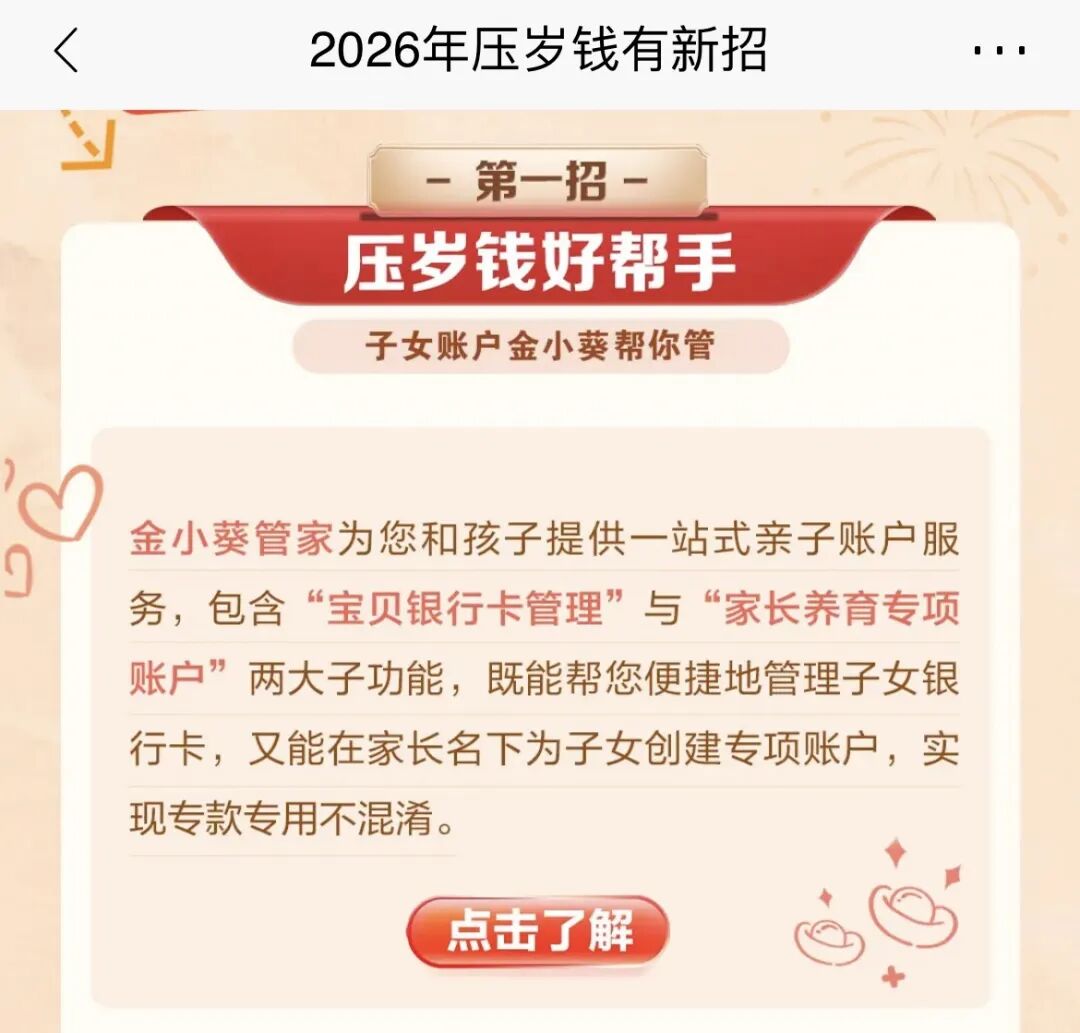
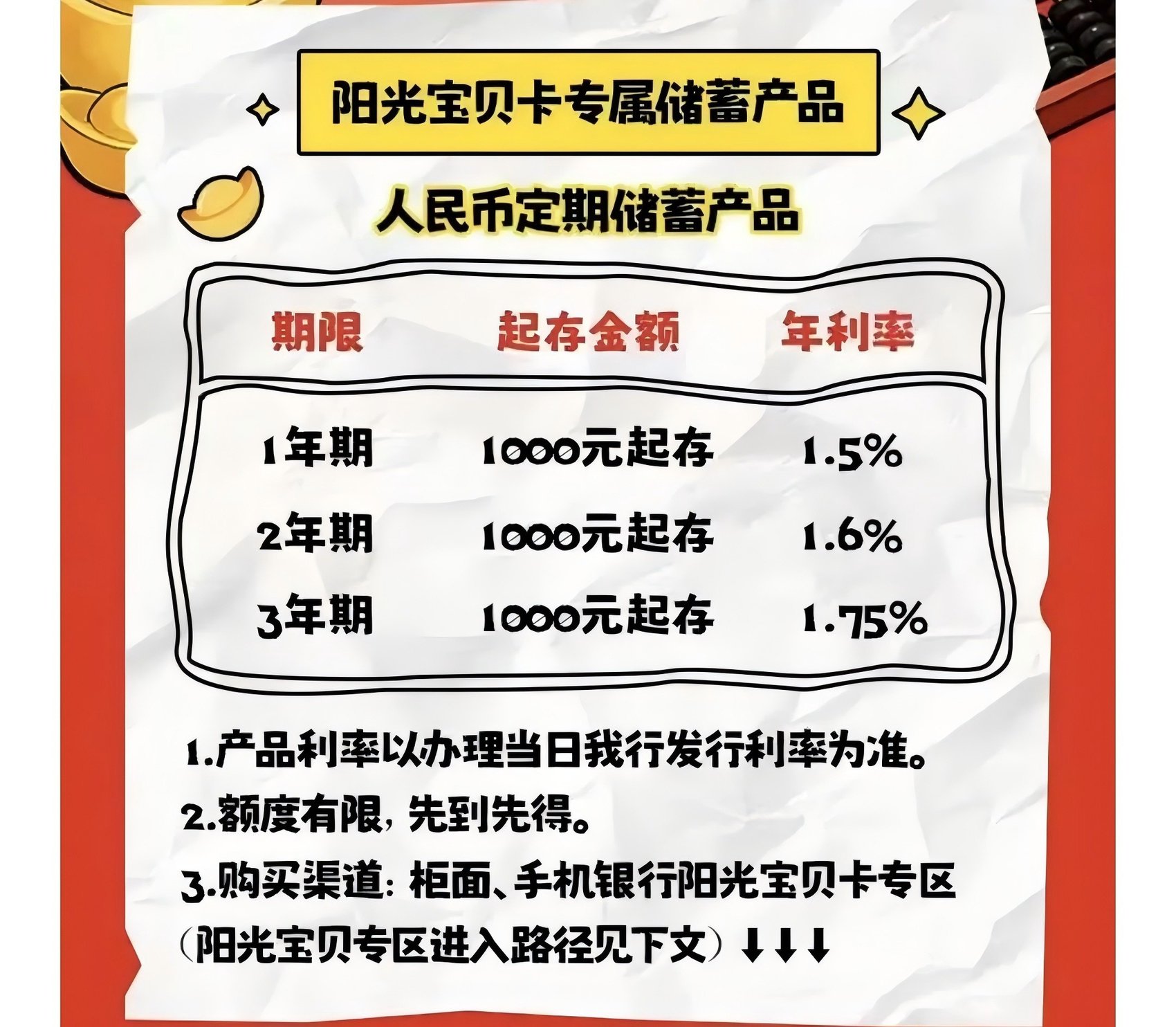
Group 1 - Parents are increasingly managing their children's New Year's money by depositing it into bank accounts, with some accumulating nearly 70,000 yuan over the years [1] - Banks are actively marketing special deposit products for New Year's money, with some offering higher interest rates than standard rates [1] - For example, Beijing Rural Commercial Bank offers a special savings product with interest rates of 1.5%, 1.6%, and 1.75% for different terms, compared to standard rates of 1.15%, 1.2%, and 1.3% [1] Group 2 - China Merchants Bank has launched a "2026 New Year's Money New Strategy" campaign, providing services to help parents manage their children's bank accounts [2] - The campaign includes a lottery for customers who open special accounts with a minimum asset requirement of 50,000 yuan [2] Group 3 - Guangfa Bank has introduced a "Freedom Card" for children, allowing parents to monitor spending and set limits through the bank's app [3] - Many parents are finding it difficult to find deposit products with interest rates above 2% due to declining market rates [3] Group 4 - Some parents are shifting from traditional deposit products to low-risk financial products with better returns, such as funds and insurance [4] - For instance, one parent has allocated a portion of their child's New Year's money to index funds, achieving a return of approximately 40% [4] Group 5 - Insurance products are becoming a popular choice for managing children's New Year's money, with parents seeking long-term benefits and stability [5] - Banks are also promoting non-deposit products, such as insurance and gold, as part of their marketing strategies for New Year's money [5]

孩子存1000元,比你存20万利息高!咋回事?
凤凰网财经· 2026-02-18 11:08
Core Viewpoint - The article discusses how banks are marketing specialized savings products for children's New Year's money, reflecting a trend towards financial education and long-term customer relationships with families [3][10]. Group 1: Bank Marketing Strategies - Many banks are launching marketing campaigns targeting children's New Year's money, offering specialized savings accounts and financial management tools for parents [5][8]. - For example, China Merchants Bank has introduced a service called "Golden Little Aster" that includes features for managing children's bank accounts and educational funds [5]. - Beijing Rural Commercial Bank offers a "Sunshine Baby Card" with higher interest rates than standard deposits, indicating a competitive approach to attract young savers [8]. Group 2: Investment Trends - As interest rates decline, parents are increasingly turning to investment products like wealth management and insurance instead of traditional savings accounts for managing their children's money [11][12]. - Some parents report difficulty finding savings products with interest rates above 2%, prompting a shift towards low-risk investment options that offer better returns [11]. - For instance, one parent mentioned investing in index funds, which have yielded returns of approximately 40% [11]. Group 3: Financial Education and Long-term Planning - Experts suggest that banks are focusing on children's financial products to cultivate long-term relationships with families and instill financial habits in children [10][17]. - The article emphasizes the importance of safety and long-term growth in managing children's savings, recommending options like stable wealth management products and educational insurance [17]. - Parents are encouraged to allocate some funds for children's personal spending to help develop their financial literacy [17].
孩子存1000元,比你存20万利息高?
3 6 Ke· 2026-02-18 03:35
Group 1 - The article discusses how parents are managing their children's "lucky money" received during the Chinese New Year, with many opting to deposit it in banks or invest in financial products due to declining interest rates on savings accounts [1][2][4] - Banks are actively marketing specialized savings products for children's "lucky money," with features like dedicated accounts and parental controls to help manage funds [2][4][6] - Some banks, like Beijing Rural Commercial Bank and Mongolian Merchant Bank, are offering higher interest rates on specialized savings accounts compared to standard rates, with rates for 1-year, 2-year, and 3-year terms ranging from 1.4% to 1.75% [4][6] Group 2 - As interest rates decline, parents are increasingly turning to investment products such as wealth management and insurance instead of traditional savings accounts, with some reporting difficulty finding savings products with rates above 2% [7][8] - The article highlights a trend where parents are diversifying their children's "lucky money" into various financial products, including insurance policies that offer long-term benefits and investment funds with higher returns [8][9] - Industry experts suggest that parents should focus on safety and long-term growth when managing children's funds, recommending stable financial products and educational insurance to secure future educational expenses [10][12]