
压岁钱理财

Search documents
“压岁钱理财”不能只是搞营销
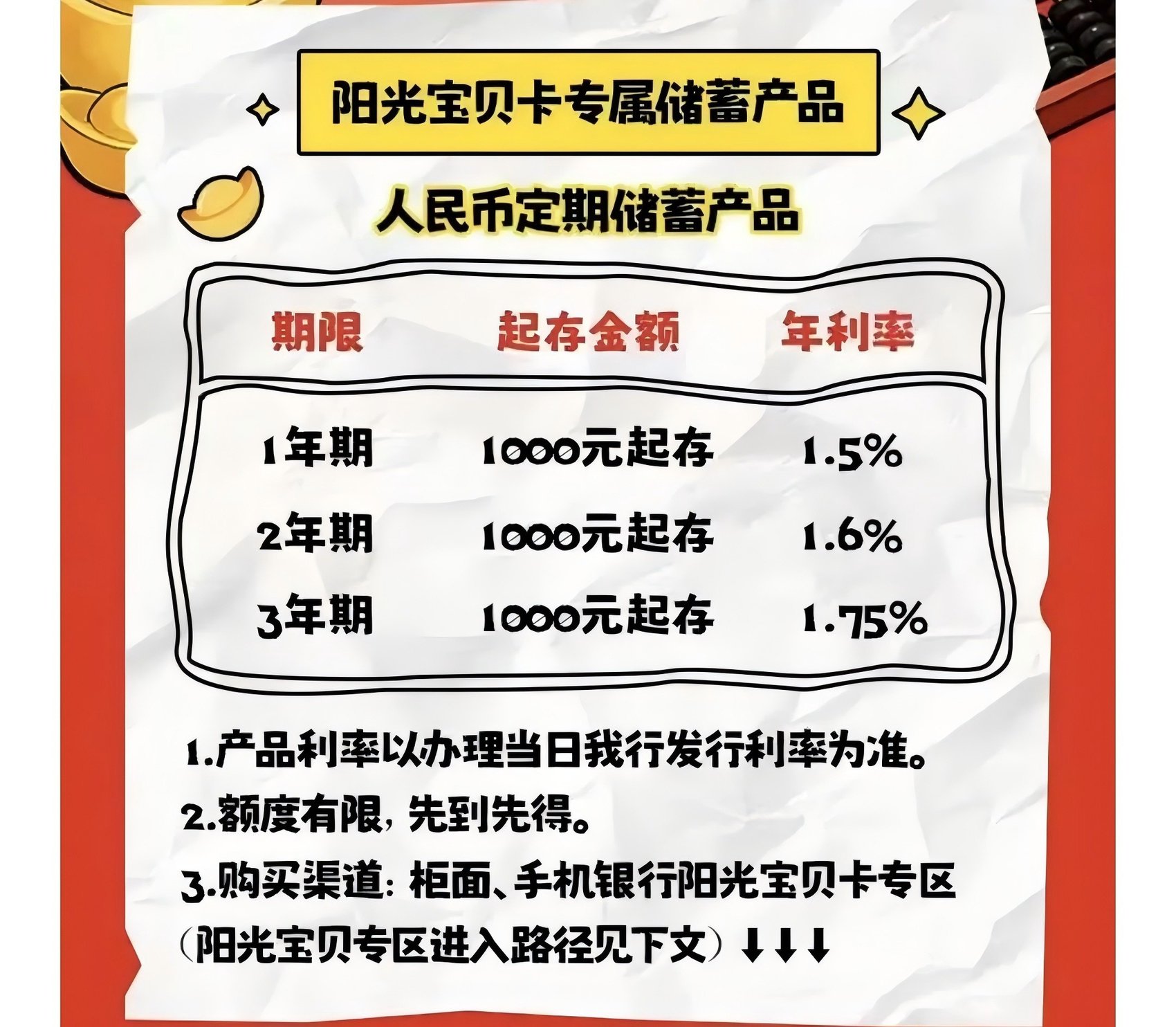
Xin Lang Cai Jing· 2026-02-26 21:46
Group 1 - The core idea of the articles revolves around the marketing opportunities for financial institutions to promote "lucky money" investment products during the Lunar New Year, emphasizing the need for these products to genuinely meet children's diverse financial needs rather than just serving as a performance boost for the institutions [1] - Financial institutions are encouraged to optimize products like dedicated debit cards and "parent-child" linked cards to help children establish sound financial management concepts, allowing parents to guide their children in understanding account management and cash flow [2] - There is a focus on enhancing the variety of financial products, including savings, investment, and insurance products, to cater to children's different growth stages and educational funding needs, ensuring that these products provide both economic security and support for higher education [3] Group 2 - The articles highlight the importance of considering parents' risk protection alongside children's financial education, as many parents from the "80s" and "90s" generations are becoming more aware of financial management but still need to address their own risk transfer and protection needs [4] - Financial institutions are advised to offer diversified investment products and professional insurance recommendations tailored to parents' family structures, income, expenses, and educational costs, ensuring a stable financial foundation for children's growth [4]
压岁钱理财需分年龄段,攒金攒股等多元规划成趋势丨经济周刊·理财
Guang Zhou Ri Bao· 2026-02-26 16:26
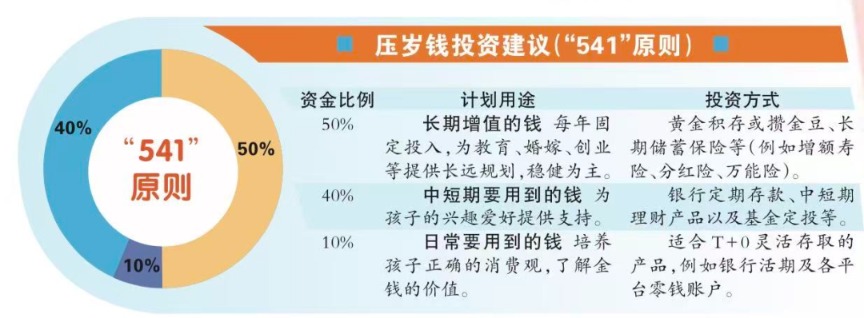
Core Insights - The article discusses the increasing trend among parents to manage their children's New Year's money (lucky money) as a means of financial education, emphasizing the importance of age-appropriate financial planning [1][3]. Age-Based Planning - Financial management of lucky money should be tailored to different growth stages of children, with a focus on the relationship between money and time [3]. - A suggested approach is to divide the lucky money into three parts using the "541 principle": 50% for long-term growth, 40% for foreseeable goals (like education and travel), and 10% for daily expenses [3][4]. - Financial education should be gradual, adapting to children's varying levels of understanding and self-control as they age [3][4]. Specific Age Stages - For children aged 3-6, the focus is on establishing a basic understanding of money, using savings accounts or cash to illustrate wealth accumulation [4]. - For ages 7-12, the emphasis shifts to developing saving habits and low-risk investment practices, allowing children to manage small amounts for daily spending [4]. - For those aged 13 and above, the focus is on fostering independent planning and diversified investment thinking, encouraging the use of low-risk investment options like mutual funds and gold accumulation [4]. Diverse Investment Trends - Parents are increasingly looking to invest lucky money in gold, high-yield stocks, and insurance products, reflecting a shift in financial perspectives among new-generation parents [5]. - The article highlights that many families are now investing in gold as a tangible asset, with some parents purchasing gold beans for their children as a way to teach saving and investment [5]. - The rising interest in capital markets has led some parents to invest in stocks and funds for their children's future education and marriage expenses, focusing on long-term holding strategies [5]. Insurance as a Financial Tool - Financial professionals recommend using long-term savings insurance products for managing lucky money, which can provide stable and continuous growth [6]. - Current market rates for universal life insurance products show guaranteed rates around 1%, with many products offering settlement rates above 2%, and some reaching up to 3.5% [6]. Investment Cautions - The article advises that lucky money management should prioritize stable investments, with common choices including fixed deposits, low-risk financial products, gold, and insurance [8]. - For families considering stock investments, it is suggested to use a dollar-cost averaging approach to mitigate risks associated with market volatility [8].

银行竞逐宝贝经济:压岁钱产品利率“反超”20万大额存单
2 1 Shi Ji Jing Ji Bao Dao· 2026-02-25 08:34
Core Viewpoint - Financial institutions are engaging in a "red envelope money competition" targeting minors, with banks offering attractive interest rates on children's savings products that surpass those of large-denomination time deposits [1][4]. Group 1: Product Offerings - Many banks have introduced children's savings accounts with low minimum deposit requirements and no account opening fees, making them accessible [1][3]. - For example, Beijing Bank's "Little Jing Red Envelope Treasure" offers interest rates of 1.5% for one year, 1.6% for two years, and 1.75% for three years, all starting from a minimum deposit of 1,000 yuan [3]. - Agricultural commercial banks are also launching tailored products, such as the "Sunshine Baby Card" with interest rates of 1.5%, 1.6%, and 1.75% for one, two, and three years, respectively [3]. Group 2: Marketing Strategies - Banks are employing creative marketing strategies, including vibrant card designs featuring popular characters and customizable options for children's savings accounts [5]. - Unique savings products, such as the "certainly above 985" themed deposit, are designed to resonate with parents' aspirations for their children [5]. - The marketing approach has shifted from traditional methods to more engaging and playful designs, appealing to both children and parents [5]. Group 3: Industry Trends - The trend of offering high interest rates on small deposits is driven by banks' need to secure low-cost, stable liabilities amid narrowing interest margins [6]. - The focus on children's savings accounts allows banks to establish long-term relationships with families, paving the way for future financial services such as education funds and insurance [6]. - Parents are increasingly viewing the management of red envelope money as part of financial education for their children, shifting from a model of parental control to shared management [7].
孩子存1000元比你存20万利息高?各大银行盯上了压岁钱
Xin Lang Cai Jing· 2026-02-19 06:34
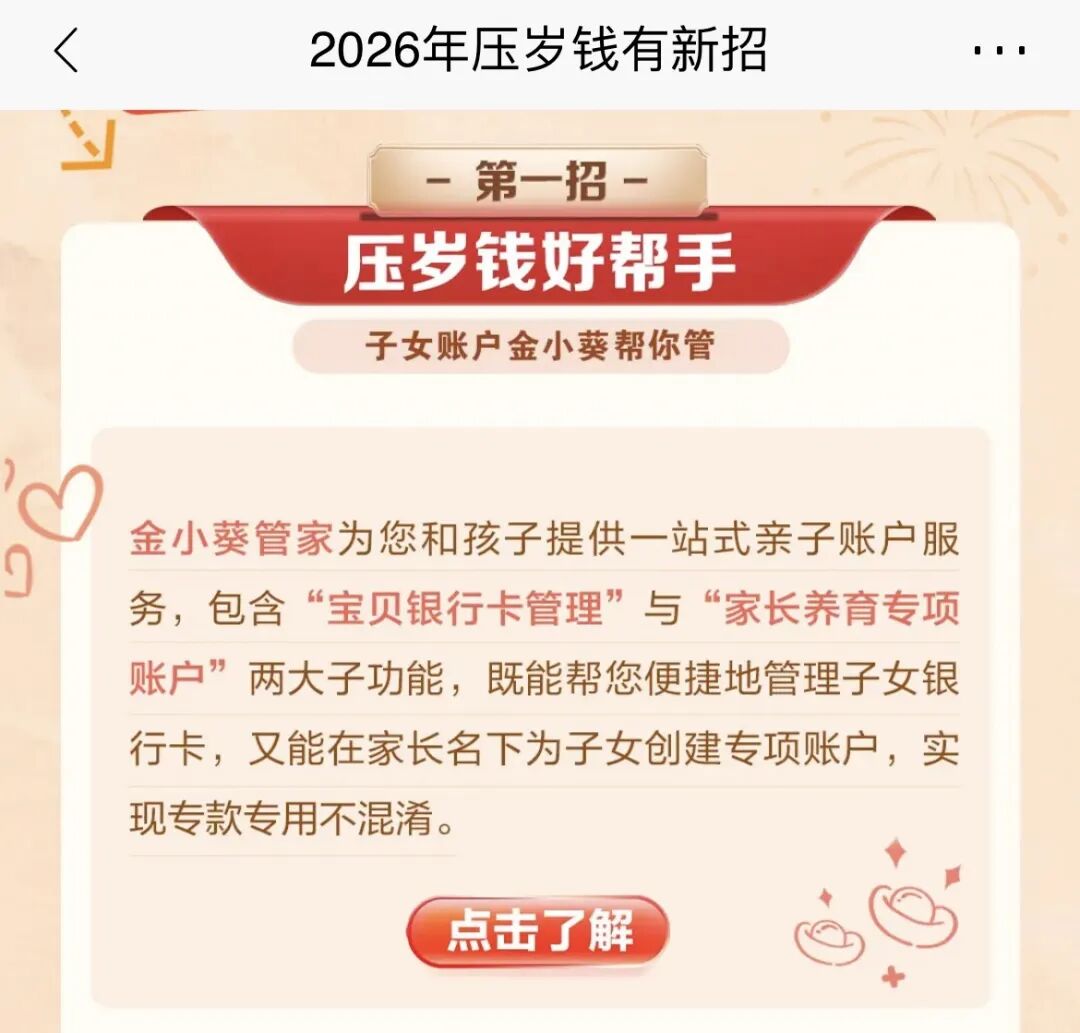
Group 1 - Parents are increasingly managing their children's New Year's money by depositing it into bank accounts, with some accumulating nearly 70,000 yuan over the years [1] - Banks are actively marketing special deposit products for New Year's money, with some offering higher interest rates than standard rates [1] - For example, Beijing Rural Commercial Bank offers a special savings product with interest rates of 1.5%, 1.6%, and 1.75% for different terms, compared to standard rates of 1.15%, 1.2%, and 1.3% [1] Group 2 - China Merchants Bank has launched a "2026 New Year's Money New Strategy" campaign, providing services to help parents manage their children's bank accounts [2] - The campaign includes a lottery for customers who open special accounts with a minimum asset requirement of 50,000 yuan [2] Group 3 - Guangfa Bank has introduced a "Freedom Card" for children, allowing parents to monitor spending and set limits through the bank's app [3] - Many parents are finding it difficult to find deposit products with interest rates above 2% due to declining market rates [3] Group 4 - Some parents are shifting from traditional deposit products to low-risk financial products with better returns, such as funds and insurance [4] - For instance, one parent has allocated a portion of their child's New Year's money to index funds, achieving a return of approximately 40% [4] Group 5 - Insurance products are becoming a popular choice for managing children's New Year's money, with parents seeking long-term benefits and stability [5] - Banks are also promoting non-deposit products, such as insurance and gold, as part of their marketing strategies for New Year's money [5]
“小孩姐”用压岁钱买黄金,三年攒的“小金库”账面价值翻倍
Sou Hu Cai Jing· 2026-02-18 13:08
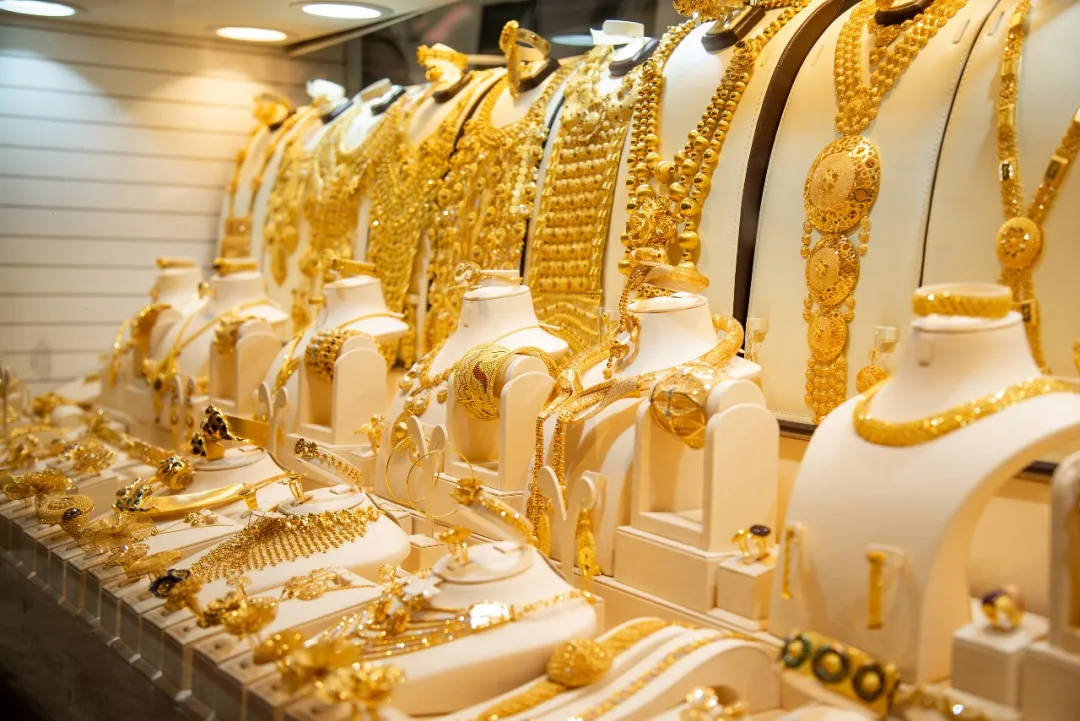
Core Insights - The article highlights a unique approach taken by two sisters in Hangzhou who have successfully invested their red envelope money into gold over three years, resulting in a significant increase in value as gold prices have surged to historical highs [1][3]. Group 1: Investment Strategy - The sisters decided to convert their red envelope money into physical gold, specifically gold beans, after being inspired by a casual conversation about gold investment returns [3][4]. - They each invested over 10,000 yuan in gold beans, which have now appreciated to a value of over 40 grams each, effectively doubling their initial investment [3][4]. Group 2: Financial Education - The investment experience has instilled valuable financial habits in the children, such as comparing prices and distinguishing between needs and wants [4][5]. - The mother emphasizes that the goal was not merely to make money but to teach the children responsibility over their finances, leading to broader life lessons beyond just the investment [5].
杭州一对姐妹用压岁钱购买3年黄金,母亲:两姐妹各自手握40多克金豆豆
Sou Hu Cai Jing· 2026-02-18 11:29
Core Insights - The article highlights a unique approach taken by two sisters in Hangzhou who have successfully invested their red envelope money into gold over three years, resulting in a significant increase in value as gold prices have surged to historical highs [1][2]. Investment Strategy - The sisters, aged 12 and 11, decided to invest their red envelope money into physical gold after a casual conversation with their mother about her own gold investments, demonstrating an early understanding of financial literacy [2]. - They opted for physical gold, specifically gold beans, over paper gold due to the tangible nature of the investment, which provided them with a sense of security [2]. Financial Growth - Over the three years, each sister accumulated over 40 grams of gold, and the value of their investments has doubled alongside rising gold prices [2][3]. - The article notes that the sisters' initial investment of over 10,000 yuan each has significantly appreciated, showcasing the potential benefits of investing in gold [2]. Financial Education - The experience has instilled valuable financial habits in the sisters, such as price comparison and distinguishing between needs and wants, indicating that the investment journey has been more about financial responsibility than merely profit [3]. - The mother emphasizes that the goal was not solely to make money but to teach her children to be responsible with their finances, which has led to broader life lessons beyond just the investment [3].
两姐妹3年用压岁钱攒下40多克黄金
Xin Lang Cai Jing· 2026-02-18 10:02
Core Viewpoint - Two sisters in Hangzhou have saved over 40 grams of gold using their New Year's money over three years, reflecting a unique approach to financial responsibility and investment at a young age [1] Group 1: Investment Behavior - The sisters decided to invest their New Year's money in gold, specifically in gold beans, which have minimal processing fees [1] - Each sister contributed over 10,000 yuan, leading to a significant accumulation of gold as the price of gold increased [1] Group 2: Financial Education - The mother emphasized that the goal was not to make money but to teach the children to be responsible for their finances [1] - The experience has provided the children with valuable lessons beyond just accumulating gold [1]
孩子存1000元,比你存20万利息高?
3 6 Ke· 2026-02-18 03:35
Group 1 - The article discusses how parents are managing their children's "lucky money" received during the Chinese New Year, with many opting to deposit it in banks or invest in financial products due to declining interest rates on savings accounts [1][2][4] - Banks are actively marketing specialized savings products for children's "lucky money," with features like dedicated accounts and parental controls to help manage funds [2][4][6] - Some banks, like Beijing Rural Commercial Bank and Mongolian Merchant Bank, are offering higher interest rates on specialized savings accounts compared to standard rates, with rates for 1-year, 2-year, and 3-year terms ranging from 1.4% to 1.75% [4][6] Group 2 - As interest rates decline, parents are increasingly turning to investment products such as wealth management and insurance instead of traditional savings accounts, with some reporting difficulty finding savings products with rates above 2% [7][8] - The article highlights a trend where parents are diversifying their children's "lucky money" into various financial products, including insurance policies that offer long-term benefits and investment funds with higher returns [8][9] - Industry experts suggest that parents should focus on safety and long-term growth when managing children's funds, recommending stable financial products and educational insurance to secure future educational expenses [10][12]
学会这招,让孩子压岁钱越理越多!
招商银行App· 2024-09-26 08:09
此图片来自微信公众平台 未经允许不可引用 4 此图片来自微信公众平台 未经允许不可引用 此图片来自微信公众平台 未经允许不可引用 此图片来自微信公众平台 未经允许不可引用 此图片来自微信公众平台 未经允许不可引用 点击 "阅读原文" ,召唤金小葵管家 ...