钙钛矿太阳能电池材料

Search documents
重磅!全球关键电子材料应用进展与我国未来发展方向(23000字)
材料汇· 2025-12-23 15:04
Core Viewpoint - The article emphasizes the importance of electronic materials in various high-tech industries, highlighting the need for innovation and domestic production capabilities to enhance China's competitiveness in the global market [7][9]. Group 1: Industry Overview - Electronic materials are crucial for manufacturing electronic devices, integrated circuits (ICs), and optoelectronic devices, directly impacting product functionality and efficiency [7]. - The global semiconductor industry is projected to reach a total sales of $526.8 billion in 2023, with IC electronic materials accounting for approximately 12.7% of this market [7]. - The demand for electronic materials is increasing in sectors such as ICs, display technology, photovoltaic energy, and high-end capacitors/resistors, driven by advancements in information technology and communication [7][9]. Group 2: Key Electronic Materials - **Semiconductor Materials**: Silicon (Si) is the primary material used in over 95% of semiconductor devices, with a market dominated by companies like Shin-Etsu Chemical and Sumco, holding over 90% market share in 8-12 inch wafers [11][15]. - **Electronic Specialty Gases**: The market for electronic specialty gases is highly concentrated, with major players like Air Products and Linde holding over 80% market share. The largest category, NF3, has a market size of $8.8 billion [16][18]. - **Photoresists**: The photoresist market is critical for IC manufacturing, with costs accounting for about 35% of total chip manufacturing costs. The development of EUV photoresists is essential for advanced nodes below 7nm [19][21]. - **Wet Electronic Chemicals**: The global market for wet electronic chemicals was valued at 639.1 billion yuan in 2022, with a projected growth rate of 8.9% annually [25]. - **CMP Materials**: Chemical Mechanical Polishing (CMP) materials are vital for achieving high precision in wafer manufacturing, with the global market for CMP pads and slurries growing significantly from 2016 to 2021 [28][29]. - **Third-Generation Semiconductor Materials**: Materials like SiC and GaN are gaining traction due to their superior properties for high-frequency and high-power applications, with China's market for these materials reaching approximately 85.4 billion yuan in 2023 [30][31]. Group 3: Market Dynamics and Trends - The electronic materials industry is characterized by a high degree of international competition, with the U.S., Europe, Japan, South Korea, and China being the main players [8]. - The ongoing technological revolution and industrial transformation present both challenges and opportunities for the electronic materials sector, necessitating advancements in material performance to meet the demands of emerging technologies like 6G and quantum computing [8][9]. - The article highlights the need for China to enhance its domestic production capabilities and innovation in electronic materials to ensure supply chain security and reduce reliance on foreign imports [9].


万润股份(002643.SZ):已有钙钛矿太阳能电池方面材料实现供应
Ge Long Hui· 2025-11-24 01:30
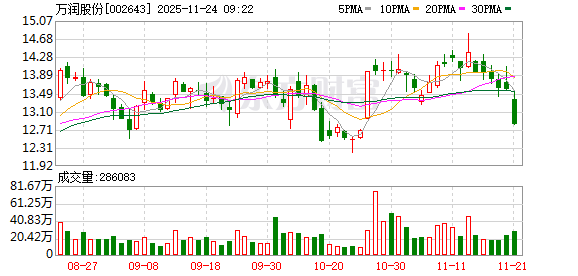
Core Viewpoint - The company has successfully achieved supply of materials for perovskite solar cells and is currently meeting downstream market demand [1] Group 1: Company Developments - The company's production capacity for perovskite solar cell materials is sufficient to satisfy current market needs [1] - Downstream partners are primarily in the product development or optimization phase, indicating a focus on innovation and improvement [1] - The company aims to plan its production capacity based on downstream market demand and is committed to providing products and technical support to more downstream enterprises [1]


万润股份:已有钙钛矿太阳能电池方面材料实现供应,目前产能可以满足下游市场需求
Mei Ri Jing Ji Xin Wen· 2025-11-24 01:23
Group 1 - The company has achieved production capacity for perovskite solar cell materials that meets current market demand [2] - The downstream market is primarily in the product development or optimization phase, indicating potential for future growth in perovskite solar cells [2] - The company plans to adjust production capacity based on downstream market demand and aims to provide products and technical support to more downstream enterprises [2]
趋势研判!2025年中国新材料行业相关政策、发展现状及未来前景展望:在政策支持、市场需求和技术创新的多重驱动下,产业发展空间巨大 [图]
Chan Ye Xin Xi Wang· 2025-06-01 01:14
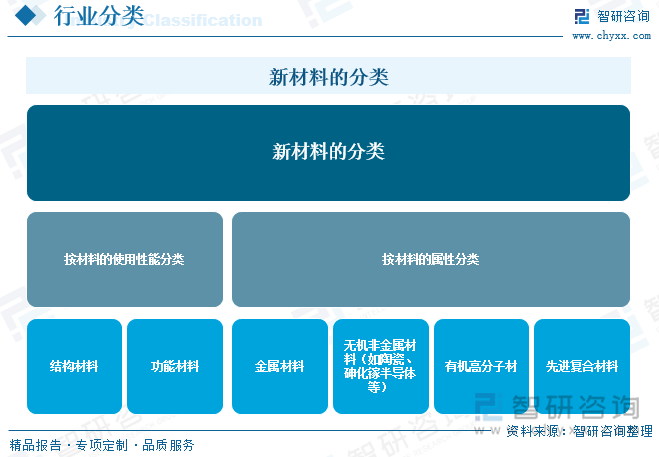
Core Viewpoint - The new materials industry in China is experiencing rapid growth driven by policy support, market demand, and technological innovation, with a projected total output value of 8.48 trillion yuan in 2024, maintaining double-digit growth for 14 consecutive years [1][3][20]. Group 1: Industry Definition and Classification - New materials refer to recently developed or developing structural and functional materials with superior properties. They can be classified into structural materials and functional materials based on their usage, and further categorized into four types: metal materials, inorganic non-metal materials, organic polymer materials, and advanced composite materials [1]. Group 2: Current Development Status - The new materials industry has expanded significantly, with the government focusing on electronic information materials, aerospace materials, new energy materials, and environmentally friendly materials. National high-tech industrial bases for new materials have been established in seven cities [3][5]. Group 3: Market Size and Structure - In 2024, the chemical new materials market is expected to account for approximately 22.08% of the total new materials market in China, while battery new materials will represent about 6.66%. By 2025, these figures are projected to be 21.75% and 6.97%, respectively [7]. Group 4: Competitive Landscape - Major companies in the new materials sector include Lens Technology, Antai Technology, China National Materials, and others, which are enhancing their international competitiveness through technological innovation and market expansion [12][16]. Group 5: Development Trends - The demand for new materials is increasing due to the rapid development of downstream industries such as information technology and new energy. The industry is transitioning towards low-carbon and green development, supported by significant technological advancements [20][23].